
Mindful Moments or Moving Muscles? The Benefits of Meditation and Exercise During Perimenopause and Menopause
Written and edited by Sarah Bonza MD, MPH, FAAFP, MSCP, DipABLM, NBC-HWC

meditation during perimenopause
If you’re reading this, you might be experiencing some of the unique changes that come with perimenopause or menopause. I want you to know that these shifts are a natural part of this life stage, and they bring a numerous opportunities to nurture yourself in new ways. Here, we explore two powerful practices that can truly make a difference during this phase: meditation and exercise. Both are scientifically proven to enhance well-being, and together, they create a balanced approach to health that serves body and mind alike.
Meditation: A Calming Anchor for Mind and Body
Meditation has been my anchor, helping me find calm on even the busiest days, and I know many of you can relate to those days! In a time when hormone fluctuations might bring heightened stress, a moment of stillness can be profoundly helpful. Four benefits of meditation include:

Mindfulness during perimenopause
Calming the Mind, Reducing Stress
Perimenopause often brings new stressors and more emotional highs and lows as our hormones fluctuate. The wonderful thing about meditation is that it’s a simple, effective way to find calm when we need it most. Just a few minutes a day can lower cortisol, our stress hormone, allowing your body and mind to unwind. Even short daily sessions can ease stress, support emotional balance, and make the world feel a bit more manageable.
Building Emotional Resilience
We’ve all had those days when it feels like our emotions are riding a rollercoaster. Perimenopause amplifies this for many of us, and meditation offers a safe space to process feelings with self-compassion and without judgment. Over time, it strengthens emotional resilience and gives us a solid emotional foundation to lean on during this transition.
Improving Focus and Mental Clarity
“Brain fog” is one of the most common complaints I hear, and it can be especially frustrating. The good news? Regular meditation has been shown to increase gray matter in the brain, helping to counteract cognitive effects like forgetfulness and distraction. With a daily practice, meditation can help you think more clearly and focus, even when hormones are doing their thing.
Promoting Restful Sleep
Quality sleep is hard to come by for many of us, especially as hormones shift. But meditation has a gentle way of relaxing the mind and preparing it for a deeper sleep. This restful sleep fuels our energy and enhances every other area of well-being.
Exercise: Strengthening Body and Mind
Exercise is another practice I hold dear. From strength training to cardio, it’s essential for feeling physically and mentally resilient. Perimenopause and menopause present a perfect opportunity to lean into exercise for its wide-ranging benefits.

Strength training in perimenopause
Boosting Energy and Uplifting Mood
Exercise is the ultimate mood lifter, as it stimulates endorphins, serotonin, and dopamine—the feel-good chemicals that help balance mood swings and boost energy levels. Physical activity also provides that refreshing mental reset, creating a natural lift in energy and mood.
Supporting Physical Health and Bone Strength
With the onset of menopause, our risk for bone density loss increases. Weight-bearing and resistance exercises strengthen muscles, protect bones, and help balance our bodies, reducing the risk of osteoporosis. Exercise keeps us physically resilient, helping us maintain balance and mobility.
Promoting Mental Clarity and Focus
Exercise isn’t just a body boost; it’s a brain boost too! Increased oxygen flow to the brain helps us stay alert, sharp, and focused. This can be especially valuable if you’ve been experiencing the “foggy brain” effect that often accompanies hormonal shifts.
Enhancing Sleep Quality
Like meditation, regular exercise can improve sleep quality. This one-two punch of meditation and exercise helps regulate our body’s rhythms, reduce stress, and make it easier to get a good night’s rest.
Bringing Meditation and Exercise Together: A Total Wellness Approach
While each practice has its own unique benefits, together, meditation and exercise become even more powerful. Here’s why they’re a dynamic duo:
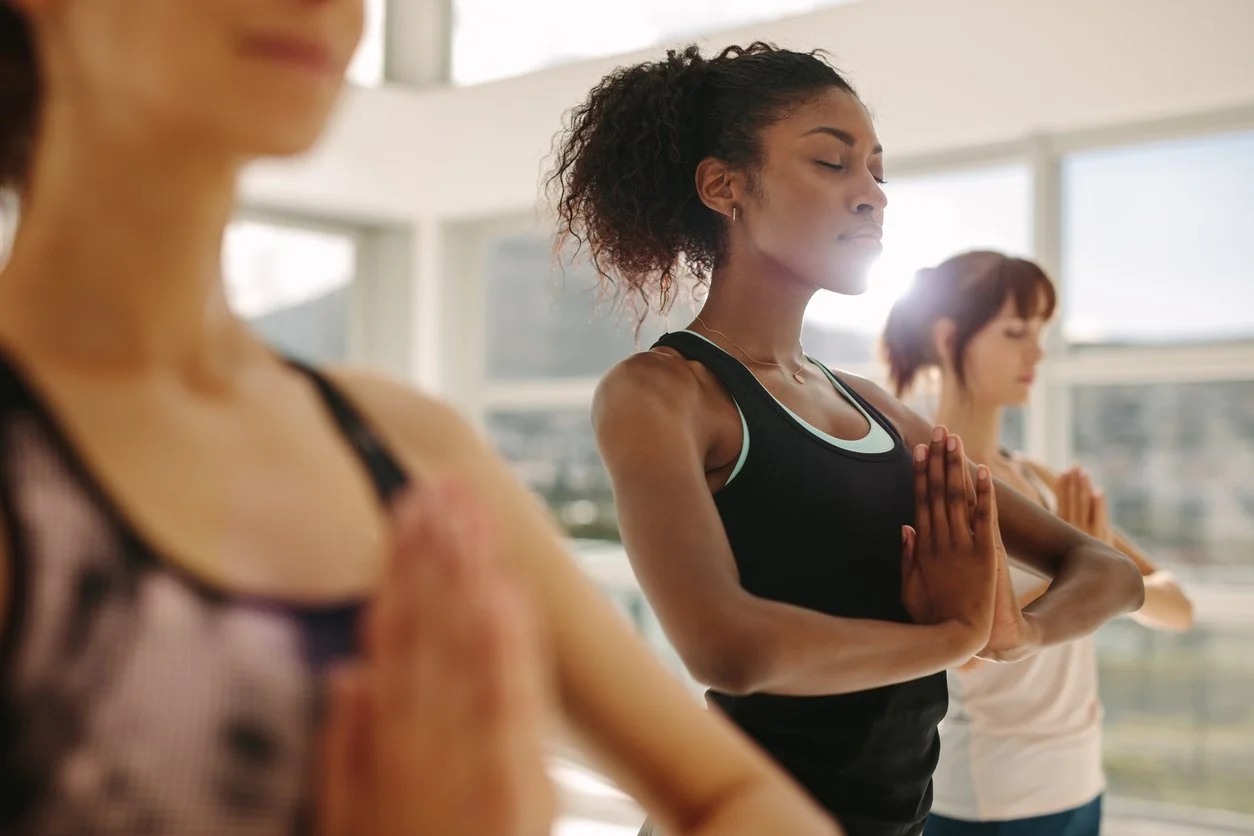
Perimenopause, exercise and meditation
Comprehensive Stress Relief
Meditation addresses mental and emotional stress, while exercise helps release built-up tension in the body. Together, they create a comprehensive approach to stress management, helping you feel more grounded, centered, and at ease.
Balanced Mental Clarity and Emotional Resilience
Exercise boosts physical energy and sharpens mental clarity, while meditation keeps you calm and grounded. This combination helps stabilize mood and supports both cognitive and emotional wellness, giving you a balanced approach to navigating hormonal changes.
A Well-Rounded Routine for Total Wellness
Meditation and exercise complement each other beautifully: one calms the mind, the other energizes the body. Together, they create a full-spectrum approach that nurtures both the physical and mental aspects of wellness, helping you feel strong, focused, and ready to tackle each day with renewed vitality.
Simple Ways to Get Started: Your Meditation and Exercise Routine
Starting a new routine doesn’t need to be overwhelming. Here’s a simple yet effective way to weave both meditation and exercise into your day:
Begin with Meditation
Take 5–10 minutes each morning to sit quietly, set an intention, and center yourself. This moment of calm will help you approach the day with focus and purpose.Move Your Body
Follow meditation with a short workout, brisk walk, or some yoga. Even a few minutes of movement can boost your mood and provide lasting energy for the day.Reflect and Reset
At the end of the day, take a few minutes to check in with yourself. Reflect on how you felt during the day and acknowledge the progress you’re making in your wellness journey.
Navigating perimenopause and menopause can feel like uncharted territory, but you have all the tools you need to create a wellness routine that nurtures both your mind and body. Meditation and exercise together are powerful allies, helping you maintain balance, stay strong, and approach each day with resilience and grace. Try both, see what resonates, and remember that this journey is about honoring your needs, finding what works for you, and stepping into this stage of life with confidence. You’re stronger than you think, and every mindful moment, every workout, brings you closer to reclaiming your vitality.

Sign up for Fullscript to shop professional-grade perimenopause supplements.
