The Hidden Hormone: How Elevated Cortisol Fuels Perimenopause Symptoms—And What You Can Do About It
Written and edited by Sarah Bonza MD, MPH, FAAFP, MSCP, DipABLM, NBC-HWC

When life stressors and hormonal instability collide, chronic elevation of cortisol becomes common and worsens the menopausal transition.
Cortisol is the hidden hormone that often gets overlooked in perimenopause, yet it has the power to disrupt sleep, mood, cognition, and metabolism—while also offering opportunities for holistic, personalized wellness strategies. This comprehensive blog explores the science, symptom patterns, and action plans for navigating cortisol challenges during perimenopause, featuring visuals and practical protocols.
What Makes Cortisol Crucial in Perimenopause?
Cortisol is essential for energy, immune function, and stress response. However, during perimenopause, declining estrogen and progesterone leave the adrenal glands both managing sex hormones and producing stress hormones. When life stressors and hormonal instability collide, chronic elevation of cortisol becomes common, worsening the menopausal transition.
The Perfect Storm: Symptoms Amplified by Cortisol
Symptoms such as hot flashes, brain fog, sleep disruption, and mood swings create stress, which triggers higher cortisol, perpetuating the cycle.
Research, including the Seattle Midlife Women's Health Study, confirms that cortisol levels dramatically rise from early to late perimenopause, tightly linked to symptom severity[1].
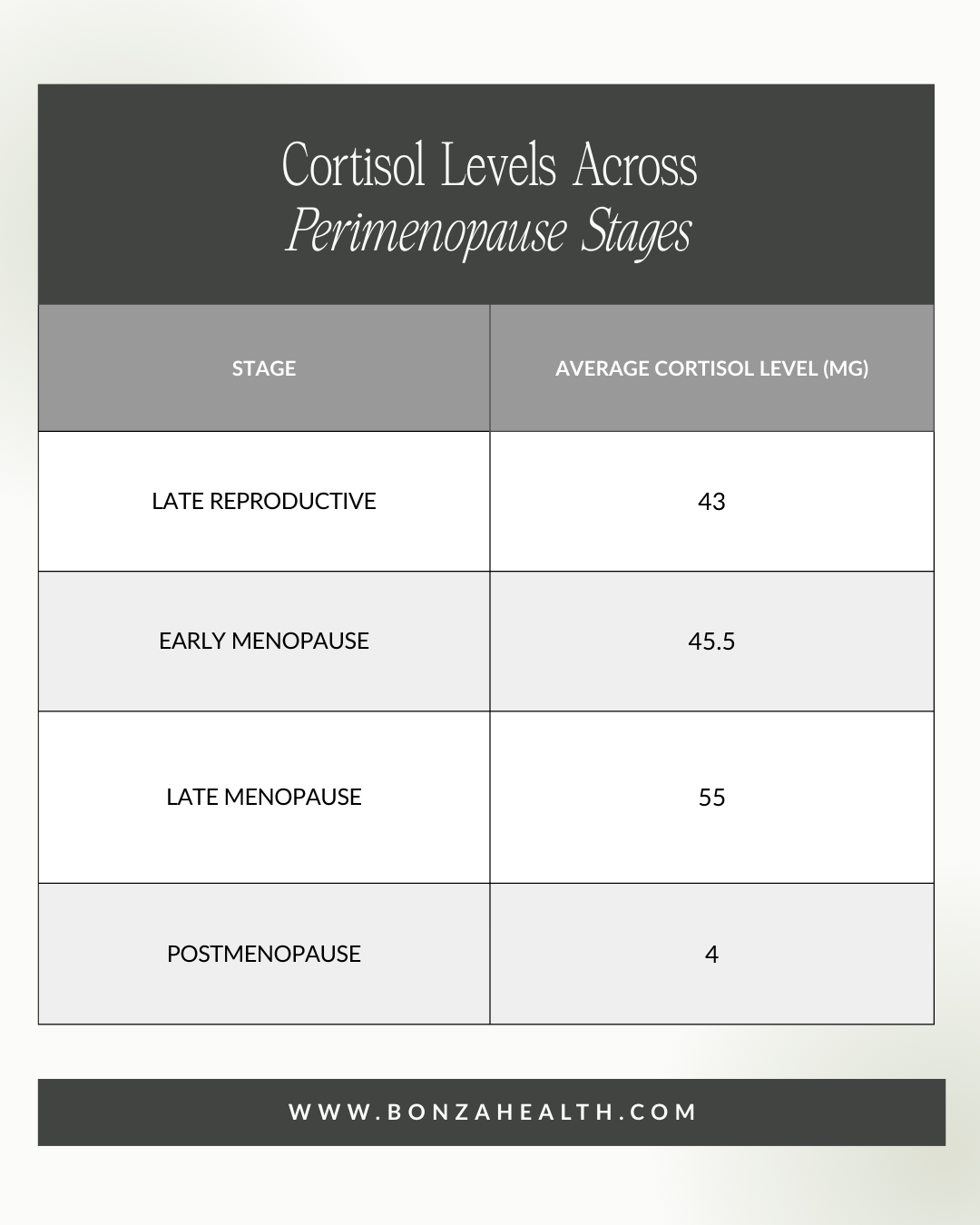
Cortisol levels across perimenopause stages.
How Cortisol Drives Key Symptoms
Sleep Disruption: Dysregulated evening cortisol inhibits melatonin, leading to “wired and tired” insomnia.
Weight Gain: High cortisol encourages belly fat, increases cravings, and raises blood sugar.
Brain Fog: Cognitive struggles intensify as cortisol impairs memory and focus.
Mood Swings & Anxiety: Increased emotional volatility tracks with cortisol surges.
Hot Flashes: Some evidence links higher cortisol to greater hot flash intensity.
Digestive Issues: Bloating, constipation, and reflux worsen when stress hormones rise.
The Progesterone and Cortisol Connection
Progesterone normally buffers the stress response; as levels decline, cortisol runs unchecked. Additionally, the body makes cortisol directly from progesterone, further depleting this calming hormone and amplifying stress vulnerability[2].
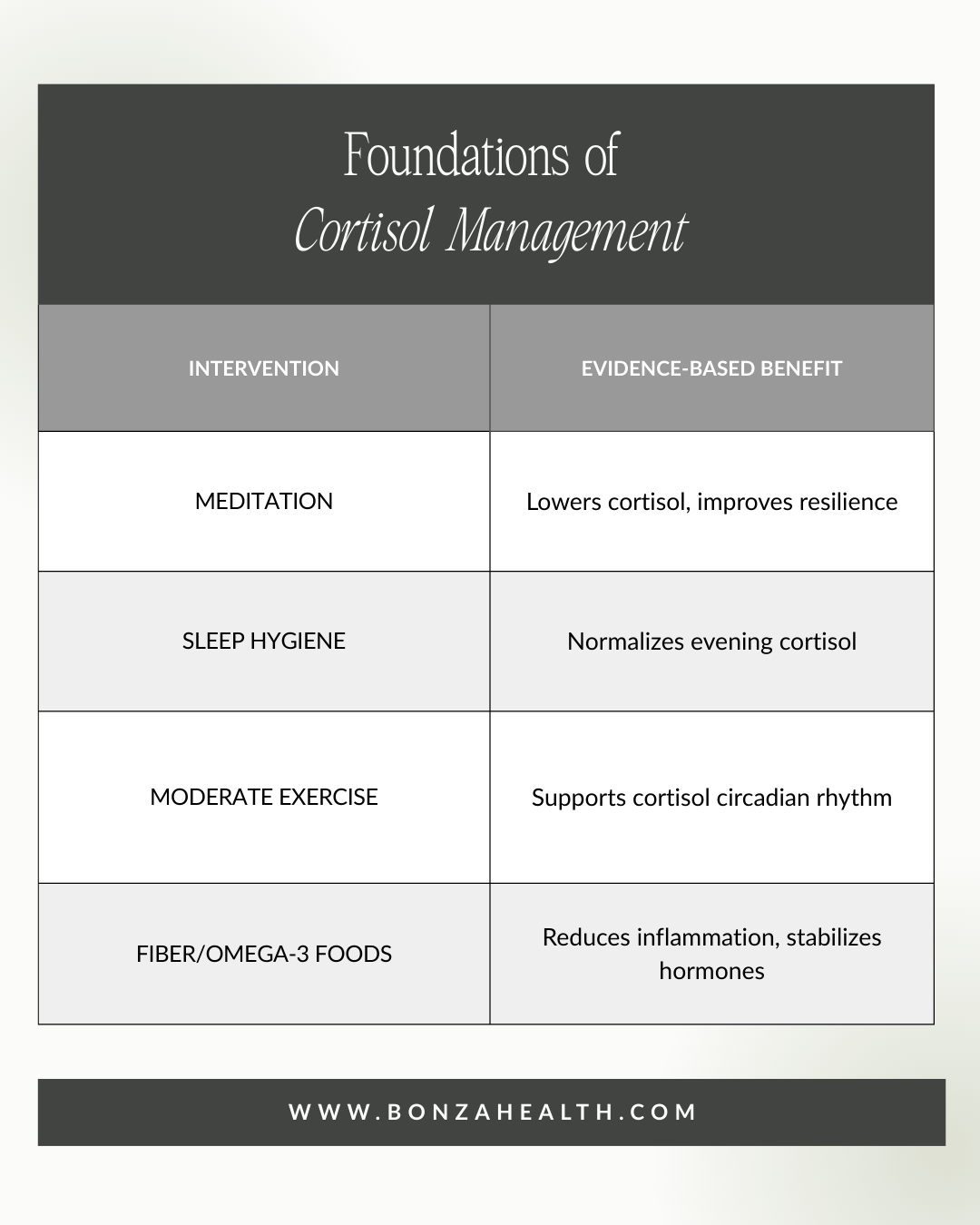
Foundations of cortisol management.
Holistic Strategies for Cortisol Mastery
Stress Management
Mindfulness/meditation: Just 10-15 minutes daily lowers cortisol and improves resilience.
Somatic techniques: Grounding exercises, breathwork, and progressive muscle relaxation.
Time in nature: Even 20 minutes reduces stress hormone levels.
Therapy/counseling: Cognitive behavioral therapy (CBT) supports more adaptive stress responses.
Sleep Optimization
Consistent sleep-wake schedule, wind-down routines, and cool, dark, tech-free bedrooms.
Avoid caffeine after 2 PM and prioritize sleep hygiene.
Exercise Balance
Strength training builds metabolic balance and supports cortisol rhythms.
Gentle yoga and walking reduce excess cortisol if stressed; avoid over-exercising.
Nutrition for Hormone Balance
Anti-inflammatory foods (rich in omega-3s), high-fiber vegetables, fruits, whole grains, and fermented foods for gut health.
Limit processed foods, excess sugar, and caffeine.
Evidence-Based Supplements
Ashwagandha: Reduces cortisol and stress.
Magnesium: Supports sleep and nervous system health.
L-Theanine: Promotes calm without drowsiness.
Omega-3s: Reduce inflammation, support hormones.
Phosphatidylserine: May help regulate cortisol response.
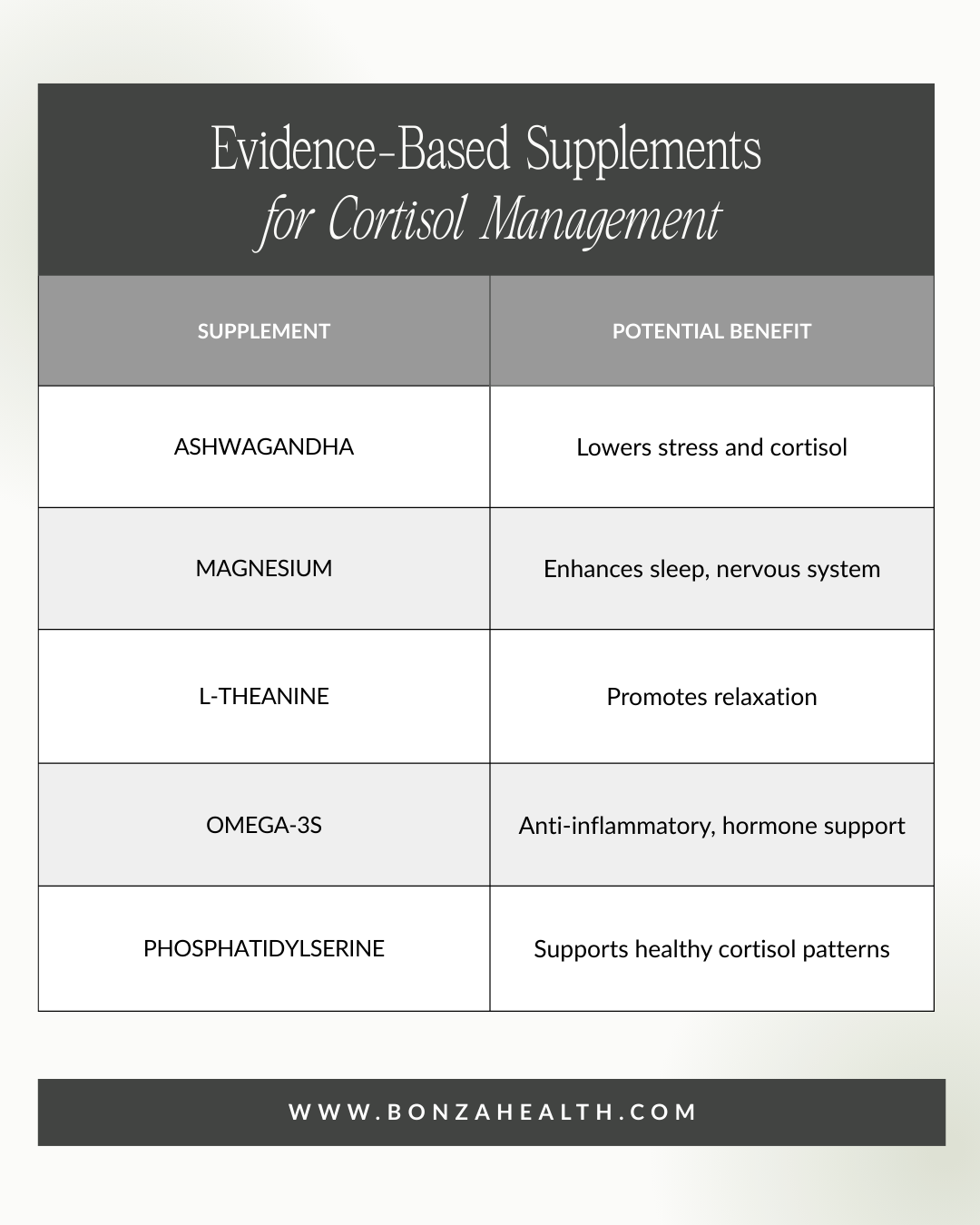
Evidence-based supplements for cortisol management.
Cortisol Advice: What Experts Emphasize
Cortisol management is a marathon: extreme protocols or expensive supplements are rarely needed. Many “high cortisol” symptoms overlap with normal perimenopause; the aim is resilience, not total stress elimination.
When to Seek Professional Help
If symptoms like persistent sleep issues, unexplained weight gain, severe mood changes, blood pressure, or blood sugar fluctuations impact daily function, a medical evaluation is essential. Professional cortisol testing (preferably diurnal saliva tests) and thorough evaluation are recommended.
Your Action Plan: Week-by-Week Growth
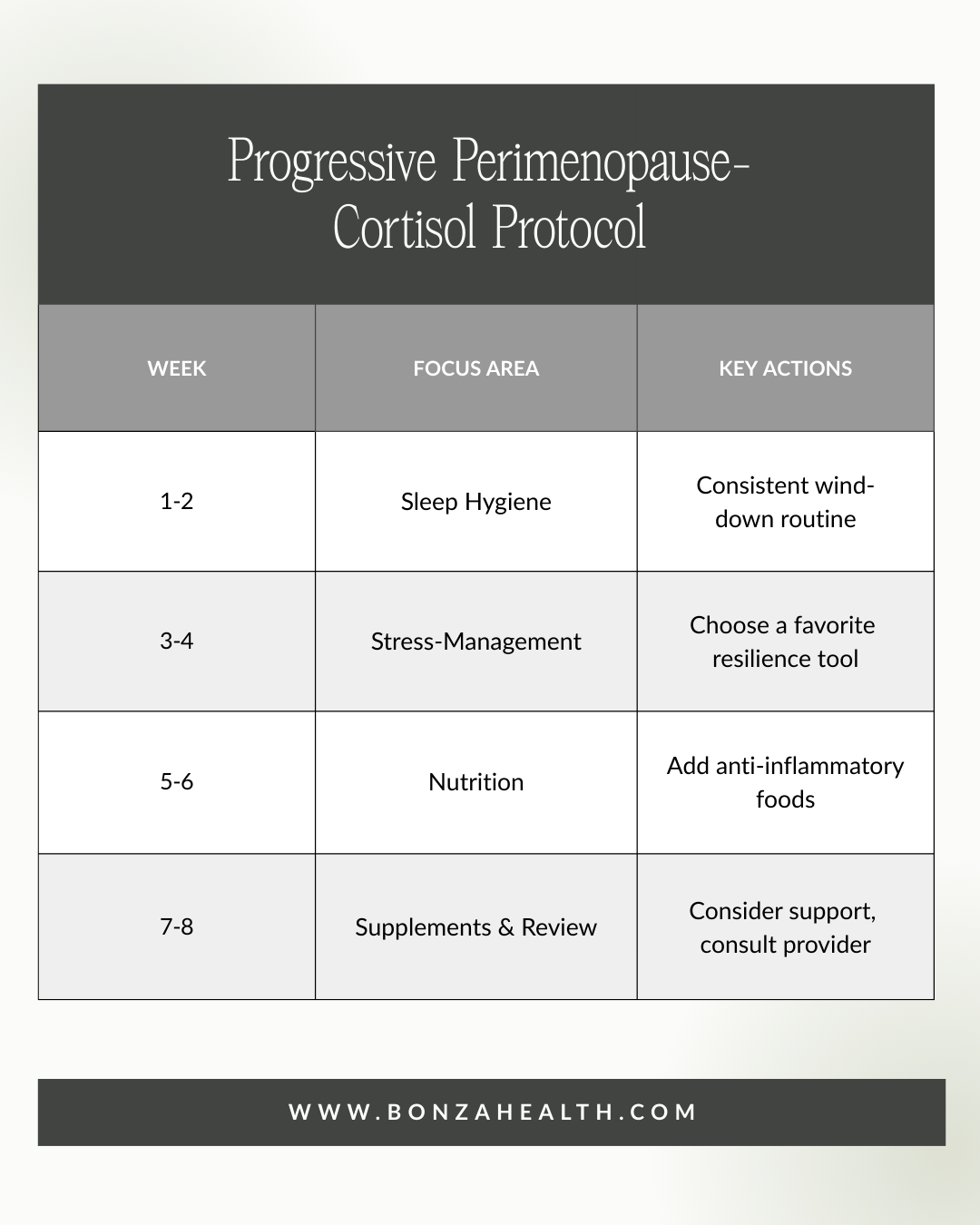
Progressive perimenopause-cortisol protocol.
The Bottom Line
Understanding and managing cortisol during perimenopause is about recognizing symptoms and building a better foundation for long-term health—not “doing more.” With evidence-based lifestyle strategies and a personalized approach, women can navigate this transition with more energy, calm, and clarity.

Ready to take the next step in the journey? Bonza Health specializes in midlife women's health, offering telemedicine consults and customized protocols tailored for real-world resilience and recovery.
References
[1] Grub, J., Süss, H., Willi, J., & Ehlert, U. (2021). Steroid Hormone Secretion Over the Course of the Perimenopause: Findings From the Swiss Perimenopause Study. Frontiers in Global Womens Health, 2. https://doi.org/10.3389/fgwh.2021.774308
[2] Stefaniak, M., Dmoch–Gajzlerska, E., Jankowska, K., Rogowski, A., Kajdy, A., & Maksym, R. (2023). Progesterone and Its Metabolites Play a Beneficial Role in Affect Regulation in the Female Brain [Review of Progesterone and Its Metabolites Play a Beneficial Role in Affect Regulation in the Female Brain]. Pharmaceuticals, 16(4), 520. Multidisciplinary Digital Publishing Institute. https://doi.org/10.3390/ph16040520