Musculoskeletal Syndrome of Menopause: Why Arthritis & Joint Pain Surge in Midlife Women
Written and edited by Sarah Bonza MD, MPH, FAAFP, MSCP, DipABLM, NBC-HWC
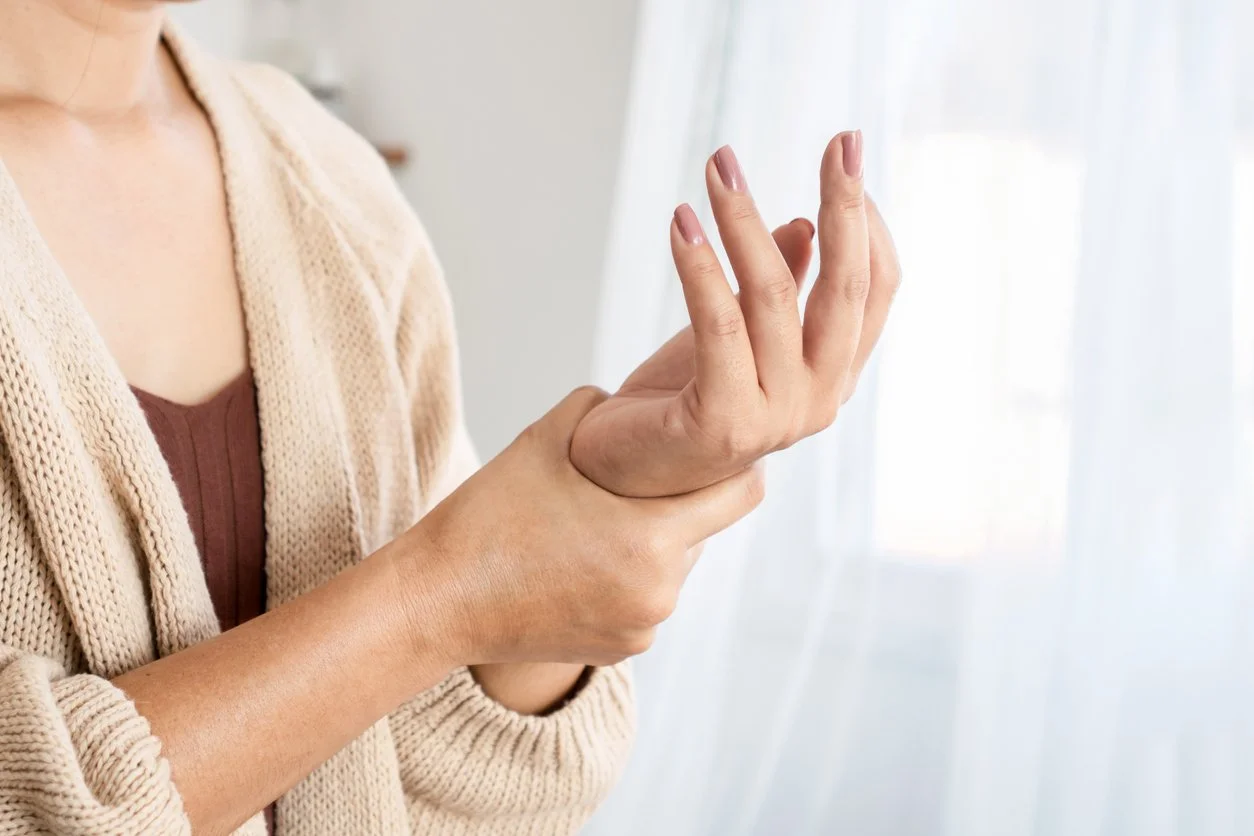
It’s common for joint pain to surge in perimenopause.
Perimenopause and menopause are profound physiological transitions for women: periods where unpredictable hormone shifts can impact every tissue, especially the musculoskeletal system. Many women, including those seen daily at Bonza Health, struggle with new-onset joint pain, stiffness, and even disabling arthritis. Why does this happen, what’s the link with estrogen, and how can women reclaim their vitality?
The Hidden Epidemic: Prevalence and Impact
Over 70% of perimenopausal women report musculoskeletal symptoms, including joint pain and stiffness; more than 25% are significantly disabled by these symptoms[1].
The odds of musculoskeletal pain jump by 63% in perimenopause compared to premenopause, and worsen with progression to postmenopause.
More than 50% of women experience arthritis or arthralgia at menopause, contributing to lost mobility, anxiety, and reduced life quality.
Estrogen deficiency lies at the heart of menopausal arthritis.
How Arthritis Manifests and Worsens in Perimenopause
1. "Arthritis of Menopause": Osteoarthritis and More
Estrogen deficiency lies at the heart of menopausal arthritis: a recognized, though underdiagnosed entity. The spectrum includes:
Osteoarthritis: Accelerates during menopause as cartilage loses protective estrogen, leading to pain, swelling, and stiffness—commonly in knees, hips, hands, and spine.
Rheumatoid Arthritis: Postmenopause increases risk and exacerbation, likely due to weakened immune regulation and higher inflammatory response.
Polyarthritis (“menopausal arthritis”): Multiple joints—ankles, toes, knees, shoulders—may be involved; pain often does not respond to standard analgesics[1-3].
2. Joint Symptoms: What Women Experience
Pain and Swelling: Often migratory, can affect knees, hands, feet, and hips.
Morning Stiffness and Fatigue: Worse after rest; sometimes severe enough to limit activity.
Frozen Shoulder and Tendon Issues: Adhesive capsulitis and tendonopathies rise sharply in perimenopause, linked to sudden drops in estrogen[4].
Hip Pain: Bone and cartilage loss, inflammation, and changes in gait put women at double the risk for hip arthritis and bursitis versus men their age.
The Science: Why Joint Pain Surges in Perimenopause
Estrogen & Joint Health
Anti-inflammatory Role: Estrogen suppresses inflammatory cytokines, supports cartilage regeneration, and maintains joint lubrication.
Bone Density & Cartilage: Its loss accelerates osteoclast activity, weakens bones by up to 20%, and increases risk for osteoporosis and osteoarthritis in the hips, knees, and hands.

Low estrogen, sarcopenia, autoimmune dysregulation, and collagen loss can all worsen arthritis symptoms and pain.
Case Study: Unmasking Menopausal Arthritis
Patient: 44-Year-Old, Early Menopause
A 44-year-old woman presented for evaluation of swelling and pain in both ankles, toes, and feet. Her menstrual cycles had become irregular and delayed. Initial treatment with analgesics and anti-inflammatories resulted in minimal improvement. As cycles became even more erratic, the number and severity of affected joints increased—shoulders, knees, and back soon became involved.
Specialist assessment:
Ankles, shoulders, and knees were swollen, warm, and tender
Stiffness, reduced range of motion
Bloodwork, including rheumatoid factor, thyroid, and metabolic panel: Normal
Diagnosis: Polyarthritis with seronegative RA—likely “menopausal arthritis”
Treatment included:
Corticosteroids
Leflunomide (anti-RA therapy)
NSAIDs
Topical natural gels
After several weeks, the patient noted 50% improvement, though pain persisted during irregular menstrual cycles.
Key lesson: Standard evaluation often misses menopause-related arthritis. Once recognized, targeted therapy and hormone support (when indicated) can produce dramatic improvements—even in cases unresponsive to traditional rheumatology protocols.
Estrogen therapy can help restore anti-inflammatory activity, supporting cartilage and improving bone density.
How Can Women Reclaim Their Vitality?
1. Menopausal Hormone Therapy (MHT)
Estrogen replacement can dramatically alleviate pain and stiffness—sometimes within 24–48 hours—by restoring anti-inflammatory activity, supporting cartilage, and improving bone density.
Best results occur when therapy is started early in the menopausal transition, ideally within 10 years of the final period.
2. Lifestyle & Physical Therapy
Movement is medicine: Low-impact aerobic exercise (walking, swimming, cycling) and muscle-strengthening routines (yoga, Pilates) preserve joint health and prevent muscle loss.
Physical therapy restores range of motion, corrects posture, and eases stiffness—especially in frozen shoulder and hip bursitis.
3. Anti-Inflammatory Nutrition
Phytoestrogens: Foods rich in soy, flax, and legumes may provide modest hormonal support.
Omega-3s: Walnuts, flax, fish, and vitamin D/K-rich foods combat inflammation and fortify joints.
See the table below:

Essential anti-inflammatory nutrients include omega-3s, vitamin K, vitamin D, phytoestrogens, and turmeric.
4. Supplements & Adjuncts
Judicious use of calcium, Vitamin D, and select plant-based compounds may aid joint health—always with medical supervision.
Topical natural gels, acupuncture, massage, and cognitive behavioral therapy (CBT) offer additional relief.
5. Medications
NSAIDs (e.g., ibuprofen, naproxen) and short-course corticosteroids for more severe flares.
Disease-modifying agents (e.g., leflunomide) in select cases of seronegative RA; always guided by subspecialist.

Medications, supplements, and anti-inflammatory eating patterns can alleviate perimenopause-related pain and stiffness.
What About “Miracle” Improvements After Estrogen Therapy?
Many women, including those under Dr. Bonza’s care, report near-complete relief of severe joint pain within a day or two of starting estrogen. Is this normal?
While responses vary, estrogen’s rapid anti-inflammatory effect on joint tissues is well-documented, with clinical studies showing dramatic pain reduction and improved mobility in treated women compared to non-hormonal approaches.

Register to watch our free Vitality Code webinar.
References
[1] A. Atasoy‐Zeybek, K. K. Showel, C. V. Nagelli, J. J. Westendorf, and C. H. Evans, “The intersection of aging and estrogen in osteoarthritis,” NJP Womens Health, vol. 3, no. 1. Feb. 25, 2025. https://doi.org/10.1038/s44294-025-00063-1.
[2] H. Zhao, Y. Fan, and W. Wu, “The Mechanism by Which Estrogen Level Affects Knee Osteoarthritis Pain in Perimenopause and Non-Pharmacological Measures,” International Journal of Molecular Sciences, vol. 26, no. 6. Multidisciplinary Digital Publishing Institute, p. 2391, Mar. 07, 2025. https://doi.org/10.3390/ijms26062391.
[3] S. Onuora, “Oestrogens implicated in progression to arthritis,” Nature Reviews Rheumatology. Nature Portfolio, Mar. 25, 2025. https://doi.org/10.1038/s41584-025-01242-9.
[4] V. J. Wright, J. Schwartzman, R. Itinoche, and J. R. Wittstein, “The musculoskeletal syndrome of menopause,” Climacteric, vol. 27, no. 5. Taylor & Francis, p. 466, Jul. 30, 2024. https://doi.org/10.1080/13697137.2024.2380363.