The Cellular Powerhouses: Understanding Mitochondria's Critical Role in Women's Health, Longevity, and Vitality
Written and edited by Sarah Bonza MD, MPH, MSCP, FAAFP, DipABLM, NBC-HWC

As women navigate the complex journey of perimenopause and beyond, understanding the fundamental cellular processes that drive energy, vitality, and healthy aging becomes paramount. At the heart of this cellular symphony are mitochondria, often referred to as the "powerhouses of the cell”.
Mitochondria are tiny organelles that play an outsized role in determining how we age, how energetic we feel, and how well our bodies function throughout our lives.
Understanding Mitochondria: The Body's Energy Factories
Mitochondria are membrane-bound organelles found in nearly all human cells, responsible for generating the vast majority of our cellular energy in the form of adenosine triphosphate (ATP).[1] These remarkable structures are unique among cellular organelles, possessing their own DNA and two distinct membranes that create specialized compartments for energy production.[2,3] More than 90% of our cellular energy is produced by mitochondria, making them absolutely essential for every physiological process in our bodies.[4]
What makes mitochondria particularly fascinating is their evolutionary origin. They were once independent bacterial organisms that merged with human cells eons ago in what scientists call "the grand bargain of life".[5] In this mutually beneficial relationship, mitochondria produce the energy our cells need while our cells provide the antioxidants and nutrients mitochondria require for protection and optimal function.[5]
The number of mitochondria varies dramatically between cell types, with energy-demanding tissues like the heart, brain, liver, and skeletal muscle containing hundreds to thousands of mitochondria per cell.[2,3] Heart muscle cells, for instance, dedicate approximately 40% of their cellular volume to mitochondria, reflecting the enormous energy demands of this vital organ.[2]

Mitochondria and the Aging Process: A Complex Relationship
The relationship between mitochondrial function and aging is profound and multifaceted. As we age, mitochondrial function naturally declines, leading to reduced energy production, increased oxidative stress, and accelerated cellular aging.[6,7] Research has shown that individuals over 70 have 15 times more mitochondrial damage than those in their 40s.[8]
This age-related mitochondrial dysfunction manifests as decreased mitochondrial mass, reduced respiratory chain capacity, and accumulation of damaged mitochondrial DNA.[6] The number of mitochondria decreases with age in liver cells, concurrent with decreased mitochondrial DNA copy number and protein levels.[6] Additionally, the activity of specific respiratory chain complexes declines, particularly complexes I and IV, which are crucial for energy production.[6]
The concept of "healthspan", the period of life spent in good health, is intimately connected to mitochondrial function.[9,10] Recent research has identified mitochondrial dysfunction as one of the ten contributing factors to the aging process and a common denominator in virtually all age-related diseases.[9] This includes cognitive decline, metabolic syndrome, neurodegenerative diseases, chronic fatigue syndrome, and fibromyalgia.[9]
The Perimenopause Connection: When Hormones Meet Mitochondria
For women entering perimenopause, the relationship between hormones and mitochondria becomes particularly critical. Estrogen acts as a powerful mitochondrial enhancer, helping mitochondria produce ATP more efficiently and shielding them from oxidative damage.[11,12] As estrogen levels decline during perimenopause, this protective effect diminishes, making mitochondria more vulnerable to dysfunction.[13]
Research has demonstrated that estrogen regulates mitochondrial structure, biogenesis, and function through multiple pathways.[12,14] Estrogen increases mitochondrial electron transport chain efficiency, prevents ATP depletion, and maintains mitochondrial membrane potential.[12] The hormone also promotes mitochondrial biogenesis by stimulating the expression of key regulatory factors like PGC-1α (peroxisome proliferator-activated receptor gamma coactivator 1-alpha).[14,15]
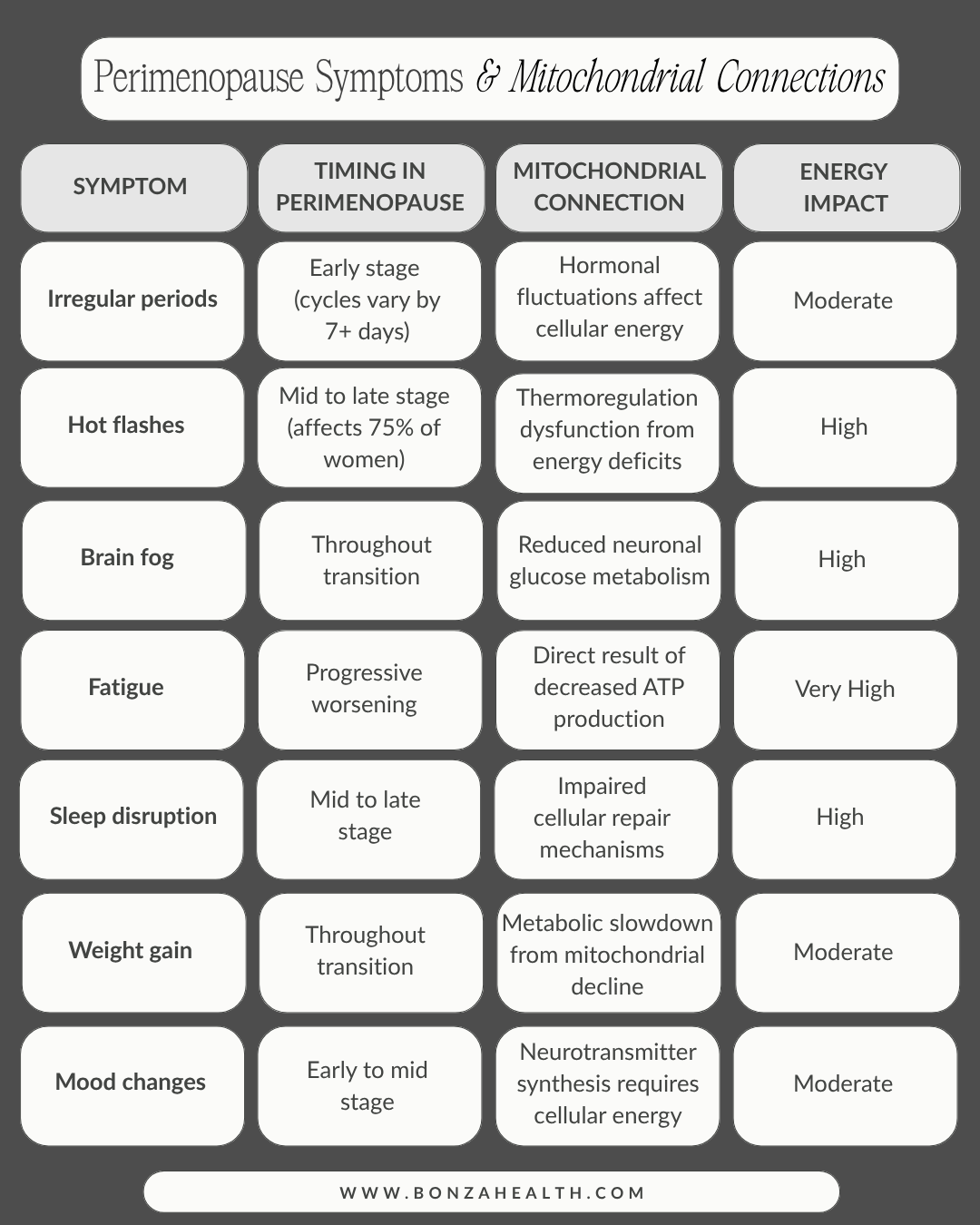
Studies show that estrogen deficiency leads to mitochondrial damage that precedes cognitive decline.[16] In postmenopausal mouse models, ovariectomy resulted in significant reductions in mitochondrial proteins, impaired mitochondrial biogenesis, and disrupted mitochondrial dynamics, all occurring before observable cognitive impairments.[16] This research suggests that mitochondrial dysfunction may be one of the earliest changes in the transition to menopause, potentially explaining the fatigue, brain fog, and reduced vitality many women experience during this time.[11,17]
The brain is particularly vulnerable to estrogen-related mitochondrial changes. During perimenopause, there's a persistent decline in neuronal glucose transport and metabolism, followed by decreased mitochondrial function.[17] This hypometabolic state in the female brain may contribute to the increased risk of Alzheimer's disease observed in postmenopausal women.[17,18]
Mitochondria as the Foundation of Energy and Vitality
Understanding mitochondrial function helps explain why optimizing these cellular powerhouses is crucial for maintaining energy and vitality throughout life. When mitochondria function optimally, they provide the steady stream of ATP needed for every cellular process, from muscle contraction to neurotransmitter synthesis.[14]
Healthy mitochondria also maintain proper calcium signaling, regulate cell death pathways, and manage oxidative stress through sophisticated antioxidant systems.[2,19]
They undergo continuous cycles of fusion and fission, allowing them to adapt their shape and distribution based on cellular energy demands.[19,20] During periods of high energy need, mitochondria can fuse together to form elongated, interconnected networks, while during times of abundance, they fragment into smaller units.[20]
This dynamic nature of mitochondria, their ability to move, change shape, and respond to cellular signals, is what allows them to maintain cellular homeostasis and support optimal function throughout the body.[19] When this dynamic balance is disrupted, as occurs with aging and hormonal changes, cellular function suffers, leading to the fatigue, reduced resilience, and diminished vitality many women experience during midlife transitions.

Evidence-Based Strategies for Mitochondrial Optimization
Exercise: The Ultimate Mitochondrial Medicine
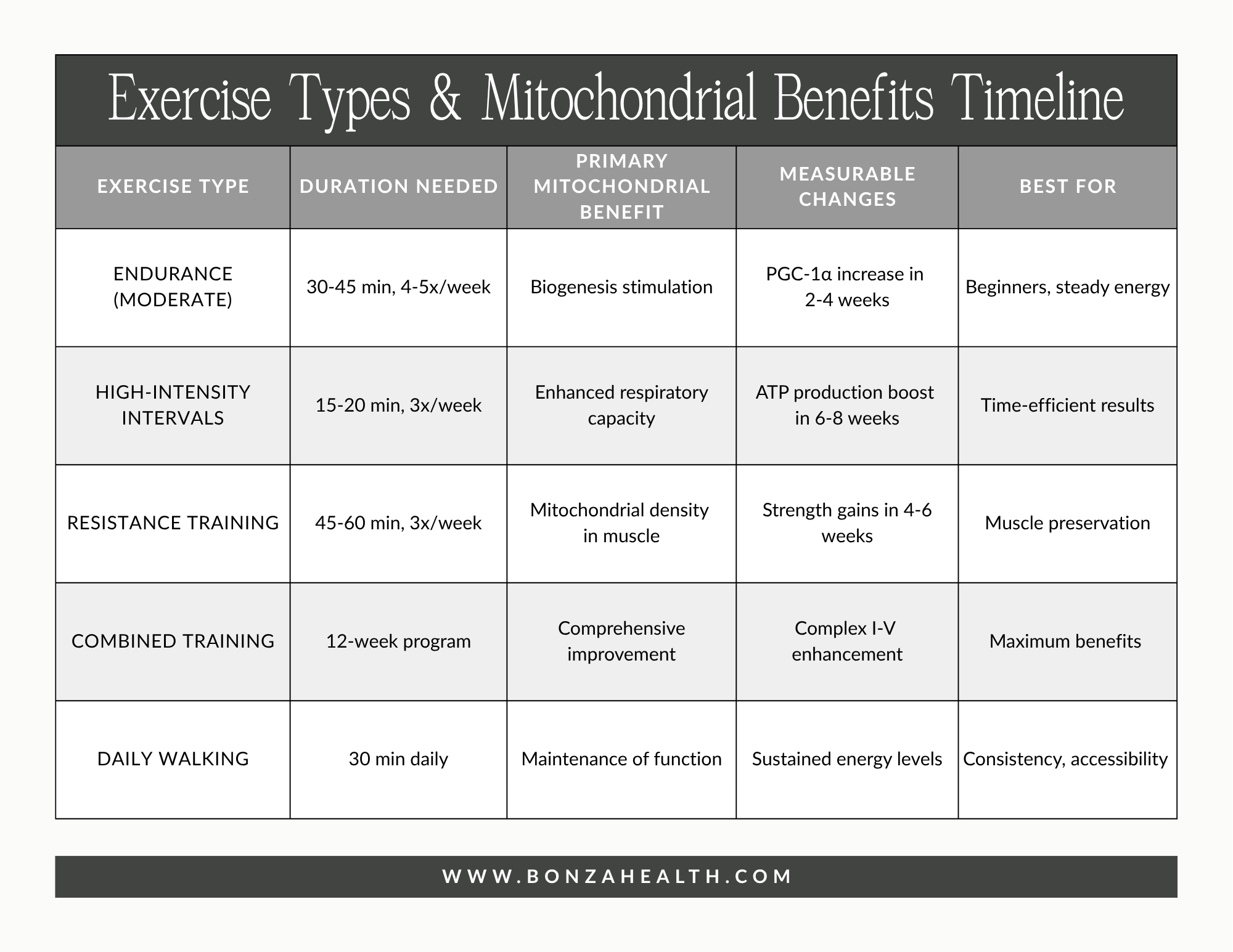
Exercise stands out as perhaps the most powerful intervention for promoting mitochondrial health and biogenesis. Both endurance and high-intensity exercise activate multiple pathways that enhance mitochondrial function.[21,22] Exercise stimulates the expression of PGC-1α, the master regulator of mitochondrial biogenesis, leading to increased mitochondrial mass and improved respiratory capacity.[21,22]
Regular physical activity promotes optimal mitochondrial dynamics by balancing fusion and fission processes, enhances mitochondrial protein homeostasis, and increases the expression of antioxidant enzymes that protect against oxidative stress.[21,22] Studies show that even a single exercise session can trigger structural changes in mitochondrial networks, while long-term training programs lead to sustained improvements in mitochondrial respiratory capacity and energy production.[22]
Intermittent Fasting: Cellular Renewal Through Nutrient Cycling
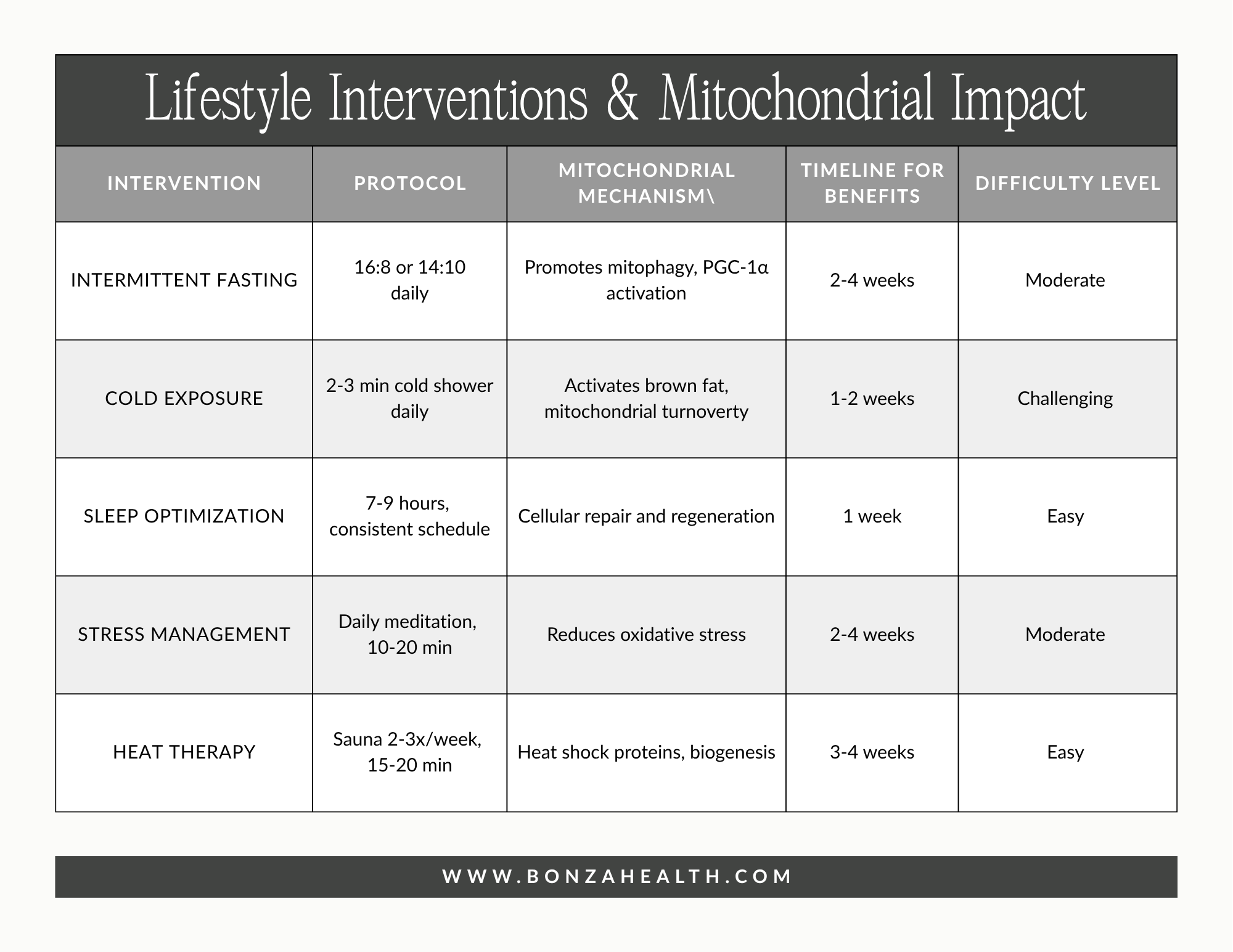
Intermittent fasting has emerged as a powerful strategy for optimizing mitochondrial health through several mechanisms.[23,24] Fasting increases mitochondrial splitting or fission, which may allow cells to more efficiently process fatty acids and cope with metabolic stress.[23] This process is mediated by the mTORC2 cellular signaling pathway and helps maintain healthy mitochondrial populations.[23]
Research suggests that fasting enhances mitochondrial biogenesis through activation of PGC-1α and Nrf2, key regulators of mitochondrial function and antioxidant defense.[24] Fasting also promotes mitophagy, the selective removal of damaged mitochondria, ensuring that cells maintain populations of healthy, functional mitochondria.[24]
Cold Exposure: Hormetic Stress for Mitochondrial Adaptation
Controlled cold exposure, such as cold showers or cryotherapy, can stimulate mitochondrial biogenesis and function through hormetic stress responses.[25]
Intermittent cold exposure upregulates mitochondrial biogenesis regulators through PKA and SIRT-3 mediated pathways, leading to increased mitochondrial mass and improved metabolic function.[25] This adaptive response helps build cellular resilience and may contribute to improved energy production and stress tolerance.
Targeted Nutritional Support for Mitochondrial Health
NAD+ Precursors: Restoring Cellular Energy Currency
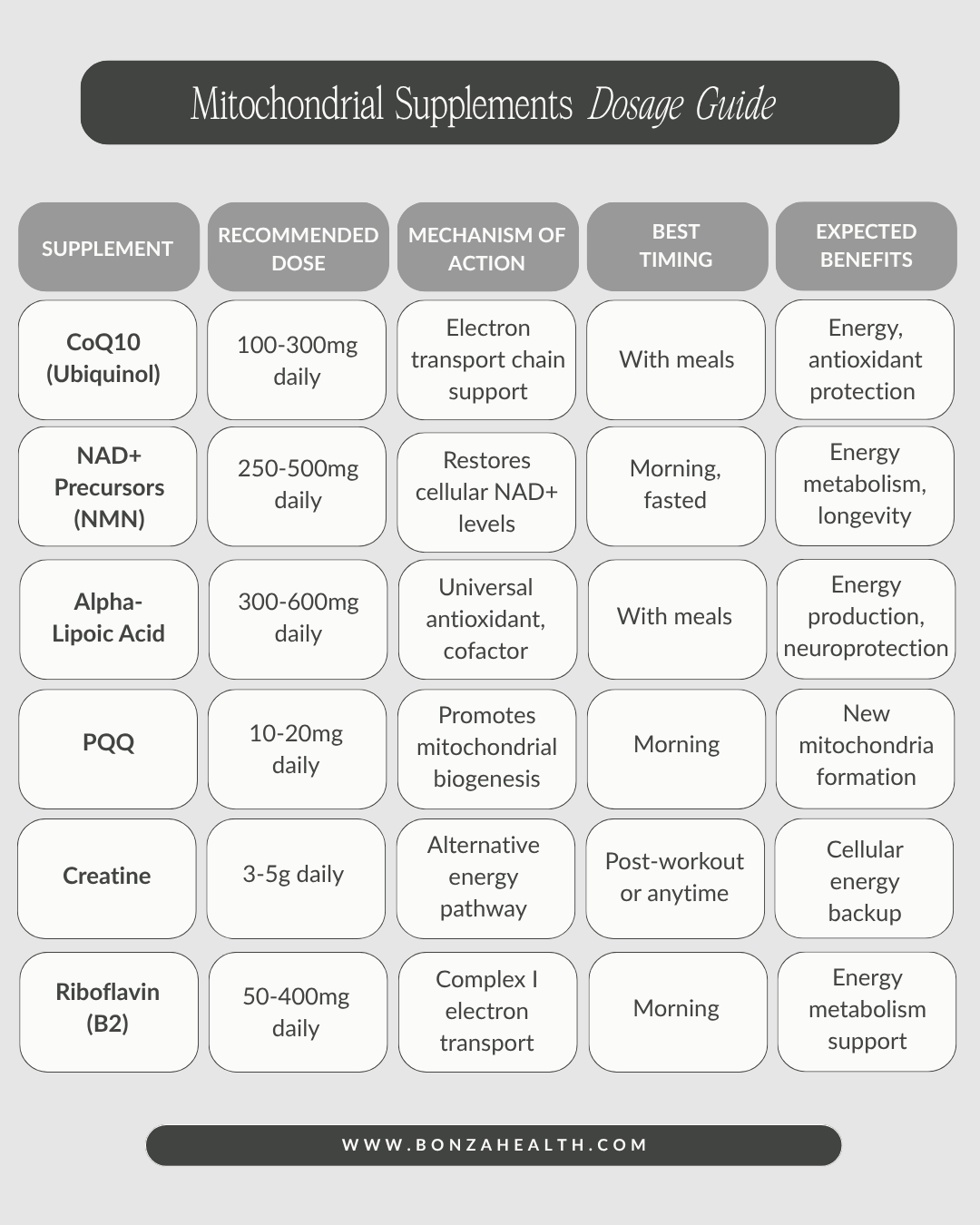
Nicotinamide adenine dinucleotide (NAD+) is essential for mitochondrial energy production, but levels decline significantly with age.[26,27] NAD+ precursors like nicotinamide mononucleotide (NMN) and nicotinamide riboside (NR) have shown remarkable potential for restoring mitochondrial function.[26,27,28]
Research demonstrates that NMN supplementation increases mitochondrial NAD+ levels, activates SIRT3 (a key mitochondrial protein), and reduces oxidative stress while improving mitochondrial dynamics.[26] Studies show that NMN can restore mitochondrial function, improve cellular energy production, and even provide neuroprotective effects in models of neurodegeneration.[28] A single dose of NMN has been shown to increase mitochondrial NAD+ levels by 76% for up to 24 hours.[26]
Coenzyme Q10: The Mitochondrial Antioxidant
Coenzyme Q10 (CoQ10) serves as the primary antioxidant system protecting mitochondria from oxidative damage.[5,29] As we age, CoQ10 levels naturally decline, leading to increased mitochondrial dysfunction and reduced energy production.[5] CoQ10 supplementation has been shown to restore mitochondrial membrane potential, reduce mitochondrial oxidative stress, and improve ATP production.[29]
Research indicates that CoQ10 enhances mitochondrial respiratory capacity and promotes mitophagy, the removal of damaged mitochondria, through activation of the Nrf2 antioxidant pathway.[29] However, traditional CoQ10 supplements have limited bioavailability to mitochondria, making targeted delivery systems like MitoQ potentially more effective for mitochondrial support.[5]

Alpha-Lipoic Acid: The Universal Antioxidant
Alpha-lipoic acid (α-LA) functions as both a mitochondrial cofactor and powerful antioxidant, making it particularly valuable for mitochondrial health.[30] α-LA acts as an enzymatic cofactor in mitochondrial energy production while providing antioxidant protection through its unique ability to regenerate other antioxidants like vitamin C and vitamin E.[30]
Studies show that α-LA supplementation can improve mitochondrial biogenesis, enhance ATP production, and protect against age-related mitochondrial dysfunction.[30] Its dual role as both an energy cofactor and antioxidant makes α-LA particularly effective for supporting overall mitochondrial performance and protecting against oxidative stress.[30]
PQQ: Promoting Mitochondrial Birth
Pyrroloquinoline quinone (PQQ) represents one of the most exciting developments in mitochondrial nutrition due to its ability to stimulate mitochondrial biogenesis: the creation of new mitochondria.[8] Until recently, scientists believed only caloric restriction, exercise, and certain medications could promote the formation of new mitochondria.[8]
PQQ supplementation has been shown to increase mitochondrial number and improve energy production, making it particularly valuable for individuals experiencing age-related energy decline.[8] As a potent antioxidant, PQQ also protects existing mitochondria from oxidative damage while promoting the development of new, healthy mitochondria.[8]
Integrating Mitochondrial Health into Clinical Practice
For healthcare practitioners working with perimenopausal and menopausal women, understanding mitochondrial health provides a foundational approach to addressing common complaints of fatigue, brain fog, and reduced vitality. Rather than simply treating symptoms, focusing on mitochondrial optimization addresses root causes of cellular dysfunction.
Assessment of mitochondrial health can include evaluation of energy levels, exercise tolerance, cognitive function, and biomarkers of oxidative stress and mitochondrial function.[31] Growth differentiation factor-15 (GDF-15), a marker of mitochondrial stress, has shown strong associations with accelerated aging and can serve as a clinical biomarker.[31]
Treatment approaches should integrate lifestyle interventions with targeted nutritional support, recognizing that mitochondrial health is foundational to hormone balance, energy production, and healthy aging. The combination of regular exercise, intermittent fasting, stress management, and strategic supplementation provides a comprehensive approach to mitochondrial optimization

Embracing Cellular Vitality for Lifelong Health
As we continue to unravel the complex relationships between mitochondrial function, hormonal health, and aging, it becomes clear that these cellular powerhouses hold the key to maintaining vitality throughout life's transitions. For women navigating perimenopause and beyond, understanding and optimizing mitochondrial health offers a pathway to sustained energy, cognitive clarity, and overall well-being.
The evidence is compelling: mitochondrial dysfunction precedes many age-related health challenges, while mitochondrial optimization can extend both lifespan and healthspan. By implementing evidence-based strategies that support these remarkable organelles, through exercise, nutrition, lifestyle modifications, and targeted supplementation, women can take proactive steps to maintain their vitality and health throughout the aging process.
The future of healthy aging lies not just in managing symptoms as they arise, but in supporting the fundamental cellular processes that determine how we age. By nurturing our mitochondria, we nurture our capacity for lifelong vitality, energy, and optimal health.

References
[1] National Human Genome Research Institute. Mitochondria. https://www.genome.gov/genetics-glossary/Mitochondria
[2] Medical News Today. Mitochondria: Form, Function, and Disease. https://www.medicalnewstoday.com/articles/320875
[3] Britannica. Mitochondrion | Definition, Function, Structure, & Facts. https://www.britannica.com/science/mitochondrion
[4] Mitopure. Unlocking Cellular Vitality: The Role of Mitochondria in Cellular Health. https://www.mitopure.com/blog/unlocking-cellular-vitality-the-role-of-mitochondria-in-cellular
[5] MitoQ. Why CoQ10 is Crucial to Mitochondria and Overall Health. https://www.mitoq.com/journal/coq10-crucial-mitochondria-function-overall-health
[6] Bratic A, Larsson NG. The role of mitochondria in aging. J Clin Invest. 2013;123(3):951-957. https://doi.org/10.1172/JCI64125
[7] PCCA. Mitochondrial Health: The Key to Longevity. https://www.pccarx.com/Blog/mitochondrial-health-the-key-to-longevity
[8] Global Healing. PQQ Benefits: 9 Reasons It's a Key Nutrient for Healthy Aging. https://globalhealing.com/blogs/education/pqq-benefits
[9] Nescens. Mitochondrial health: a fundamental aspect of longevity. https://www.nescens.com/en-us/journal/article/mitochondrial-health
[10] Vintila AR, Slade L, Cooke M, et al. Mitochondrial sulfide promotes life span and health span through distinct mechanisms in developing versus adult treated Caenorhabditis elegans. Proc Natl Acad Sci U S A. 2023;120(32):e2216141120. https://doi.org/10.1073/pnas.2216141120
[11] Menopause Natural Solutions. Mitochondria and Menopause: The Secret to Regaining Your Energy. https://www.menopausenaturalsolutions.com/blog/mitochondria
[12] Velarde MC. Pleiotropic actions of estrogen: a mitochondrial matter. Physiol Genomics. 2013;45(3):106-109. https://doi.org/10.1152/physiolgenomics.00155.2012
[13] Well Nourished. Perimenopause and Mitochondrial Dysfunction - Nourishing Your Cells for Hormonal Harmony. https://www.wnourished.com/post/perimenopause-and-mitochondrial-dysfunction-nourishing-your-cells-for-hormonal-harmony
[14] Ventura-Clapier R, Piquereau J, Veksler V, Garnier A. Estrogens, estrogen receptors effects on cardiac and skeletal muscle mitochondria. Front Endocrinol. (2019) 10:557. https://doi.org/10.3389/fendo.2019.00557
[15] Klinge CM. Estrogenic control of mitochondrial function and biogenesis. J Cell Biochem. 2008;105(6):1342-1351. https://doi.org/10.1002/jcb.21936
[16] Zhao W, Hou Y, Song X, et al. Estrogen deficiency induces mitochondrial damage prior to emergence of cognitive deficits in a postmenopausal mouse model. Front Aging Neurosci. 2021;13:713819. Published 2021 Jul 15. https://doi.org/10.3389/fnagi.2021.713819
[17] Lejri I, Grimm A, Eckert A. Mitochondria, estrogen and female brain aging. Front Aging Neurosci. 2018;10:124. Published 2018 Apr 27. https://doi.org/10.3389/fnagi.2018.00124
[18] Henderson VW, Brinton RD. Menopause and mitochondria: windows into estrogen effects on Alzheimer's disease risk and therapy. Prog Brain Res. 2010;182:77-96. https://doi.org/10.1016/s0079-6123(10)82003-5
[19] Chen W, Zhao H, Li Y. Mitochondrial dynamics in health and disease: mechanisms and potential targets. Signal Transduct Target Ther. 2023;8(1):333. Published 2023 Sep 6. doi:10.1038/s41392-023-01547-9
[20] UCLA Medical School. What Does The Mitochondria Do? https://medschool.ucla.edu/research/themed-areas/metabolism-research/mitochondria
[21] Sorriento D, Di Vaia E, Iaccarino G. Physical exercise: a novel tool to protect mitochondrial health. Front Physiol. 2021;12:660068. Published 2021 Apr 27. https://doi.org/10.3389/fphys.2021.660068
[22] Zhang H, Zhang Y, Zhang J, Jia D. Exercise alleviates cardiovascular diseases by improving mitochondrial homeostasis. J Am Heart Assoc. 2024;13(19):e036555. https://doi.org/10.1161/jaha.124.036555
[23] Daily Bruin. UCLA study links fasting to mitochondrial splitting. https://dailybruin.com/2023/08/23/ucla-study-links-fasting-to-mitochondrial-splitting
[24] Institute for Functional Medicine. Fasting and Mitochondrial Health. https://www.ifm.org/articles/fasting-mitochondrial-health
[25] Mohan MS, Sreedevi AS, Sakunthala AN, Boban PT, Sudhakaran PR, Kamalamma S. Intermittent cold exposure upregulates regulators of cardiac mitochondrial biogenesis and function in mice. Physiol Int. 2023;110(1):1-18. Published 2023 Feb 27. https://doi.org/10.1556/2060.2023.00128
[26] Klimova N, Long A, Kristian T. Nicotinamide mononucleotide alters mitochondrial dynamics by SIRT3-dependent mechanism in male mice. J Neurosci Res. 2019;97(8):975-990. https://doi.org/10.1002/jnr.24397
[27] Wang H, Sun Y, Pi C, et al. Nicotinamide mononucleotide supplementation improves mitochondrial dysfunction and rescues cellular senescence by NAD+/Sirt3 pathway in mesenchymal stem cells. Int J Mol Sci. 2022;23(23):14739. Published 2022 Nov 25. https://doi.org/10.3390/ijms232314739
[28] Xiong X, Hou J, Zheng Y, et al. NAD+-boosting agent nicotinamide mononucleotide potently improves mitochondria stress response in Alzheimer's disease via ATF4-dependent mitochondrial UPR. Cell Death Dis. 2024;15(10):744. Published 2024 Oct 11. https://doi.org/10.1038/s41419-024-07062-1
[29] Sun J, Zhu H, Wang X, Gao Q, Li Z, Huang H. CoQ10 ameliorates mitochondrial dysfunction in diabetic nephropathy through mitophagy. J Endocrinol. 2019;240(3):445-465. https://doi.org/10.1530/joe-18-0578
[30] Dos Santos SM, Romeiro CFR, Rodrigues CA, Cerqueira ARL, Monteiro MC. Mitochondrial dysfunction and Alpha-Lipoic Acid: beneficial or harmful in Alzheimer's disease?. Oxid Med Cell Longev. 2019;2019:8409329. Published 2019 Nov 30. https://doi.org/10.1155/2019/8409329
[31] King-Hudson TJ, Pearson AG, Dunstan-Harrison C, et al. Biomarkers of oxidative and mitochondrial stress Are associated With accelerated pace of aging at Midlife in a Birth Cohort. J Gerontol A Biol Sci Med Sci. 2025;80(7):glaf105. https://doi.org/10.1093/gerona/glaf105