Migraines During Perimenopause: Understanding the Role of Estradiol
Written and edited by Sarah Bonza MD, MPH, MSCP, FAAFP, DipABLM, NBC-HWC

I specialize in helping perimenopausal and menopausal women reclaim their vitality through evidence-based approaches. One of the most common questions I receive from patients is whether they qualify for menopause hormone therapy despite having a history of migraines. This question is particularly meaningful to me because I personally experience severe migraines with aura, yet I've noticed fewer episodes since starting estrogen therapy myself.
Many women are surprised to learn that what they've been told about hormone therapy and migraines may be outdated or oversimplified. As both a physician and a patient, I understand the frustration of navigating conflicting information while seeking relief from debilitating symptoms.
Through my practice, I prescribe FDA-approved menopausal hormone therapy according to the North American Menopause Society guidelines, while also incorporating functional medicine approaches to address the whole person.
The relationship between migraines, hormones, and perimenopause is complex and often misunderstood. In this blog, I'll share both the scientific evidence and my personal experience to help you understand how estradiol therapy might be a viable option for managing migraines during perimenopause, contrary to what many women have been told.

An Introduction to Migraines
Migraine is a complex neurological disorder that affects approximately 14% of the global population, with a significantly higher prevalence among women.[1] This gender disparity becomes particularly evident during reproductive years, when women experience migraines at a rate three times higher than men.[2]
The relationship between migraines and hormonal fluctuations is well-established, with many women noting changes in migraine patterns throughout their menstrual cycle, pregnancy, perimenopause, and menopause.[2] For women entering perimenopause, migraine management presents unique challenges and opportunities, particularly regarding the use of estradiol therapy.[3,4]
Understanding Migraine: Pathophysiology and Clinical Presentation
Migraine is characterized by recurrent attacks of moderate to severe headache, typically unilateral, pulsating in quality, and aggravated by routine physical activity.[5] These attacks can last between 4 and 72 hours and are often accompanied by nausea, vomiting, and sensitivity to light and sound.[6] The pathophysiology of migraine is multifaceted, involving complex interactions between neural, vascular, and inflammatory mechanisms.[5,7]
Recent research has elucidated several key components in migraine pathogenesis. The trigeminovascular system plays a central role, with activation of trigeminal nerves triggering the release of neuropeptides, particularly calcitonin gene-related peptide (CGRP).[7] CGRP is involved in multiple pathophysiological processes, including dilation of cerebral and dural blood vessels and neurogenic inflammation.[7] Women with migraines have higher circulating levels of CGRP, which is modulated by estrogen.[2,7]
Migraine attacks typically progress through several phases: prodrome, aura (in some cases), headache, and postdrome.[5] The prodrome phase may involve hypothalamic activation, affecting processes such as sleep-wake cycles, feeding, thirst, and autonomic regulation.[5]
Approximately one-third of migraine sufferers experience aura, characterized by transient neurological symptoms that usually precede the headache phase.[8] Visual disturbances are the most common manifestation of aura, affecting 99% of those who experience this phenomenon.[8]

Migraine With Aura vs. Without Aura: Important Distinctions
The distinction between migraine with aura (MA) and migraine without aura (MO) is clinically significant.[8] According to the International Classification of Headache Disorders-3 (ICHD-3), migraine aura consists of "recurrent attacks, lasting minutes, of unilateral fully reversible visual, sensory, or other central nervous system symptoms that usually develop gradually and are followed by headache and associated migraine symptoms".[8]
Migraine with aura presents with more dramatic clinical manifestations and is associated with a 2-fold higher risk for stroke compared to migraine without aura.[8,9] Structural brain changes are more pronounced in MA, and cerebral blood flow patterns may differ between the two types.[8] Additionally, therapeutic responses to both acute and preventive treatments can vary significantly between MA and MO.[8]
Perimenopause and Migraine: The Hormonal Connection
Perimenopause, the transitional period leading to menopause, typically lasts 4-8 years and can begin as early as the mid-thirties, though most women enter this phase in their 40s[3]. During perimenopause, hormonal fluctuations—particularly in estrogen levels—can significantly impact migraine patterns.[3,10]
The prevalence of migraine during perimenopause ranges from 10% to 29%, with many women experiencing an increase in attack frequency and severity.[2,3] This exacerbation is primarily attributed to the "estrogen withdrawal hypothesis," which posits that declining estrogen levels trigger migraine attacks.[1,11]
Evidence suggests that estradiol levels below 45-50 pg/mL are sufficient to trigger migraine onset.[1,2] During perimenopause, estrogen levels not only fluctuate more but also eventually decline, creating multiple opportunities for estrogen dips that can precipitate migraines.[2,10]
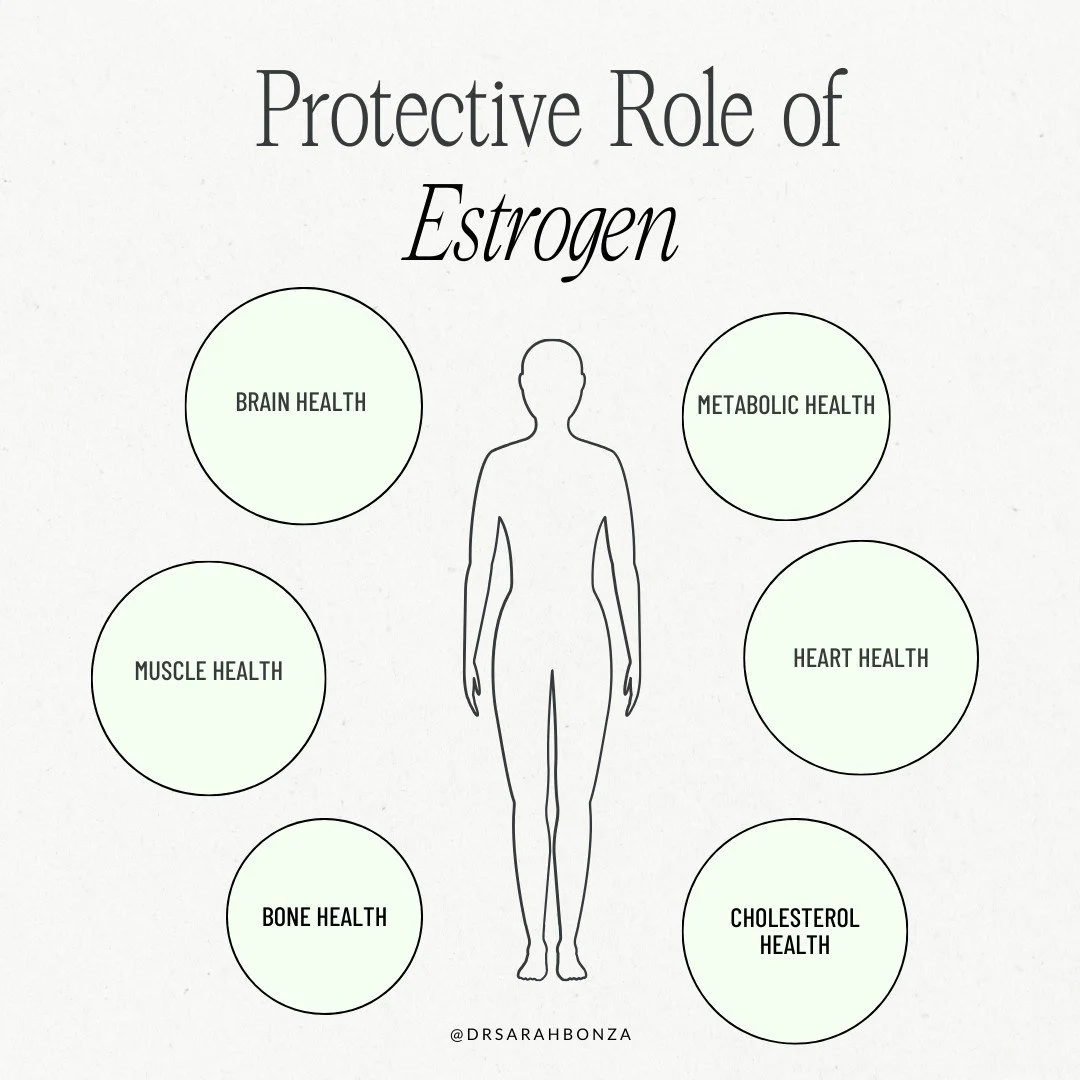
The brain contains abundant estrogen receptors in areas associated with migraine and pain processing.[2] Estrogen influences several factors in migraine pathology, including neurotransmitters and other hormones.[3] Additionally, estrogen has anti-inflammatory properties, so low estrogen levels can lead to increased inflammation, potentially contributing to migraine pain.[2]
Estrogen, Histamine, and Migraine: A Complex Interplay
A fascinating aspect of the estrogen-migraine relationship involves histamine pathways.[12,13] Estrogen upregulates histidine decarboxylase, the enzyme that converts histidine to histamine, and increases mast cell degranulation.[13,14] This process contributes to histamine sensitivity and vascular reactivity, which are common triggers for migraines.[12]
Histamine triggers the release of nitric oxide, which dilates blood vessels surrounding the brain, leading to migraine pain.[12] Furthermore, histamine can stimulate the ovaries to produce more estrogen, creating a potential feedback loop between these compounds.[12] This relationship helps explain why histamine-rich foods may exacerbate migraines in some women, particularly during periods of hormonal fluctuation.[12,15]
While estrogen stimulates mast cell activation and promotes histamine release, progesterone has the opposite effect, acting as a natural inhibitor.[15] This hormonal balance is disrupted during perimenopause, potentially contributing to increased migraine susceptibility.[15]
Estradiol Therapy for Perimenopausal Migraines: Evolving Perspectives
Traditionally, migraine with aura has been considered a relative contraindication to estrogen therapy due to concerns about increased ischemic stroke risk.[16,17] However, more nuanced approaches are emerging based on recent research and clinical experience.[4,16]
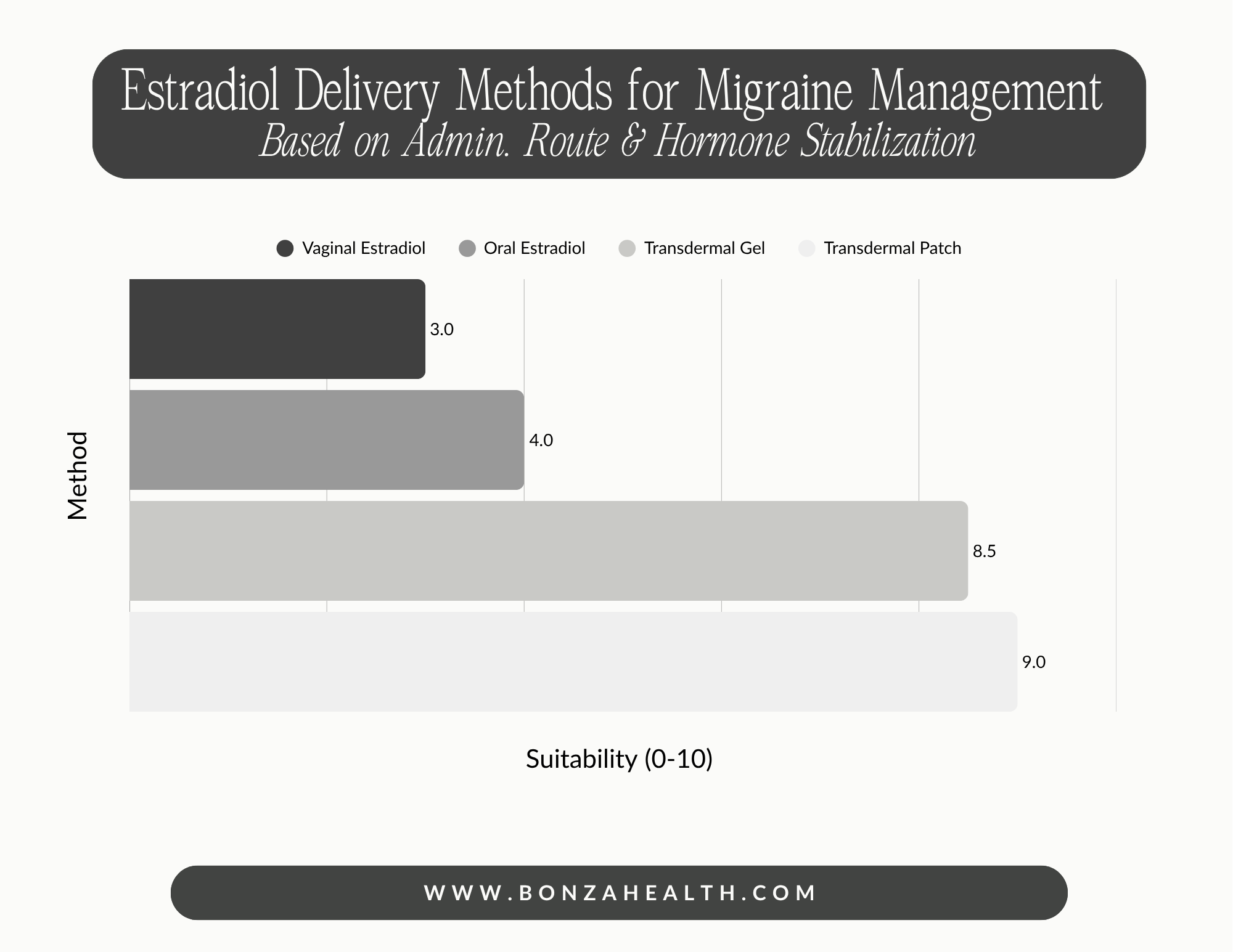
According to the North American Menopause Society (NAMS) and recent literature, transdermal estradiol in low doses may be considered for women with migraine, particularly if aura is absent and vascular risk factors are low.[4,18] Transdermal estrogen delivery avoids first-pass hepatic metabolism, potentially mitigating thrombotic risks associated with oral formulations.[4,19]
A key insight from recent research is that estrogen fluctuations—rather than stable levels—are the primary trigger for migraines during perimenopause.[1,11] Therefore, stabilizing estrogen levels through appropriate hormone therapy may be therapeutic for migraine-prone women.[1,10] This approach aligns with the estrogen withdrawal hypothesis, which has been supported by multiple studies.[1,11]

Clinical Recommendations for Estradiol Use in Perimenopausal Women with Migraine
For perimenopausal women with migraine, several evidence-based recommendations can guide estradiol therapy:
Delivery Method: Transdermal estrogen (patches, gels, or sprays) is preferred over oral formulations, as it provides more stable hormone levels and avoids fluctuations that can trigger migraines.[4,19] Transdermal delivery also bypasses first-pass hepatic metabolism, reducing thrombotic risks.[4,20]
Dosage: Use the lowest effective dose of estradiol that adequately controls vasomotor symptoms.[4,18] For transdermal estradiol, starting with patches delivering 25-50 μg/day is often recommended.[20] Some studies suggest that the 100μg patch may provide greater preventative benefit for migraineurs compared to the 50μg patch, indicating a potential estrogen threshold beneficial for migraine prevention.[19]
Regimen: Continuous rather than cyclical hormone therapy is preferred for women with migraine, as it provides more stable hormone levels.[19,20] For women with an intact uterus requiring progestogen, continuous delivery methods are recommended to minimize hormonal fluctuations.[4,19]
Progestogen Options: When progestogen is required (for women with an intact uterus), consider options that minimize migraine impact[4,19]:
Levonorgestrel intrauterine system
Transdermal norethisterone (in combined patches)
Micronized progesterone
Special Considerations for Migraine with Aura
While migraine with aura has traditionally been viewed as a contraindication to estrogen therapy, recent evidence suggests that low-dose transdermal estradiol may be considered in selected cases after careful risk assessment.[4,21]
The absolute risk of stroke remains low in healthy, non-smoking women, and ultra-low-dose formulations (≤20 μg ethinyl estradiol) do not appear to significantly increase stroke risk.[21]
Alternative Options
For women who cannot or choose not to use hormone therapy, non-hormonal options with evidence of efficacy for both vasomotor symptoms and migraine include escitalopram and venlafaxine.[4,22]
Clinical Case Perspective
As a physician who personally experiences migraine with aura, I have observed a reduction in migraine episodes since initiating estradiol therapy. This anecdotal experience aligns with emerging research suggesting that stable estrogen levels may benefit some women with migraine, even those with aura.[19,23]
The key appears to be maintaining consistent hormone levels rather than allowing the fluctuations that typically trigger attacks.[11,23]
An Individualized Approach is Needed
The relationship between perimenopause, migraine, and estradiol is complex and highly individualized.[1,10] While traditional guidelines have cautioned against estrogen therapy in women with migraine with aura, emerging evidence supports a more nuanced approach.[4,21] Transdermal estradiol, used at the lowest effective dose and in continuous regimens, may offer benefits for perimenopausal women with migraine by stabilizing hormone levels and reducing the fluctuations that trigger attacks.[19,20]
The decision to use estradiol therapy should be based on a comprehensive assessment of individual risk factors, migraine characteristics, and symptom burden.[21,23] For many women, the benefits of improved migraine control and relief from vasomotor symptoms may outweigh potential risks, particularly when using modern, low-dose transdermal formulations.[19,21]
As our understanding of the complex interplay between hormones, neurotransmitters, and vascular factors in migraine continues to evolve, treatment approaches will likely become increasingly personalized, offering new hope for women navigating the challenging terrain of perimenopause with migraine.[1,23]

References
1. https://pmc.ncbi.nlm.nih.gov/articles/PMC7948327/
2. https://www.taramd.com/post/headaches-and-migraines-in-perimenopause
3. https://www.migrainedisorders.org/perimenopause-and-menopause/
4. https://thebms.org.uk/wp-content/uploads/2022/12/06-BMS-TfC-Migraine-and-HRT-NOV2022-A.pdf
5. https://www.scienceofmigraine.com/pathophysiology/phases-of-migraine
7. https://pmc.ncbi.nlm.nih.gov/articles/PMC3134175/
9. https://www.neurology.org/doi/10.1212/wnl.0000000000006650
10. https://migrainetrust.org/migraine-and-perimenopause/
11. https://pubmed.ncbi.nlm.nih.gov/37730536/
12. https://www.mthfrsupport.com.au/2016/09/her-stamine-the-link-between-histamine-and-estrogen/
13. https://www.geneticlifehacks.com/estrogen-and-histamine/
14. https://www.ncbi.nlm.nih.gov/pmc/articles/PMC1797832/
16. https://pubmed.ncbi.nlm.nih.gov/29139115/
17. https://pubmed.ncbi.nlm.nih.gov/36752588/
18. https://www.menopause.org/docs/default-source/professional/nams-practice-pearl-migraine.pdf
19. https://www.menopause.org.au/hp/information-sheets/migraine-headaches-menopause-and-mht-hrt
20. https://pubmed.ncbi.nlm.nih.gov/10487511/
21. https://www.ccjm.org/content/84/8/631