Battling Menopausal Weight Gain: Beyond GLP-1 Agonists
Written and edited by Sarah Bonza MD, MPH, MSCP, FAAFP, DipABLM, NBC-HWC

Due to plummeting estradiol levels during menopause, visceral fat can rise from 5% to 15–20% of total body fat.
The menopausal transition brings profound hormonal shifts that often trigger stubborn weight gain, particularly the accumulation of visceral adipose tissue. As estrogen levels decline, fat redistributes from subcutaneous areas to the abdomen, increasing cardiovascular and metabolic risks.
While GLP-1 agonists like semaglutide and tirzepatide offer significant benefits, they’re not the only solutions. Let’s explore evidence-based alternatives and combinations for managing menopausal weight gain.
The Estrogen-Visceral Fat Connection
During menopause, visceral fat can rise from 5% to 15–20% of total body fat due to plummeting estradiol levels. This shift isn’t just cosmetic; it drives metabolic chaos:
Hormonal imbalance: Androgen dominance post-estrogen decline promotes fat storage.[1]
Inflammatory cascade: Visceral fat spikes CRP and leptin while suppressing adiponectin, escalating cardiovascular risks.[2]
Insulin resistance: Estrogen loss impairs glucose metabolism, creating a vicious cycle of weight gain and metabolic dysfunction.[3]
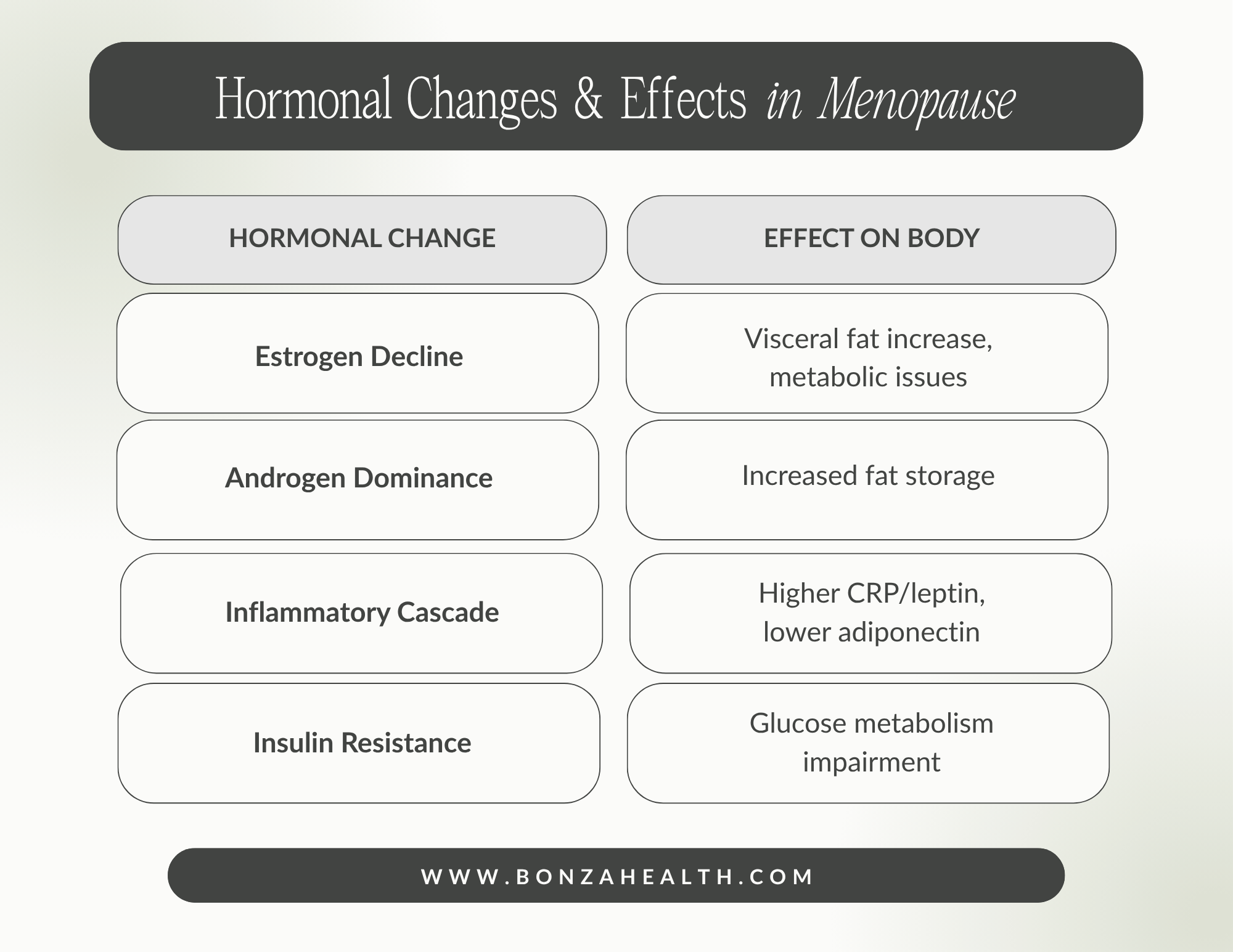
The menopausal transition brings profound hormonal shifts that often trigger stubborn weight gain, particularly the accumulation of visceral adipose tissue.
GLP-1 Agonists: Benefits and Mechanisms
These medications remain valuable tools:
Appetite regulation: They mimic GLP-1 to slow gastric emptying and enhance satiety.
Metabolic repair: They improve insulin sensitivity, countering estrogen-related glucose dysregulation.
Symptom relief: Emerging data suggest they reduce hot flashes via neurotransmitter and blood sugar stabilization.
Synergy with HRT: They combine effectively with hormone therapy for compounded benefits.[4-6]
However, alternatives exist for those seeking different approaches.
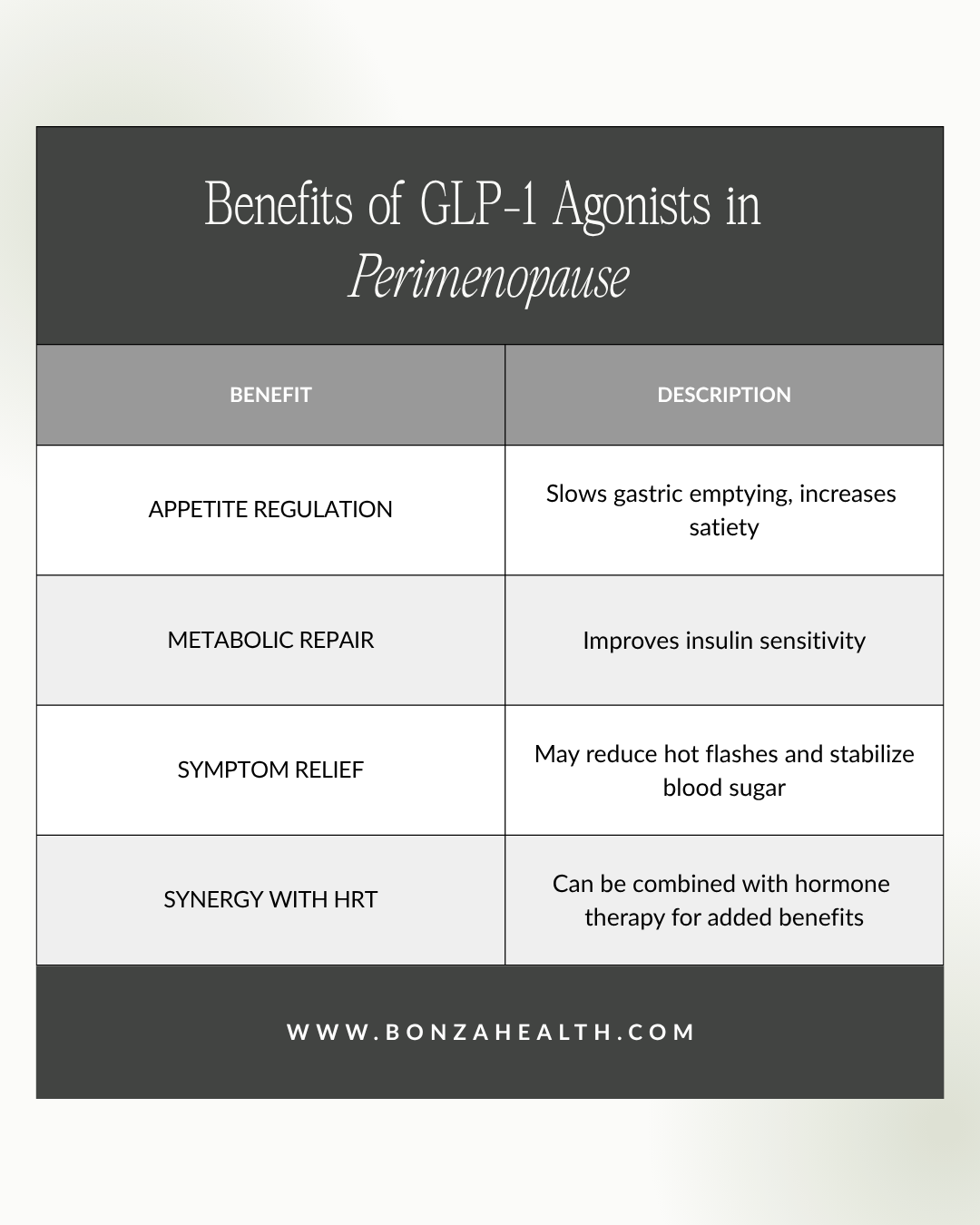
GLP-1 agonists like semaglutide and tirzepatide offer significant benefits during perimenopause, including appetite regulation, metabolic repair, symptom relief, and synergy with hormone replacement therapy.
Evidence-Based Alternatives
1. 5-Amino-1MQ: The Metabolic Enhancer
This peptide targets cellular fat storage:
Mechanism: It inhibits NNMT enzyme, boosting NAD+ and activating SIRT1 to shift metabolism from fat storage to burning.[7,8]
Benefits: Reduces visceral fat without muscle loss.
Anti-aging effects via SIRT1 activation.
Dosing: Typically 50 mg daily, cycled with off-days.
Considerations: Avoid with certain metabolic conditions; prioritize medical supervision.
2. LGD-4033: Muscle Guardian
A selective androgen receptor modulator counteracts sarcopenia-driven weight gain:
Mechanism: It binds muscle/bone androgen receptors to stimulate protein synthesis.[9-11]
Benefits: Preserves lean mass while reducing fat.
Strengthens bones, lowering osteoporosis risk.
Safety: Non-steroidal, with fewer side effects than traditional anabolics.

Alternatives to GLP-1 agonists include low-dose naltrexone.
3. Low-Dose Naltrexone: The Metabolic Modulator
Repurposed for weight management:
Evidence: In PCOS, LDN reduced BMI and improved cycles in 80% of women.
Mechanism: Immune and opioid-receptor modulation may reset metabolic pathways.[12,13]
4. Pyridoxine Combos: Enhancing GLP-1 Tolerability
Vitamin B6 pairs with GLP-1s to mitigate side effects:
Pyridoxine/Semaglutide: B6 counters nausea and aids macronutrient metabolism.
Pyridoxine/Tirzepatide: Similar benefits with dual GIP/GLP-1 agonism.[14]
5. Glycine/Sermorelin: Growth Hormone Restoration
Addresses age-related growth hormone decline:
Mechanism: Sermorelin + glycine stimulates natural growth hormone release.
Impact: Promotes muscle retention and visceral fat reduction.[8,15]
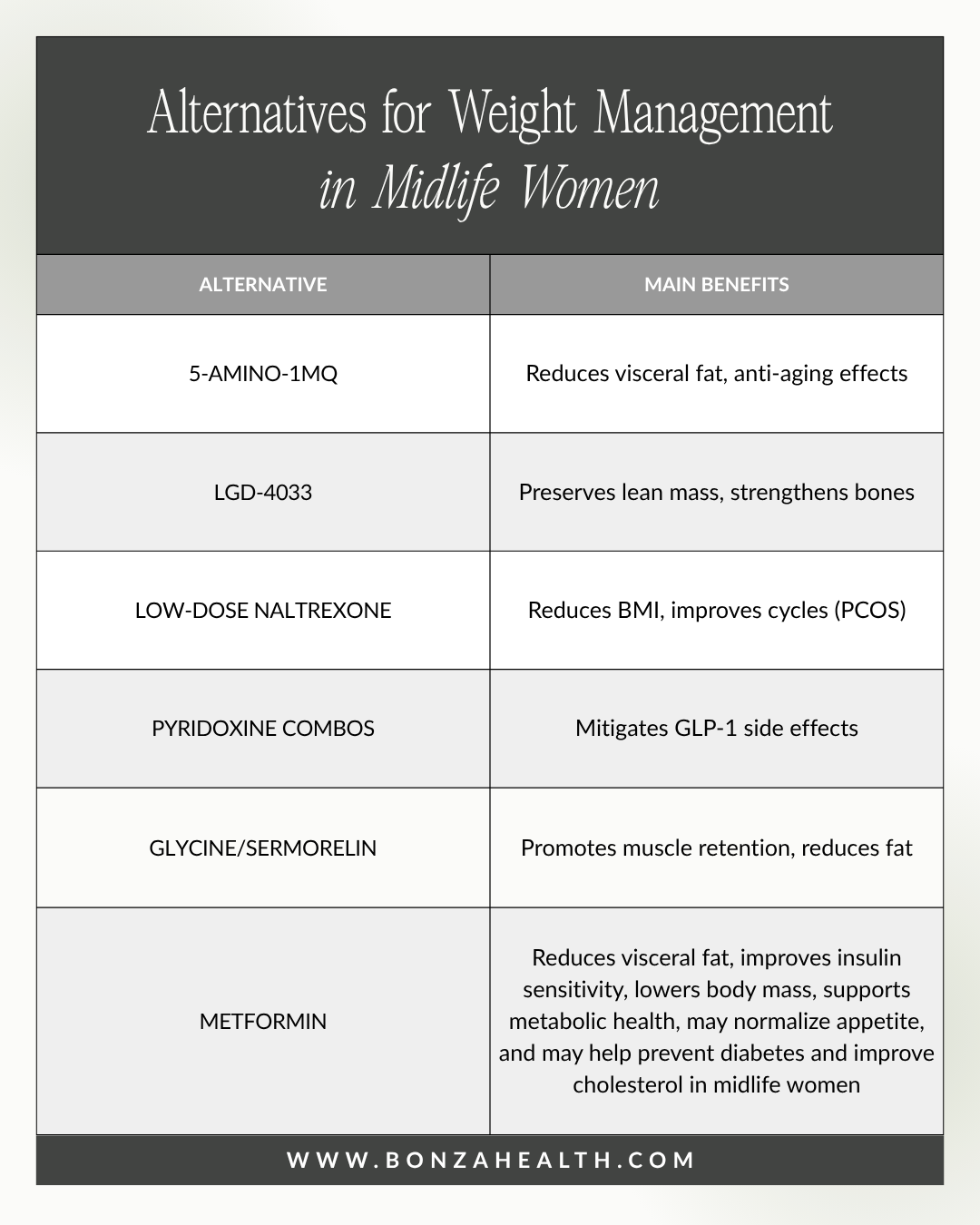
Evidence-based alternatives to GLP-1 agonists include 5-Amino-1MQ, LGD-4033, low-dose naltrexone, vitamin B6, and glycine/sermorelin.
Choosing Your Path: Key Considerations
Personalization: Match options to your metabolic profile. For androgen dominance, LGD-4033 may shine; for inflammation, 5-Amino-1MQ could excel.
Combination potential: Pair peptides like sermorelin with lifestyle changes for multiplicative effects.
Safety first: Consult a hormone-specialized clinician before using SARMs, peptides, or off-label medications.
The Bottom Line
Menopausal weight management demands a multipronged strategy.
While GLP-1 agonists offer robust benefits, alternatives like 5-Amino-1MQ, LGD-4033, and LDN provide targeted solutions for visceral fat, muscle preservation, and metabolic repair. Integrating these with plant-based nutrition, stress management, and tailored exercise can transform midlife health.

Menopausal weight management demands a multipronged strategy. Discover the 3-step system helping women reclaim their vitality in perimenopause.
References
[1] A. Kuryłowicz, “Estrogens in Adipose Tissue Physiology and Obesity-Related Dysfunction,” Biomedicines, vol. 11, no. 3. Multidisciplinary Digital Publishing Institute, p. 690, Feb. 24, 2023. https://doi.org/10.3390/biomedicines11030690
[2] S. Ko and Y. Jung, “Energy Metabolism Changes and Dysregulated Lipid Metabolism in Postmenopausal Women,” Nutrients, vol. 13, no. 12. Multidisciplinary Digital Publishing Institute, p. 4556, Dec. 20, 2021. https://doi.org/10.3390/nu13124556
[3] J. Zhu, Y. Zhou, B. Jin, and J. Shu, “Role of estrogen in the regulation of central and peripheral energy homeostasis: from a menopausal perspective,” Therapeutic Advances in Endocrinology and Metabolism, vol. 14. SAGE Publishing, Jan. 01, 2023. https://doi.org/10.1177/20420188231199359
[4] J. P. Tiano, C. R. Tate, B. Yang, R. D. DiMarchi, and F. Mauvais‐Jarvis, “Effect of targeted estrogen delivery using glucagon-like peptide-1 on insulin secretion, insulin sensitivity and glucose homeostasis,” Scientific Reports, vol. 5, no. 1, May 2015, https://doi.org/10.1038/srep10211
[5] D. J. Drucker, “Mechanisms of Action and Therapeutic Application of Glucagon-like Peptide-1,” Cell Metabolism, vol. 27, no. 4. Cell Press, p. 740, Apr. 01, 2018. https://doi.org/10.1016/j.cmet.2018.03.001
[6] G. Santulli, P. Mone, and F. Varzideh, “GLP-1 receptor agonists and SGLT2 inhibitors: new anti-aging tools?,” Future Cardiology, p. 1, Nov. 2024, https://doi.org/10.1080/14796678.2024.2433381
[7] J. Campbell, “5-Amino 1MQ: Benefits, Dosage & Side Effects.” Apr. 2025. Accessed: Jun. 29, 2025. https://jaycampbell.com/peptides/5-amino-1mq-the-body-recomposition-peptide
[8] D. H. Ryan, “New drugs for the treatment of obesity: do we need approaches to preserve muscle mass?,” Reviews in Endocrine and Metabolic Disorders. Springer Science+Business Media, May 05, 2025. https://doi.org/10.1007/s11154-025-09967-4
[9] M. Thevis et al., “Characterization of a non‐approved selective androgen receptor modulator drug candidate sold via the Internet and identification of in vitro generated phase‐I metabolites for human sports drug testing,” Rapid Communications in Mass Spectrometry, vol. 29, no. 11, p. 991, Apr. 2015, https://doi.org/10.1002/rcm.7189
[10] R. Narayanan, C. C. Coss, and J. T. Dalton, “Development of selective androgen receptor modulators (SARMs),” Molecular and Cellular Endocrinology, vol. 465. Elsevier BV, p. 134, Jun. 16, 2017. https://doi.org/10.1016/j.mce.2017.06.013
[11] Y. Rolland, C. Dray, B. Vellas, and P. de S. Barreto, “Current and investigational medications for the treatment of sarcopenia,” Metabolism, vol. 149. Elsevier BV, p. 155597, Jun. 21, 2023. https://doi.org/10.1016/j.metabol.2023.155597
[12] M. Guido, D. Romualdi, and A. Lanzone, “Role of Opioid Antagonists in the Treatment of Women with Glucoregulation Abnormalities,” Current Pharmaceutical Design, vol. 12, no. 8. Bentham Science Publishers, p. 1001, Feb. 28, 2006. https://doi.org/10.2174/138161206776055895
[13] A. Kułak-Bejda, G. Bejda, and N. Waszkiewicz, “Safety and efficacy of naltrexone for weight loss in adult patients – a systematic review,” Archives of Medical Science, vol. 17, no. 4. Termedia Publishing House, p. 940, Sep. 16, 2020. https://doi.org/10.5114/aoms.2020.96908
[14] M. H. Dawood, M. K. Abdulridha, and H. S. Qasim, “Assessing pyridoxine adjuvant therapy effects on blood glucose levels in type 2 diabetes: A randomized clinical trial,” Journal of Medicine and Life, vol. 16, no. 10, p. 1474, Oct. 2023, https://doi.org/10.25122/jml-2023-0178
[15] A. A. Rizvi and M. Rizzo, “The Emerging Role of Dual GLP-1 and GIP Receptor Agonists in Glycemic Management and Cardiovascular Risk Reduction,” Diabetes Metabolic Syndrome and Obesity. Dove Medical Press, p. 1023, Apr. 01, 2022. https://doi.org/10.2147/dmso.s351982