Creatine Supplementation During Perimenopause Mitigates Sarcopenia, the Age-Related Loss of Muscle Mass and Strength
Written and edited by Sarah Bonza MD, MPH, MSCP, FAAFP, DipABLM, NBC-HWC
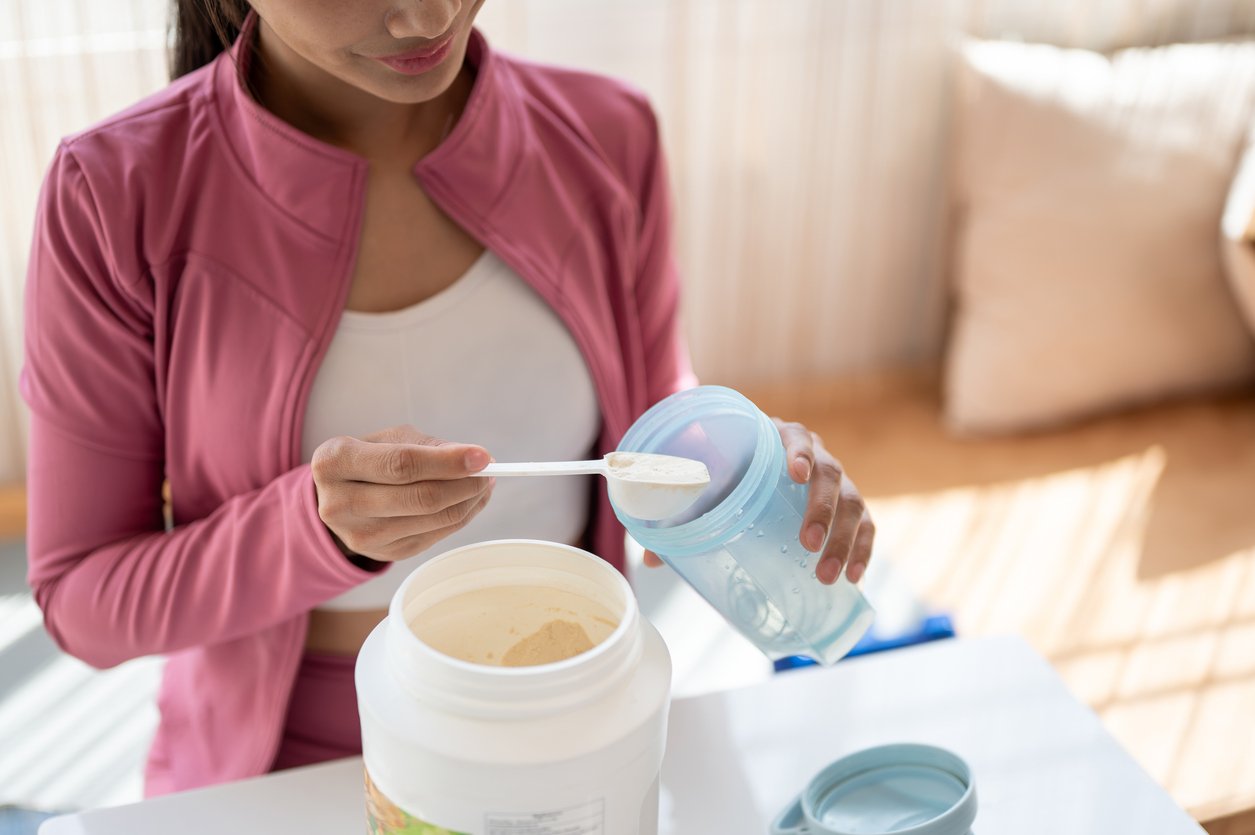
Creatine supplementation during perimenopause shows promise in mitigating sarcopenia, the age-related loss of muscle mass and strength. Emerging research highlights its synergy with resistance training to counteract estrogen-driven declines in muscle health, offering a practical strategy for preserving physical function and metabolic vitality during this transitional phase.
Hormonal Shifts and Muscle Loss in Perimenopause
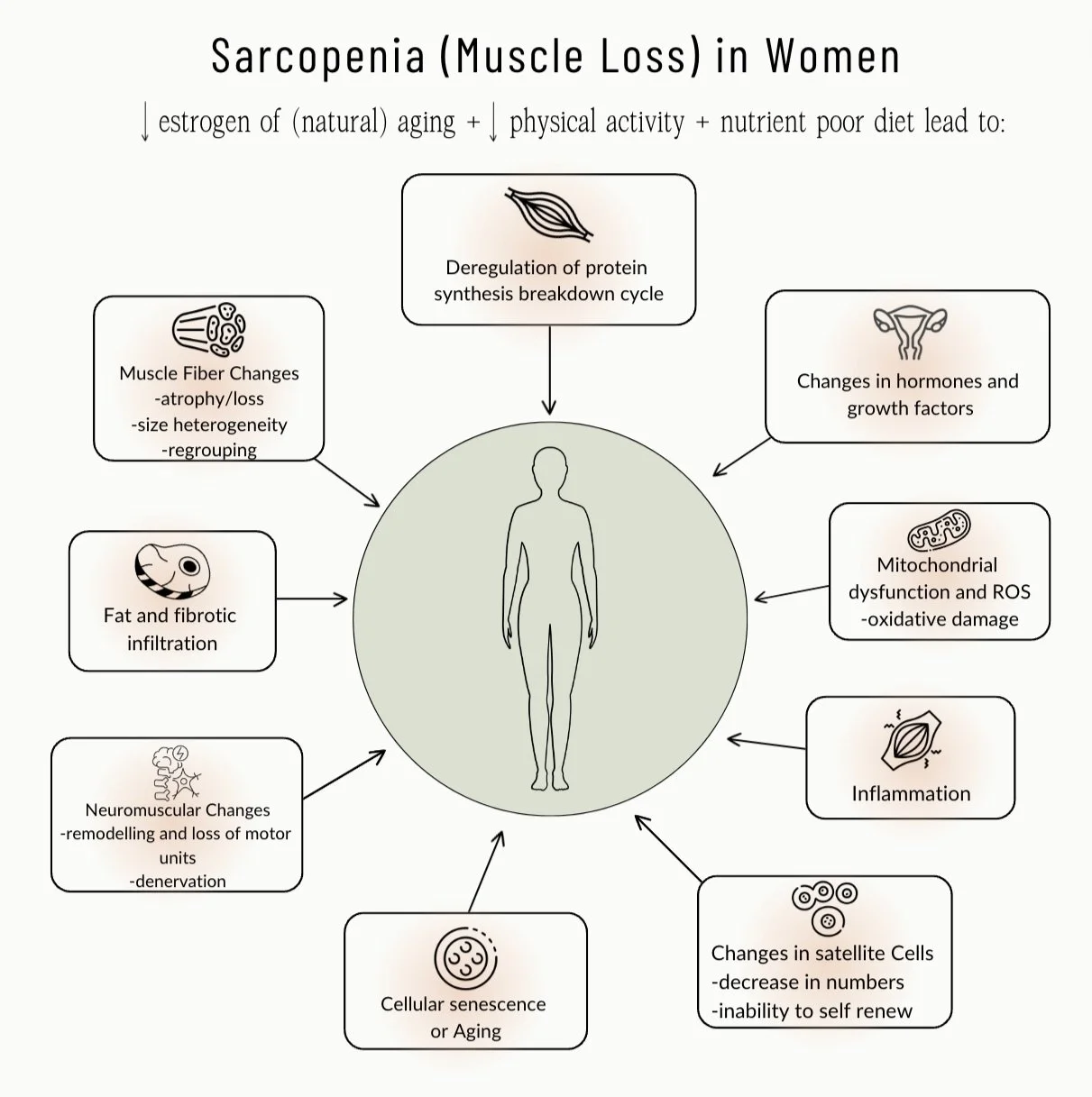
Estrogen levels decline sharply during perimenopause, reducing muscle protein synthesis and accelerating sarcopenia. Women lose approximately 3–8% of muscle mass per decade after age 30, with rates accelerating post-menopause.[1,2]
Estrogen’s anti-inflammatory effects also diminish during this time. This increases oxidative stress in the body and impairs muscle repair.[2]
The key mechanisms of muscle decline include:
How Creatine Counteracts Sarcopenia
Supplementing with creatine monohydrate enhances cellular energy production and muscle protein synthesis through three primary pathways: energy buffering, anabolic signaling, and anti-inflammatory effects.
Energy Buffering and Anabolic Signaling
Energy buffering replenishes phosphocreatine stores, delaying fatigue during resistance training.[1,5] Anabolic signaling upregulates mTOR pathways to stimulate muscle growth.[1,6]
Anti-Inflammatory and Anti-Catabolic Effects
Creatine’s anti-inflammatory effects reduce IL-6 and TNF-α, protecting against muscle catabolism. The anti-catabolic effects of creatine are even greater when paired with resistance training, as creatine improves athletic performance and reduces recovery time.[2,5,6]
Evidence-Based Dosing Strategies
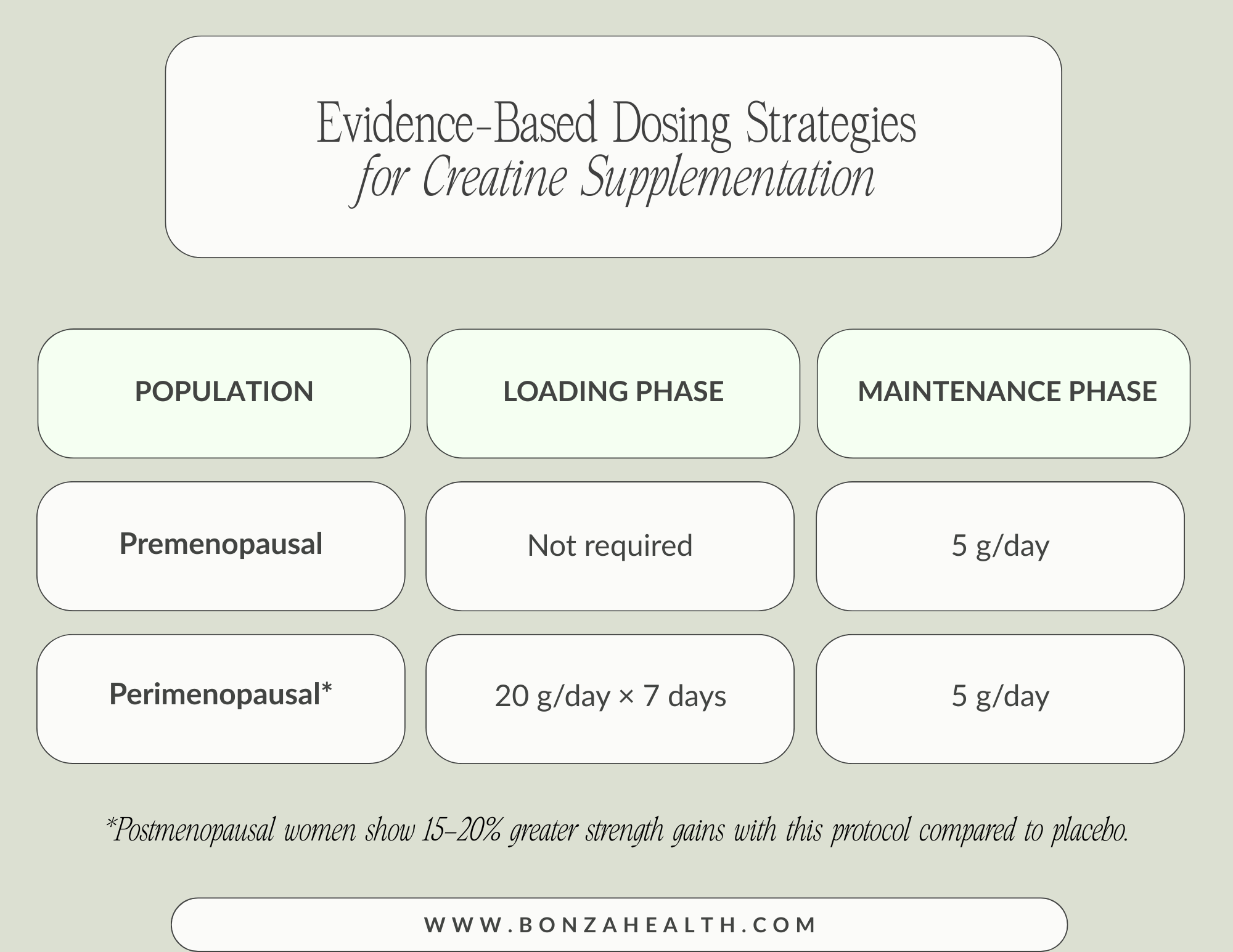
Perimenopausal women require higher creatine doses than younger populations to overcome reduced muscle uptake efficiency.[1,7] Loading doses of 20 grams daily are recommended for perimenopausal women, followed by maintenance doses of 5 grams daily.
Synergy with Resistance Training
Creatine amplifies the benefits of resistance exercise in several ways. These include:
Increased training capacity: Creatine enables 2–3 additional reps per set at 70–85% 1RM.[5,6]
Muscle fiber hypertrophy: Creatine supplementation augments type II fiber cross-sectional area by 12–26%.[1,8]
Functional outcomes: Creatine improves chair stand speed (19%) and stair-climbing power in 10-week trials.[8,9]
To reap the benefits of creatine supplementation, aim to engage in three resistance training sessions weekly at an intensity of 70–85% 1RM. Compound movements (squats, deadlifts) with progressive overload are especially beneficial.[9,10]

Creatine Implementation Tips
Consuming adequate carbohydrates and protein can help enhance creatine uptake. For maximal synergy, research suggests pairing 5 grams of creatine with 50 grams of carbohydrates post-workout[7] and combining creatine with 1.6–2.2g/kg of protein daily.[9,10]
Tracking Functional Biomarkers
As functional biomarkers, consider monitoring your waist-to-hip ratio (WHR) and heart rate variability (HRV) while supplementing with creatine.[9,11] During perimenopause, these measurements provide more accurate insights into your health than traditional measures like weight and body mass index (BMI).
Creatine Safety and Practical Considerations
Creatine demonstrates an exceptional safety profile in more than 30 years of research. Namely, there have been no adverse effects on kidney function in healthy adults.[4]
Beyond muscle maintenance and sarcopenia prevention, creatine may improve cognitive function and sleep quality in sleep-deprived perimenopausal women.[1,7] Vegan and vegetarian women often show greater responsiveness to creatine supplementation due to having lower baseline stores, making creatine a worthwhile consideration for those following a plant-based diet.[1,3]

Clinical Implications for Creatine Supplementation
While creatine isn’t a standalone solution, its integration into lifestyle medicine protocols offers a low-risk, high-reward adjuvant for sarcopenia prevention. Future research should explore long-term effects on bone density and cardiovascular outcomes in menopausal populations.
For women navigating perimenopause, creatine supplementation represents an evidence-based tool to maintain physical autonomy and metabolic health during hormonal transitions.
Need Help Finding the Best Perimenopause Supplements?

Sign up for Fullscript to shop professional-grade perimenopause supplements.
References
[1] Purely Menopause. Creatine: an evidence-based ally for menopausal women. https://www.purelymenopause.com/post/creatine-an-evidence-based-ally-for-menopausal-women
[2] Geraci A, Calvani R, Ferri E, Marzetti E, Arosio B, Cesari M. Sarcopenia and Menopause: The Role of Estradiol. Front Endocrinol (Lausanne). 2021;12:682012. Published 2021 May 19. https://doi.org/10.3389/fendo.2021.682012
[3] Smith-Ryan AE, Cabre HE, Eckerson JM, Candow DG. Creatine Supplementation in Women's Health: A Lifespan Perspective. Nutrients. 2021;13(3):877. Published 2021 Mar 8. https://doi.org/10.3390/nu13030877
[4] Hippo Education. Integrative medicine: creatine: miracle muscle booster or just hype? https://home.hippoed.com/blog/integrative-medicine-creatine-miracle-muscle-booster-or-just-hype
[5] Bonilla DA, Stout JR, Candow DG, et al. The power of creatine plus resistance training for healthy aging: enhancing physical vitality and cognitive function. Front Physiol. 2024;15:1496544. Published 2024 Dec 3. https://doi.org/10.3389/fphys.2024.1496544
[6] Feisty Menopause. Key muscle making ingredients for menopausal women. https://www.feistymenopause.com/blog/muscle-making-ingredients-menopausal-women
[7] Cristina Sutter, MHSC, RD. Creatine benefits strength in perimenopause. https://cristinasutter.ca/creatine-benefits-strength-in-perimenopause/
[8] Pontes EO, Filho JCCN, dos Santos JCC, et al. Effects of creatine supplementation in the prevention of sarcopenia. Adv Obes Weight Manag Control. 2022;12(5):143‒146. https://medcraveonline.com/AOWMC/effects-of-creatine-supplementation-in-theprevention-of-sarcopenia.html
[9] Healthline. How to manage and treat muscle loss from sarcopenia due to aging. https://www.healthline.com/nutrition/sarcopenia
[10] Tan TW, Tan HL, Hsu MF, Huang HL, Chung YC. Effect of non-pharmacological interventions on the prevention of sarcopenia in menopausal women: a systematic review and meta-analysis of randomized controlled trials. BMC Womens Health. 2023;23(1):606. Published 2023 Nov 14. https://doi.org/10.1186/s12905-023-02749-7
[11] NewWoman Health. Muscle Loss and Menopause. https://newwomanhealth.co.uk/resources/muscle-loss-and-menopause/