Under-Eye Dark Circles After 40? It Could Be Perimenopause—Here’s What Your Skin Is Telling You
Written and edited by Sarah Bonza MD, MPH, MSCP, FAAFP, DipABLM, NBC-HWC

Entering your late 30s and 40s often brings unwelcome surprises in the mirror. One common complaint is the appearance of persistent under-eye dark circles.
You might chalk it up to stress or lack of sleep. But if those shadows refuse to fade even with a good night’s rest, they could be hormonal whispers of perimenopause rather than just cosmetic nuisances. In other words, your body might be hinting at shifting estrogen levels well before you’ve stopped having periods.
Dark circles under the eyes often appear as a shadowy discoloration around the lower eyelids. In midlife women, these circles can be one of the first subtle signs of hormonal changes.
When Dark Circles Signal Hormonal Changes
Perimenopause (the transition phase before menopause) typically begins in a woman’s 40s, though it can start in the late 30s. During this time, estrogen levels fluctuate and gradually decline.
While we expect hot flashes or irregular cycles as signs of this change, many women are surprised to learn that under-eye skin changes can be an early indicator. The delicate skin around the eyes is particularly sensitive to hormonal shifts.
In fact, dermatologists note that under-eye creping (crepe-like fine lines) and wrinkles – and even dark circles and puffiness – are linked to estrogen deficiency. Instead of dismissing your under-eye circles as mere “vanity issues,” consider them a potential early clue of perimenopause.[1,2]
How Do Hormones Cause Raccoon Eyes?
The answer lies in the skin’s structure. Estrogen is one of the key hormones that keeps skin thick, elastic, and well-vascularized. When estrogen levels dip, the skin gradually becomes thinner and less firm, making the under-eye area more translucent.
As a result, the blood vessels under the eyes show through more easily, creating a bluish-purple hue that looks like a dark shadow. In simpler terms, declining estrogen can turn formerly plump, opaque under-eye skin into thinner tissue that literally lets the “dark” from underneath shine through. Combine that with hormonal water retention or slight puffiness, and you get shadows and hollows that convey a tired appearance even when you feel fine.
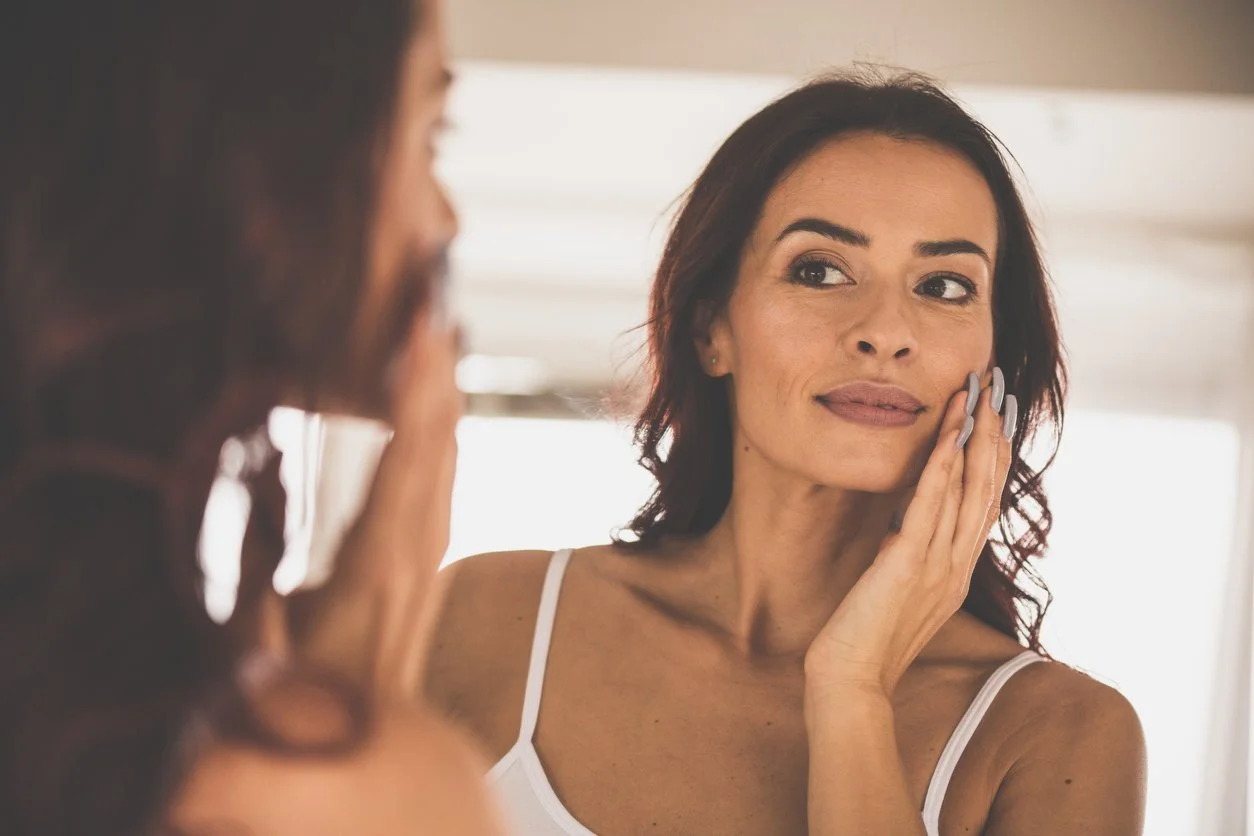
It’s important to remember that many factors contribute to dark circles, including genetics, pigmentation, allergies, and lifestyle. But hormone-driven skin changes are a significant piece of the puzzle for midlife women. If you’re nourishing your body, sleeping well, and using eye creams, yet still see stubborn circles, it may be your body nudging you to pay attention to internal changes.
Think of these under-eye shadows as a gentle prompt to listen to what your hormones are trying to tell you.
Estrogen’s Essential Role in Skin Health
Why does a drop in estrogen wreak such havoc on the skin (under the eyes and elsewhere)? Estrogen, the primary female sex hormone, has a profound influence on skin physiology.
In our younger years, ample estrogen helps skin stay thick, hydrated, and rich in collagen: all qualities that keep skin smooth and resilient. As estrogen wanes, especially in perimenopause and menopause, several changes unfold in the skin’s deeper layers:
Collagen Loss
Collagen is the protein scaffold that gives skin firmness and structure. Estrogen stimulates collagen production, so when estrogen declines, collagen levels fall.
Research shows that women can lose a striking amount of collagen with menopause, up to 30% of dermal collagen in the first five years after menopause.[1,2] After that initial plunge, collagen continues to decrease by about 2% per year if no interventions are taken. This collagen loss is a major reason skin starts to sag and wrinkle in midlife.
Thinning of the Skin
With less collagen and elastin being made, the skin’s dermal layer literally gets thinner and more fragile. In one study, skin thickness was found to decline about 1.1% per year after menopause.[1,2]
Around the eyes, this thinning has an outsized impact: the skin there was thin to begin with. Thinner skin means underlying blood vessels and hollow areas become more visible, contributing to the dark circle effect and a sunken, tired look.
Loss of Elasticity and Hydration
Estrogen also helps skin maintain its moisture and elasticity (the ability to bounce back). It boosts the production of acid mucopolysaccharides and hyaluronic acid, which keep skin hydrated, and supports healthy skin lipids.
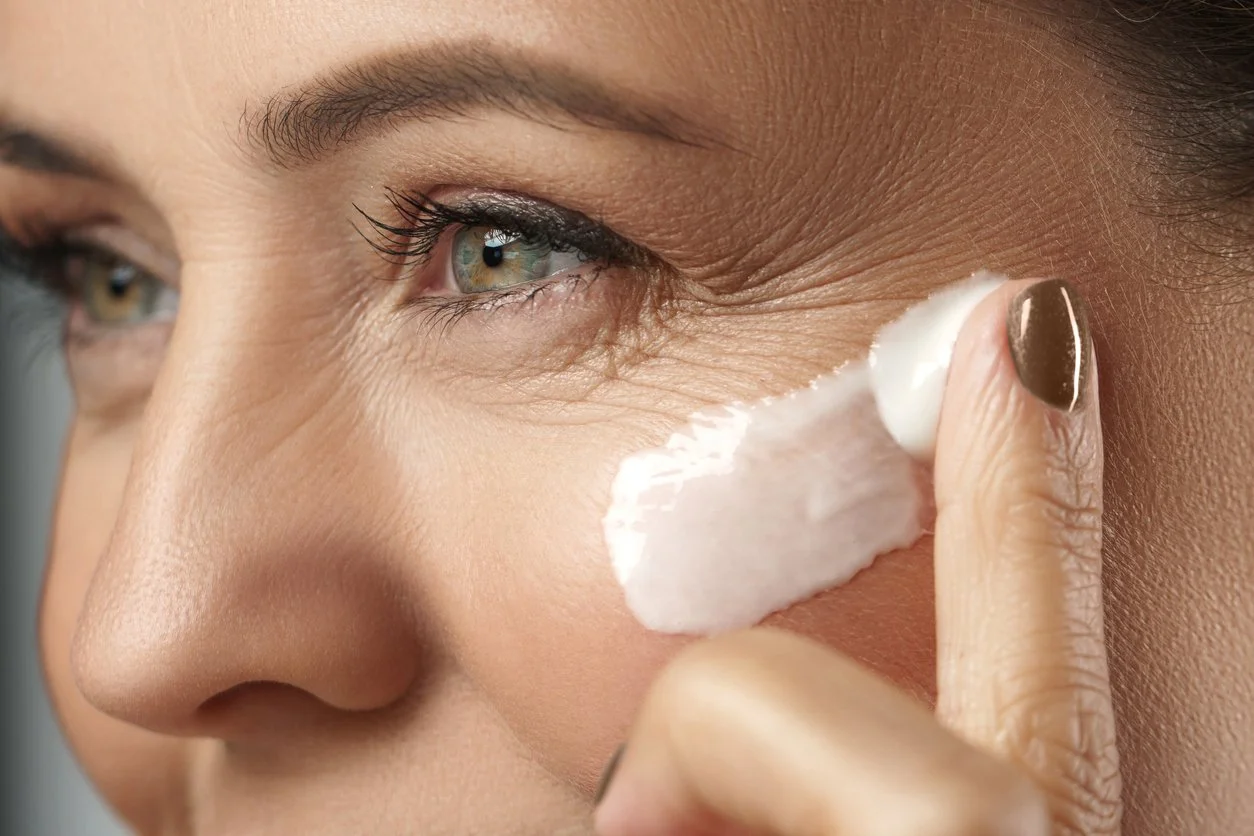
When estrogen drops, skin may become drier, duller, and less supple. You might notice more fine lines because dehydrated skin shows creases more easily. That dewy “glow” can give way to a lackluster tone. Many women describe their skin in perimenopause as suddenly “tired-looking” or less radiant than before.
All of these changes – collagen loss, thinning, dryness – converge on the under-eye area to create shadowing and a fatigued appearance. What’s fascinating is how clearly science has linked estrogen to skin quality. Multiple studies have documented that estrogen therapy can actually reverse or slow many of these changes.
For example, postmenopausal women on estrogen (hormone replacement therapy, HRT) have been found to have higher skin collagen content and greater skin thickness than women not on therapy.[3] Estrogen has demonstrated “anti-aging” effects on the skin’s properties: increasing collagen content, improving skin elasticity and hydration, and even aiding wound healing.
Estrogen Supports Skin Health
One landmark research review noted that estrogen prevents the decline of skin collagen in postmenopausal women and that both topical and systemic estrogen treatments can increase skin collagen and maintain skin thickness.[3] In practical terms, estrogen helps keep the skin’s foundation intact.
It’s also been observed that skin wrinkling is less pronounced in women on HRT, likely because estrogen’s effects on elastic fibers and collagen slow down wrinkle formation. Simply put, estrogen is a big reason our skin looked firm and moisturized in youth, and its loss is a big reason our skin ages faster around midlife.
To give an example: a small clinical trial in 2001 measured skin changes in menopausal women before and after hormone therapy. After only 6 months of treatment, the women on HRT showed significant improvements in skin hydration, elasticity, and thickness compared to before treatment.[4]

In the HRT group, skin moisture levels rose, elasticity improved, and the skin thickened: changes that were objectively measured (and also noticed by the women themselves). This aligns with other findings that estrogen can have a measurable impact on skin architecture even in the short term.
Over the longer term, benefits can be even more pronounced. Dermatologists often cite that about five years of systemic estrogen therapy can increase skin thickness by roughly 7–15% on average.[1,2] In other words, hormone therapy might help replenish some of what menopause is taking away, skin-wise. (For context, without hormones, skin thickness tends to head in the opposite direction – thinning steadily each year.)
It’s worth noting that every woman’s experience is a bit different: genetics, sun exposure, and overall health also affect skin aging. However, the overall trend is clear: declining estrogen accelerates skin aging, and adequate estrogen (either from your ovaries or via therapy) can slow down or partially reverse those changes.
That’s why the under-eye area, with its delicate skin, can act like a canary in the coal mine for hormonal shifts. The changes there often show up earlier and more visibly, alerting you to what’s happening beneath the surface.
First-Line Strategies to Brighten and Firm the Under-Eye Area
If you notice dark circles or crepey skin under your eyes in midlife, the good news is that you have a range of options to help support your skin. It’s wise to start with conservative, non-hormonal approaches to bolster the skin’s structure and appearance. Not only can these strategies improve the look of your under-eyes, but they also promote overall skin health.
Here are some first-line aesthetic and skincare options to consider:
Peptide Serums
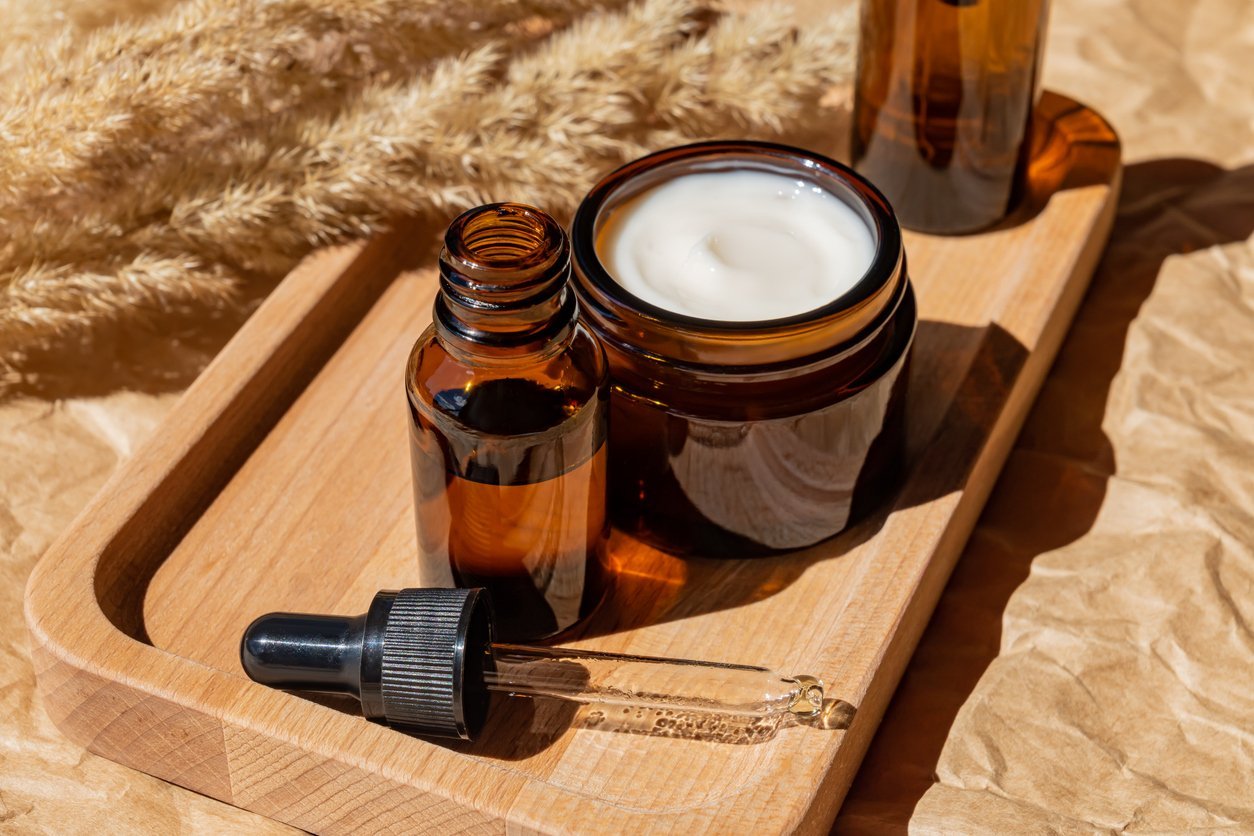
Topical serums containing peptides (short chains of amino acids) can be powerful allies for aging skin. Certain peptides act as messengers in the skin, prompting your cells to produce more collagen and elastin.
By applying a peptide serum around the eyes daily, you may gradually improve skin firmness and thickness in that area. These products essentially give your skin a signal to rebuild.
For example, signal peptides (like Matrixyl or copper peptides) have shown an ability to boost new collagen formation, which can reduce the look of fine lines. In fact, many dermatologists recommend peptide or retinol serums to midlife patients because ingredients like peptides, retinoids, and vitamin C can stimulate the skin’s natural collagen synthesis.
Consistency is key: it can take a few months of regular use to see a difference, but peptide serums are gentle and usually well-tolerated around the eyes.
Vitamin C and Collagen Supplements
Nutrients play an important role in skin health. Vitamin C is a superstar antioxidant and a co-factor in collagen production; your body literally cannot effectively build new collagen without enough vitamin C. Using a vitamin C serum in the morning can brighten the under-eye area (by fading pigmentation) and support collagen maintenance in the skin.
Some women also consider oral collagen peptide supplements to improve skin quality from the inside out. Collagen supplements have gained popularity for skin (and joint) health, and while the scientific evidence is still emerging, early research is somewhat promising.

A few randomized studies have found that ingesting collagen peptides may lead to modest improvements in skin hydration and elasticity over 8–12 weeks. However, experts caution that the data is not yet conclusive. Many studies are small or funded by supplement companies.
The bottom line: Vitamin C is undeniably important (get it from a healthy diet and/or skincare), and collagen supplements might give your skin a helpful nudge.
If you choose to try collagen supplements, look for a reputable brand and keep expectations realistic. They are generally safe, but think of them as a bonus to a healthy diet, not a magic cure. Hydration and nutrition (adequate protein, healthy fats, antioxidants) will also provide the building blocks your skin needs to look its best.

Hydrating Eye Creams and Moisturizers
Never underestimate the power of a good moisturizer. Since estrogen loss often leaves skin drier and duller, replenishing moisture is critical. A rich eye cream with ingredients like hyaluronic acid, ceramides, or glycerin can plump up the skin by boosting its water content. This instantly makes the under-eye area look smoother and less sunken.
Fine lines become less apparent when the skin is well-hydrated, and added volume from moisture can reduce the shadowing effect of hollows. You might also look for eye creams with caffeine or niacinamide; caffeine can temporarily constrict blood vessels (to reduce bluish hue and puffiness), and niacinamide can strengthen the skin barrier and even out skin tone over time.
The bottom line: Apply a moisturizer to the under-eye area morning and night. Well-moisturized skin will both feel better and appear more radiant.
Remember, during perimenopause, your skin is losing some of its ability to hold water (estrogen helped with that). Giving it extra hydration is like refilling its well.

Color-Correcting Concealers
For a quick cosmetic fix, the right makeup can work wonders. Color-correcting concealers are formulated to neutralize the specific hues of dark circles.
Most under-eye circles have a bluish-purple or gray tone (from underlying vessels or pigment). By using a peach or salmon-toned corrector (for light to medium skin) or an orange/red-toned corrector (for deeper skin tones), you can counteract those cool dark hues.
After dabbing on a thin layer of corrector, you apply your regular flesh-toned concealer on top. The result is that the darkness is cancelled out, and you won’t have to apply as much thick concealer (which can cake or settle into lines). This technique is a favorite of professional makeup artists for creating a bright-eyed look.
While concealer doesn’t treat the cause of dark circles, it certainly boosts your confidence on those days you need to look more rested. Think of it as camouflage: it’s okay to give yourself that visual pick-me-up while you work on the long-term skin improvements.
Tip: use a creamy, hydrating concealer formula (matte or drying ones can emphasize creases) and consider setting it lightly with translucent powder to prevent creasing.

Don’t Skip the Basics
Alongside these strategies, don’t forget the basic pillars of skin health:
A good sunscreen (to prevent UV from worsening collagen loss and pigmentation).
Adequate sleep.
Stress management.
Not smoking.
Since sun damage can accentuate under-eye pigment and break down collagen faster, daily SPF, sunglasses, and hats are your friends. And yes, lack of sleep will make any under-eye problem look worse (since poor sleep can lead to puffy eyes and cortisol changes that impact skin).
Managing stress and getting rest where you can will complement the skincare steps above. Think of it as an all-around support system for your skin.

When to Consider Hormone Therapy for Skin (and Beyond)
You might be wondering at this point: if estrogen is so beneficial for the skin, should I start hormone therapy just to help my skin? The answer for most women is no, not just for skin alone.
Medical experts do not recommend starting systemic estrogen solely as a beauty treatment. However, there are situations where hormone therapy (HT) can be appropriate for your overall health and quality of life, and it may bring skin benefits as a welcome side effect.
Hormone therapy – whether in the form of estrogen pills, patches, gels, or other formulations (typically combined with progesterone if you still have a uterus) – is primarily intended to relieve significant menopausal symptoms and to protect long-term health in certain cases.
If you are experiencing moderate to severe symptoms that interfere with daily life, it’s worth discussing HT with your healthcare provider. Common symptoms of perimenopause include hot flashes, night sweats, sleep disturbances, mood changes, and vaginal dryness.
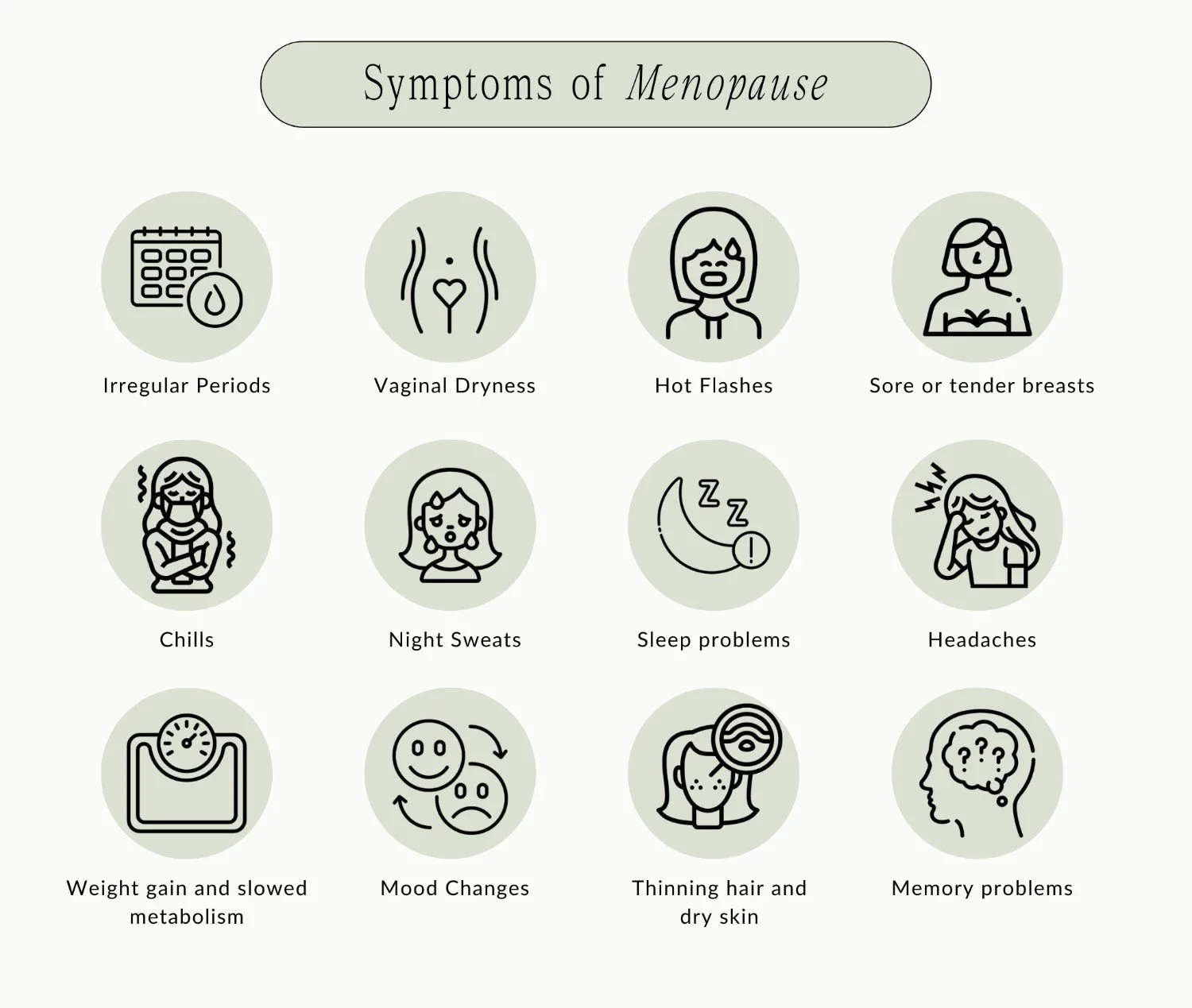
Systemic estrogen can alleviate many of these issues, and in doing so, it also helps address the underlying estrogen deficiency that affects your skin. In fact, many of the skin changes we’ve discussed (thinning, dryness, loss of elasticity) are among the variety of changes associated with declining estrogen, many of which can be improved by estrogen replacement.
It’s encouraging to know that restoring estrogen levels through HT can help rebuild skin collagen to a degree. As noted earlier, one of the bonus benefits of properly prescribed HT is often improved skin thickness, hydration, and elasticity, translating to a fresher appearance.
HRT won’t turn back time or replace your skincare routine, but women on hormone therapy often notice their skin is not aging as rapidly: they might have fewer new wrinkles, improved firmness, and even faster wound healing. There’s an overall support for skin structure that comes from correcting the underlying hormonal deficit.
Should Every Woman Consider Hormone Therapy?
The decision to use hormone therapy must take into account your personal risk factors (such as history of breast cancer, blood clots, heart disease risk, etc.), age, and how far into menopause you are. Current guidelines suggest using the lowest effective dose for the shortest duration necessary to manage symptoms, and starting HT earlier in menopause rather than later (for safety and maximum benefit).
The primary goals of HT are relief of menopausal symptoms and prevention of issues like osteoporosis. Any skin benefits are secondary.
If you have bothersome symptoms and your doctor agrees you’re a good candidate, then HT might improve your well-being and give your skin a boost. But if you’re not having significant symptoms or cannot take hormones for medical reasons, don’t worry: you can still maintain healthy skin with the topical and lifestyle measures discussed above.
Alternatives to Systemic Hormones
For some women who cannot use systemic hormones, there are other avenues to explore under medical guidance. Topical estrogen creams (applied to the skin) have been studied and shown in small trials to increase skin thickness and collagen in the applied areas.[3] These are not widely used in practice for anti-aging, and more research is needed to fully establish their safety and efficacy.
Phytoestrogens (plant-derived estrogens, like soy isoflavones) are another area of interest. Some skincare products include them to try to mimic estrogen’s effects on skin. The evidence on phytoestrogen creams or supplements is mixed, and they tend to have milder effects than real estrogen.
Always discuss with a doctor before using any hormone-related product, even over-the-counter “natural” ones, especially if you have health conditions.

Hormone Therapy is One Piece of the Puzzle
In short, consider hormone therapy as one piece of the puzzle. It’s most appropriate when there is a broader indication for it, not purely because you want to erase a few wrinkles.
But if you do go on HT for the right reasons (e.g., you’re in perimenopause or menopause with disruptive symptoms, or you need bone protection), it’s okay to quietly celebrate the skin perks that come with it!
Navigating Midlife Skin Changes with Confidence
Under-eye dark circles…sagging jowls…dull “menopausal” skin. None of these are fun changes, but they are extremely common and nothing to be ashamed of.
As estrogen ebbs, you might also notice other shifts in your face: maybe a bit of loosening along the jawline or neck, more pronounced fine lines on the forehead or around the mouth, or an overall loss of that youthful plumpness.
The drop in collagen and thickness we discussed doesn’t just affect the eyes: it can lead to skin laxity (sagging) and wrinkling across the face.[1] Many women report that their complexion becomes more dull or uneven, sometimes with new brown spots emerging (due to years of sun plus hormonal changes). You might find your favorite makeup or skincare routine isn’t delivering the same results, which can be disheartening.

It’s important to approach these changes from a place of knowledge and self-care. Feeling upset about wrinkles or dark circles is completely understandable: after all, our face is so tied to our identity. But try to reframe the narrative: these visible signs are signals of a life transition.
Just as gray hairs might signal wisdom (and changing biology), those subtle shifts in your skin are telling you that your body is entering a new phase. Listening to those signals can empower you to take steps that improve not just your appearance, but your health and comfort.
If certain aging changes truly bother you, you have every right to explore solutions, whether it’s high-quality skincare, non-invasive treatments (like laser therapy, microneedling, or radiofrequency skin tightening), or aesthetic procedures (like fillers for volume loss, for example). Many dermatologists and cosmetic specialists have tools that can soften the impact of sagging or pigmentation.

The key is to approach any treatment as an informed choice for yourself, not out of pressure to meet an unrealistic beauty standard. In this day and age, seeking a bit of cosmetic help is common and can be done in a way that still looks very natural.
For instance, if deep hollows under your eyes are a concern, a dermatologist might suggest a light filler injection to restore lost volume; if brown spots are an issue, maybe a chemical peel or laser to even out tone. These are personal decisions, and there is no “right” or “wrong” except what makes you feel like your best self.
Above all, remember that aging is not a failure or something you have to “fix.” It’s a normal process that can be supported and navigated. The goal isn’t to chase perpetual youth or compare yourself to airbrushed images, but rather to take care of your body (and skin) in a way that makes you feel healthy and confident.
Sometimes, just understanding why these changes are happening (oh, it’s the hormones!) can provide a huge sense of relief and validation. You’re not imagining things, and you’re not alone: millions of women experience the same shifts around the same age.
In Conclusion
If you catch a glimpse of dark circles or new fine lines in the mirror, take it as a gentle nudge. Maybe it’s time to show your skin some extra love or check in on your hormonal health. Maybe it’s an invitation to upgrade your skincare routine, or to talk with your doctor about perimenopause.
By viewing these signs as your body’s way of communicating, you turn a source of insecurity into an opportunity for deeper self-care. In the end, caring for your midlife skin isn’t about vanity: it’s about tuning in to your body’s needs and embracing the changes with wisdom and grace.
After all, your skin has been with you through every stage of life, and it’s simply entering its next chapter. With knowledge, tools, and self-compassion, you can make that chapter a vibrant one.

References
[1] Biopelle. Understanding and addressing estrogen deficient skin. https://biopelle.com/latest-blog-posts/what-is-estrogen-deficient-skin/
[2] Rzepecki AK, et al. Estrogen-deficient skin: The role of topical therapy. Int J Womens Dermatol. 2019;5(2):85-90. https://doi.org/10.1016/j.ijwd.2019.01.001
[3] Shah MG, Maibach HI. Estrogen and skin. An overview. Am J Clin Dermatol. 2001;2(3):143-150. https://doi.org/10.2165/00128071-200102030-00003
[4] Sator PG, et al. The influence of hormone replacement therapy on skin ageing: a pilot study. Maturitas. 2001;39(1):43-55. https://doi.org/10.1016/s0378-5122(00)00225-5