Written and edited by Sarah Bonza, MD, MPH, FAAFP, MSCP, DipABLM, NBC-HWC | Bonza Health
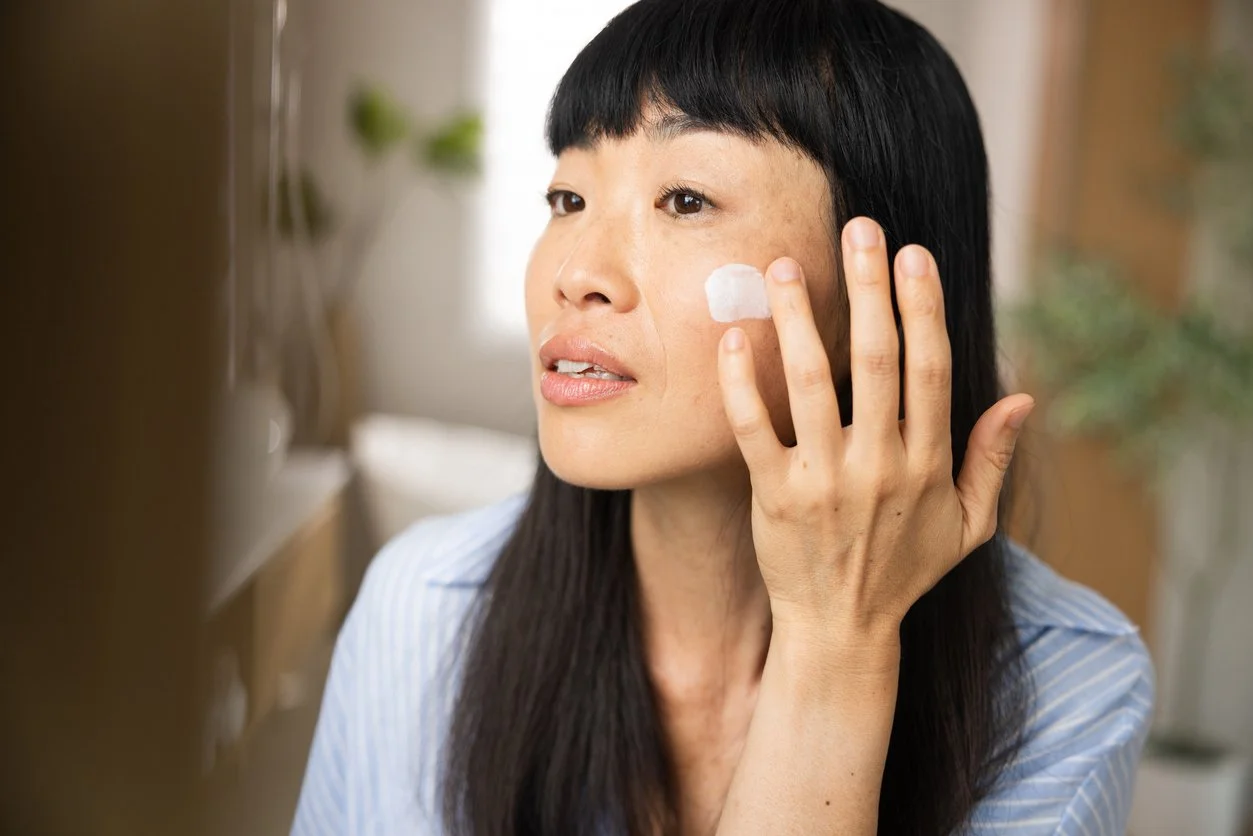
Is estradiol on your face worth it? Let’s look at the hype vs. the evidence
At a recent women’s health medical conference, I discovered something that stirred my curiosity. Between sessions, at dinners, and in hallway conversations, nearly every physician I spoke with was using estradiol on their face. Gynecologists, dermatologists, internists, menopause specialists: the "estrogen face cream" trend wasn't just on social media. It was happening among the people who write the prescriptions.
My first reaction was curiosity. My second was the one every physician is trained to have: Where's the evidence?
When doctors adopt something for themselves, it's worth paying attention. But it's not the same as proof. So I went back to the research to answer the question my patients keep asking me: Is applying estradiol to your face beneficial, or is it hype?
The honest answer is that it's both. Here's how to tell the difference.
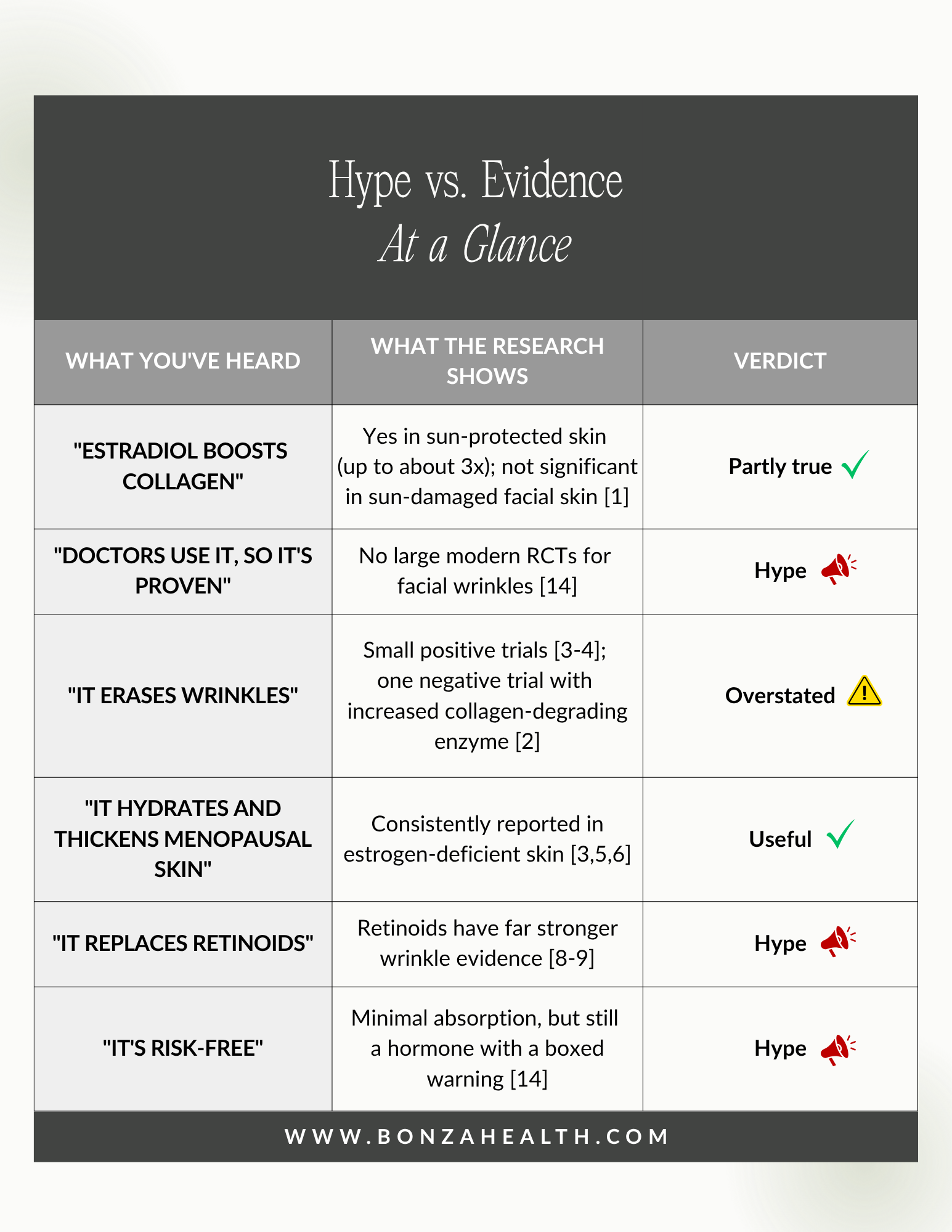
Table 1. Hype vs. Evidence at a Glance
Why Doctors Are Excited About Estrogen for Skin
The enthusiasm isn't coming from nowhere. Your skin is packed with estrogen receptors. When estrogen binds to fibroblasts, the cells that make collagen, it signals them to produce more type I and type III collagen and elastic fibers while limiting excessive breakdown of the skin's support structure [5-7].
When estrogen drops during perimenopause and menopause, collagen drops with it. Reviews of the research estimate women can lose up to roughly 30% of their dermal collagen in the first five years after menopause [5-6]. That's why so many women feel like their skin changed almost overnight: thinner, drier, crepier, and less firm.
So the logic is appealing. If losing estrogen causes collagen loss, putting estrogen back on the skin should help. In some situations, it does. Now let's separate the hype from the useful information.

Physician enthusiasm is a signal, not a study.
Hype #1: "Estradiol builds collagen in everyone's face"
The truth: It depends heavily on how much sun damage your skin has.
In a carefully controlled biopsy study, topical estradiol increased markers of new collagen production up to nearly threefold in the sun-protected skin of postmenopausal women. But in sun-damaged forearm and facial skin, it produced no significant increase [1].
Years of UV exposure appear to change how skin cells respond, making photoaged skin far less responsive to estrogen's collagen-building signal [1,10]. Since your face is the most sun-exposed skin on your body, sun protection is the single most important caveat in the estrogen skin care conversation, and the one almost nobody on social media mentions.

The effects of estrogen face cream may depend on how much sun damage your skin has
Hype #2: "If doctors are using it, it must be proven"
The truth: Physician enthusiasm is a signal, not a study.
I understand why my colleagues are trying it. Many of us are in perimenopause or menopause ourselves. We can easily access prescriptions. We understand the biology. And several small studies are encouraging.
But when I looked for large, modern randomized controlled trials proving that estradiol on the face prevents or reverses wrinkles, I didn't find them. A 2026 review of perimenopausal facial aging notes that much of the recent literature on this topic is review-based, observational, or preclinical [14]. A room full of doctors using something tells us it's promising and easy to try. It doesn't tell us it works for every face.

If losing estrogen causes collagen loss, putting estrogen back on the skin should help. And in some situations, it does
Hype #3: "Estrogen cream erases wrinkles"
The truth: The wrinkle evidence is mixed, and one trial raised a red flag.
There is positive data. In a 6-month study, 0.01% estradiol and 0.3% estriol creams improved wrinkle depth, elasticity, and moisture, with increased collagen seen on biopsy [3]. A 24-week randomized, double-blind trial in postmenopausal women found that topical estradiol significantly increased type I and type III collagen in facial skin [4].
But a 24-week vehicle-controlled trial of topical estrogen (1% estrone) on sun-exposed facial skin found no meaningful improvement in wrinkles or elasticity. The treated skin also showed roughly a tenfold increase in MMP-1, an enzyme that breaks down collagen [2].
That doesn't mean estrogen damages everyone's skin. But it does mean "estrogen erases wrinkles" is an overstatement.

Some research suggests that estrogen cream reduces wrinkles, but the evidence is mixed
Hype #4: "It replaces your retinoid"
The truth: Retinoids have far stronger evidence for facial wrinkles.
Retinoids like tretinoin have been shown to restore collagen formation in photodamaged skin since a landmark 1993 New England Journal of Medicine study [8]. They build collagen and block the enzymes that destroy it [10], [11]. A 2025 network meta-analysis of 23 randomized trials with nearly 4,000 participants confirmed that tretinoin, retinol, and isotretinoin significantly improve fine wrinkles [9]. Tretinoin and tazarotene are FDA-approved for photoaging. Topical estradiol is not.
If you swap your retinoid for estrogen, you may be trading your best-proven treatment for a less-proven one.
Compared to estrogen face cream, retinoids have far stronger evidence for facial wrinkles
Hype #5: "It's just a face cream, so there's no risk"
The truth: It's a prescription hormone, and it deserves respect.
Low-dose facial estrogen appears to have minimal systemic absorption, but estrogen products still carry the hormone-therapy class boxed warning [14]. Anyone with a personal or family history of breast or uterine cancer, blood clots, stroke, liver disease, or unexplained vaginal bleeding should talk with their doctor before using it. It's also important not to "borrow" vaginal estrogen cream for your face without medical guidance, since dosing and formulation matter.
Estrogen face cream is still a prescription hormone, and it deserves respect
What Is Useful: Who May Benefit
When you strip away the hype, topical estradiol looks most promising for women whose skin changes are driven mainly by estrogen deficiency rather than sun damage. The question isn't just "Should I use estrogen on my face?" It's "What's causing my skin changes?"
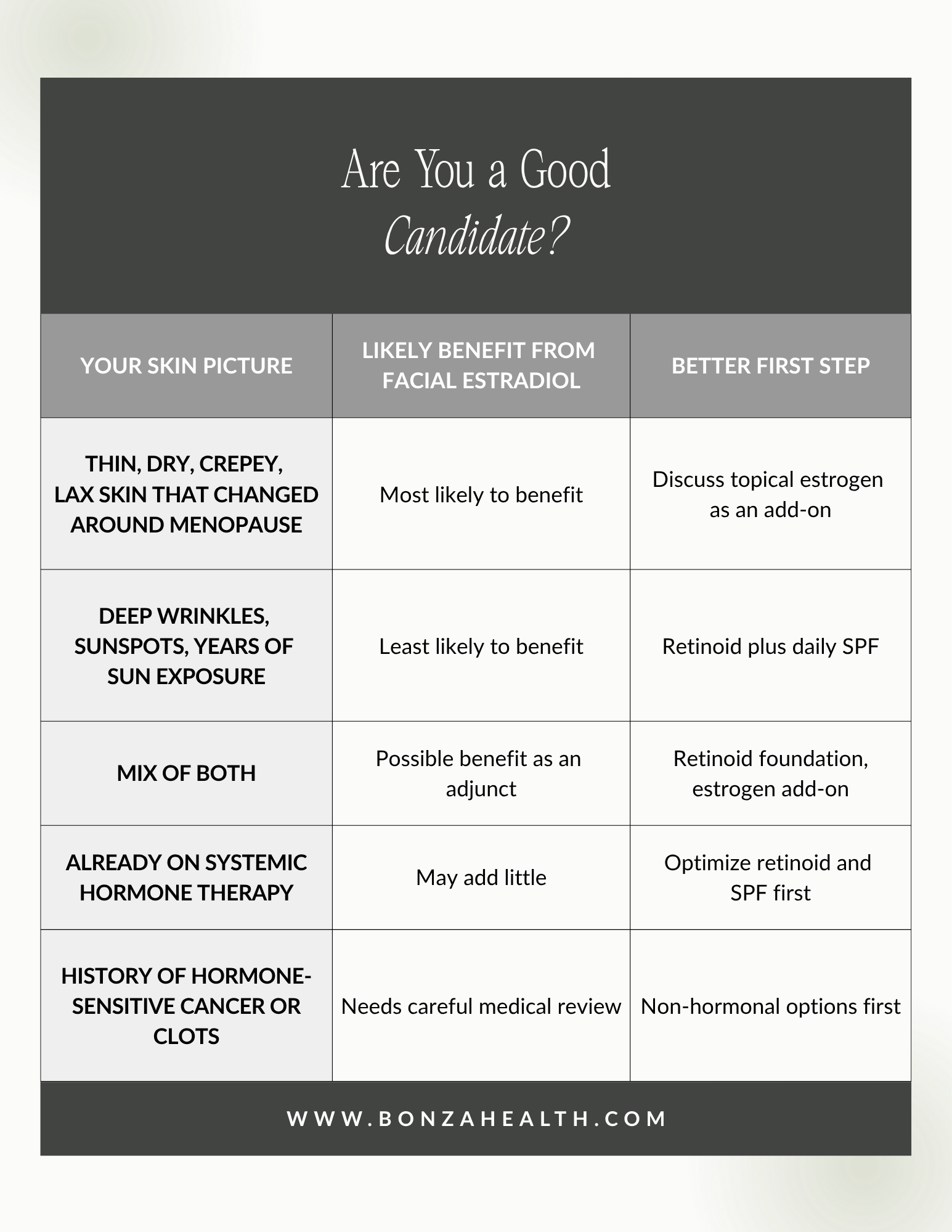
Table 2. Are You a Good Candidate?
What About Using Estradiol With a Retinoid?
This may be the most useful strategy, even though it hasn't been formally proven. No randomized trial has tested a retinoid plus topical estrogen against either one alone. But the two work on different pathways: retinoids repair UV damage, while estrogen addresses the hormonal driver of collagen loss [6,11]. One recent review suggests estrogen may work synergistically with retinoid-driven collagen repair [10].
The closest data we have paired 0.01% estradiol with 15% glycolic acid, an exfoliating acid rather than a retinoid. The combination thickened skin by 38%, compared with 27% for glycolic acid alone and 23% for estradiol alone [12].
If you and your clinician decide to combine them, a common approach is to separate them [10,14]:
Morning: gentle cleanser, prescribed topical estrogen, moisturizer, broad-spectrum SPF 30+.
Evening: gentle cleanser, pea-sized retinoid (start 2 to 3 nights per week), moisturizer.
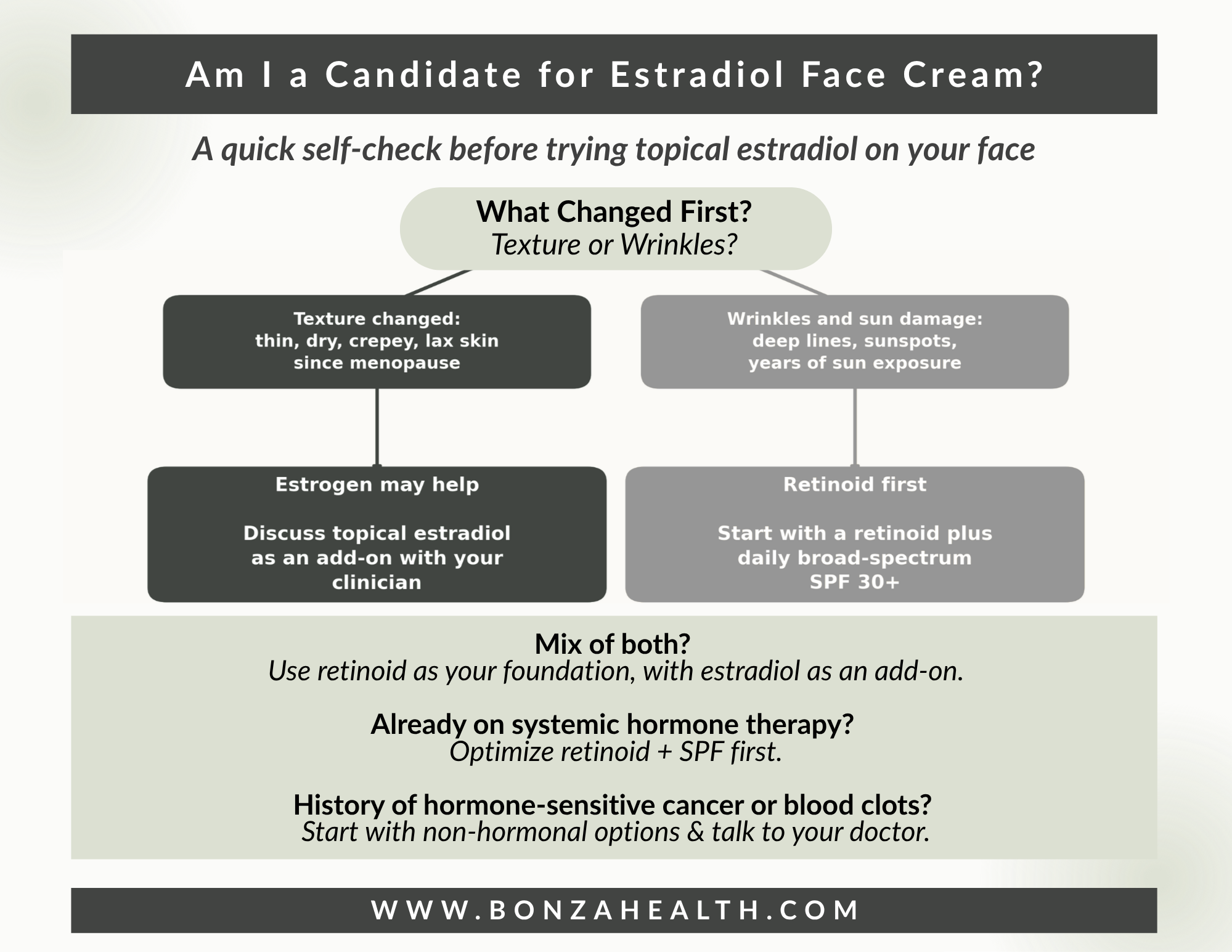
Are you a candidate for estradiol face cream?
How to Try It Wisely
If you're curious about joining the physicians, start with a medical evaluation of your health history. Use a prescribed, face-appropriate low dose rather than improvising with another product. Protect your skin with sunscreen every single day, since UV damage appears to blunt estrogen's collagen effect [1-2]. Take standardized photos in the same lighting before you start, and give it three to six months, since most studies measured results at 12 to 24 weeks [2-4].
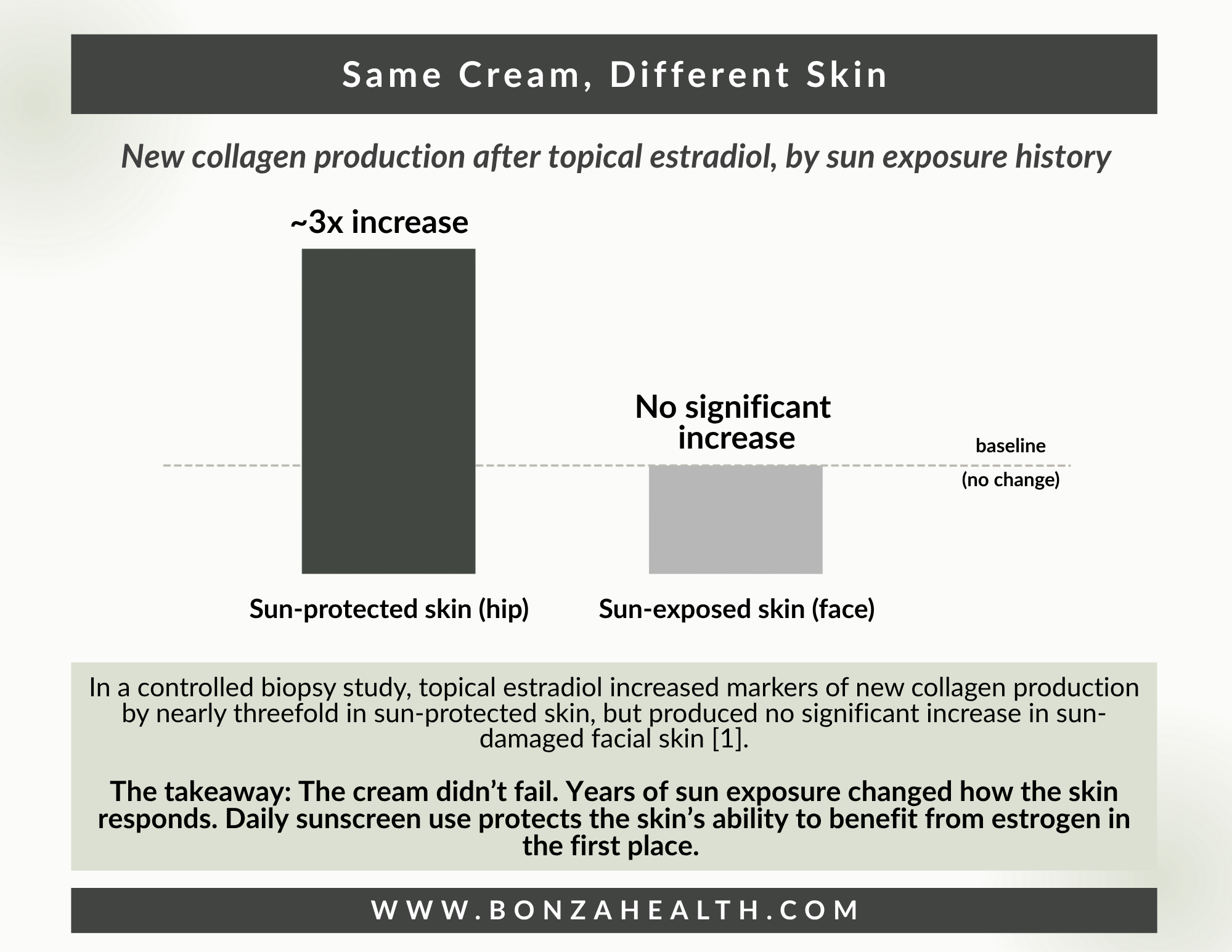
Daily sunscreen use protects the skin’s ability to benefit from estrogen
The Bottom Line
The doctors at that conference aren't wrong to be interested. Topical estradiol has real biological logic and some encouraging data, especially for thin, dry, estrogen-deficient skin. But it isn't a wrinkle eraser, it isn't a replacement for retinoids, and it isn't risk-free.
The approach I recommend is this: retinoid as your foundation, sunscreen as your protection, and estradiol as a thoughtful add-on for the right candidate.

For women in Ohio, you may book a consultation with Dr. Sarah Bonza at Bonza Health to learn more.
References
[1] L. Rittié, S. Kang, J. J. Voorhees, and G. J. Fisher, "Induction of collagen by estradiol: Difference between sun-protected and photodamaged human skin in vivo," Arch. Dermatol., vol. 144, no. 9, pp. 1129-1140, Sep. 2008. https://doi.org/10.1001/archderm.144.9.1129
[2] H. S. Yoon, S. R. Lee, and J. H. Chung, "Long-term topical oestrogen treatment of sun-exposed facial skin in post-menopausal women does not improve facial wrinkles or skin elasticity, but induces matrix metalloproteinase-1 expression," Acta Derm. Venereol., vol. 94, no. 1, pp. 4-8, 2014. https://doi.org/10.2340/00015555-1614
[3] J. B. Schmidt, M. Binder, G. Demschik, C. Bieglmayer, and A. Reiner, "Treatment of skin aging with topical estrogens," Int. J. Dermatol., vol. 35, no. 9, pp. 669-674, Sep. 1996. https://doi.org/10.1111/j.1365-4362.1996.tb03701.x
[4] L. A. Silva et al., "Collagen concentration on the facial skin of postmenopausal women after topical treatment with estradiol and genistein: A randomized double-blind controlled trial," Gynecol. Endocrinol., vol. 33, no. 11, pp. 845-848, 2017. https://doi.org/10.1080/09513590.2017.1320708
[5] Y. Y. Shu and H. I. Maibach, "Estrogen and skin: Therapeutic options," Am. J. Clin. Dermatol., vol. 12, no. 5, pp. 297-311, 2011. https://doi.org/10.2165/11589180-000000000-00000
[6] S. Verdier-Sévrain, F. Bonté, and B. Gilchrest, "Biology of estrogens in skin: Implications for skin aging," Exp. Dermatol., vol. 15, no. 2, pp. 83-94, 2006. https://doi.org/10.1111/j.1600-0625.2005.00377.x
[7] H. N. Wilkinson and M. J. Hardman, "A role for estrogen in skin ageing and dermal biomechanics," Mech. Ageing Dev., vol. 197, Art. no. 111512, 2021. https://doi.org/10.1016/j.mad.2021.111513
[8] C. E. Griffiths et al., "Restoration of collagen formation in photodamaged human skin by tretinoin (retinoic acid)," N. Engl. J. Med., vol. 329, no. 8, pp. 530-535, 1993. https://doi.org/10.1056/nejm199308193290803
[9] L. Lin et al., "Comparative efficacy of topical interventions for facial photoaging: A network meta-analysis," Sci. Rep., 2025. https://doi.org/10.1038/s41598-025-12597-0
[10] M. V. Kaltchenko and A. L. Chien, "Photoaging: Current concepts on molecular mechanisms, prevention, and treatment," Am. J. Clin. Dermatol., 2025. https://doi.org/10.1007/s40257-025-00933-z
[11] R. R. Riahi, A. E. Bush, and P. R. Cohen, "Topical retinoids: Therapeutic mechanisms in the treatment of photodamaged skin," Am. J. Clin. Dermatol., vol. 17, no. 3, pp. 265-276, 2016. https://doi.org/10.1007/s40257-016-0185-5
[12] P. G. Sator, J. B. Schmidt, T. Rabe, and C. C. Zouboulis, "Skin aging and sex hormones in women: Clinical perspectives for intervention by hormone replacement therapy," Exp. Dermatol., vol. 13, suppl. 4, pp. 36-40, 2004. https://doi.org/10.1111/j.1600-0625.2004.00259.x
[13] J. L. Cohen, "Evaluation of efficacy of a skin care regimen containing methyl estradiolpropanoate (MEP) for treating estrogen deficient skin," J. Drugs Dermatol., 2019. https://pubmed.ncbi.nlm.nih.gov/31860210/
[14] L. Pennington, M. C. Haver, and S. Fabi, "Perimenopausal nuances in the aging face: A comprehensive perspective," Facial Plast. Surg. Aesthet. Med., 2026. https://doi.org/10.1177/26893614251394378