How Perimenopause Impacts the Parasympathetic Nervous System, Sleep, and Mental Health
Written and edited by Sarah Bonza MD, MPH, FAAFP, MSCP, DipABLM, NBC-HWC

During the menopausal transition, the sympathetic system may become over-dominant, while the soothing, restorative parasympathetic system often struggles for equilibrium.
Perimenopause often arrives as a storm of unpredictability: restless nights, a rollercoaster of emotions, exhaustion with a mind that won’t quit. Fluctuating levels of estrogen and progesterone, two pivotal hormones for women’s mental and physical well-being, are responsible for these changes.
These hormones do much more than regulate cycles; they modulate the nervous system, shape sleep and mood, and buffer stress.[1] It’s no wonder women often say, “I’m exhausted but wired”: a description that’s both emotionally and physiologically true during this life phase.
The Parasympathetic Nervous System and Why It Matters in Midlife
Your autonomic nervous system manages much of your day-to-day resilience. It has two branches:
Sympathetic (“fight or flight”): Our ‘get it done’ mode.
Parasympathetic (“rest and digest”): The system that promotes relaxation and recovery.
The parasympathetic system slows the heart rate, helps digestion, and is the key to restful sleep and stable moods. Estrogen and progesterone help maintain this balance. Estrogen boosts neurotransmitters like serotonin for mood and sleep, while progesterone’s calming influence stimulates GABA receptors, acting as nature’s tranquilizer.[2]
How Perimenopause Disrupts Parasympathetic Function
Declining estrogen and (especially) progesterone during perimenopause leave the nervous system vulnerable. The sympathetic system may become over-dominant, while the soothing, restorative parasympathetic system struggles for equilibrium. One outcome? A drop in vagal tone, our body’s main parasympathetic pathway.[3,4]
This leads to:
Heightened stress response (cortisol spikes linger)
Sleep disruption
Anxiety, irritability, trouble coping
Women often report waking at 3 a.m. with a racing mind, feeling tired all day despite regular exercise. These are direct results of autonomic nervous system dysregulation.

Perimenopause often causes of storm of unpredictability: sleep disturbances, a rollercoaster of emotions, and extreme exhaustion with a mind that won’t quit.
Case Study: My Own Perimenopausal Journey
For years, I prided myself on daily aerobic activity and overall healthy habits. Yet, as my progesterone levels began to fall in perimenopause, I found myself waking repeatedly at night. Despite lifestyle diligence, my wearable trackers—the Oura Ring and Apple Watch—showed my HRV dropped as low as 13, with a resting heart rate in the 80s.
This reflected a state of sympathetic overdrive, driven by sleep disturbances and hormonal imbalance. Exhaustion met agitation; rest became elusive. No matter how I trained, my nervous system needed deep recalibration: the right mix of sleep support, stress reduction, and hormone-balancing strategies.
HRV: A Window Into Your Nervous System Health
Heart rate variability (HRV) is one of the most insightful ways to track your autonomic balance. HRV reflects the variation in time between heartbeats; a higher HRV signals healthy interplay between sympathetic and parasympathetic systems, while a lower HRV suggests stress, inflammation, or hormonal imbalance.
Wellness Trackers: Monitoring HRV in Real Life
Devices like Oura Ring, WHOOP, Garmin, Apple Watch, and HRV4Training allow women to follow HRV trends daily, seeing how stress, sleep, and exercise affects recovery. These insights help differentiate between normal cycle-induced HRV drops (especially in the luteal phase) and chronic disruptions due to perimenopausal changes.
But always treat HRV as feedback, not judgment. Fluctuations are normal—especially in midlife.
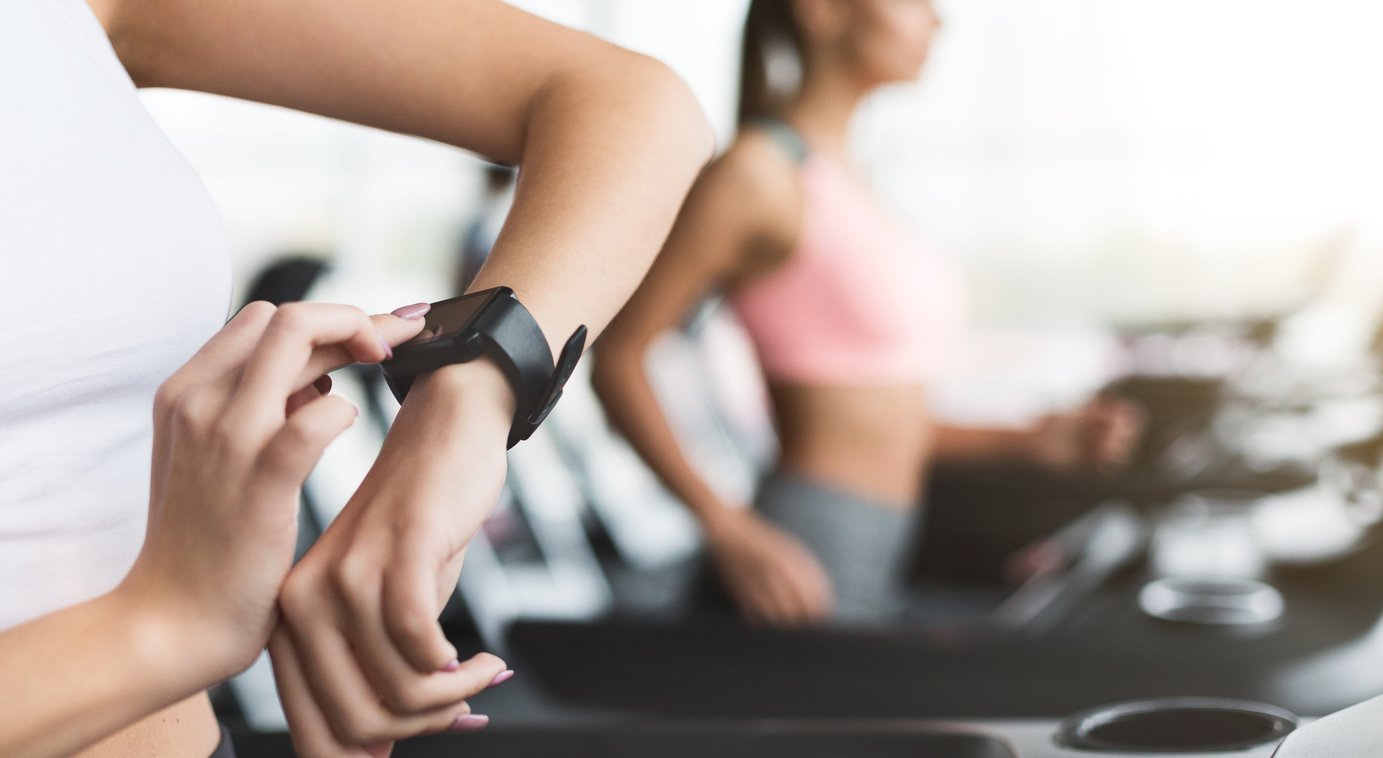
Devices like the Oura Ring, WHOOP, Garmin, Apple Watch, and HRV4Training can provide helpful insights during perimenopause and beyond.
HRV and the Menstrual Cycle
Once you start tracking your HRV, you may notice cyclic changes with your menstrual cycles. HRV commonly drops during ovulation and the luteal phase when progesterone peaks, boosting sympathetic activity and reducing parasympathetic tone [5].
Estrogen drops late in the luteal phase, causing HRV to naturally fall even in younger women. In perimenopause, these patterns become exaggerated: estrogen and progesterone lose their predictable rhythm, and HRV often shows marked decreases as sleep disturbances and stress sensitivity recur.
HRV During Perimenopause
In perimenopause, patterns grow erratic. Estrogen may spike or crash, and progesterone drops earlier and steadier, often due to missing ovulation. This hormonal mismatch dysregulates the nervous system, leading to higher sympathetic drive, more stress sensitivity, and even lower HRV.
Sleep architecture suffers, and low-grade inflammation with rising cortisol further suppresses parasympathetic tone. Mood volatility—anxiety, irritability, rage episodes—links to declining estrogen, increasing the decrease in HRV.
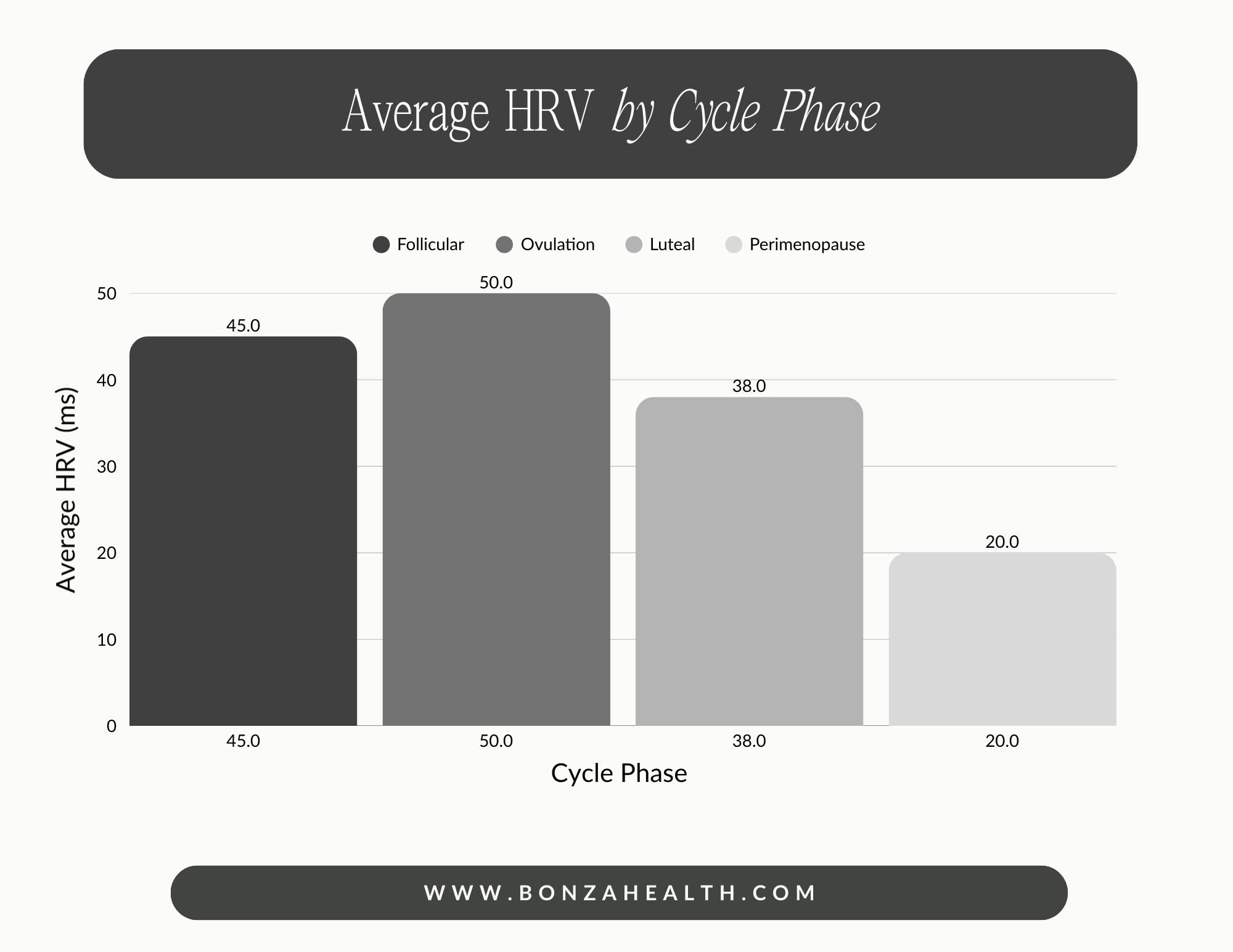
HRV commonly drops during ovulation and the luteal phase when progesterone peaks. Estrogen drops late in the luteal phase.
What You Can Do
If your device shows a drop in HRV, especially in the luteal phase or perimenopause, this is data that confirms your body is adapting.
Strategies for support:
Support progesterone: Naturally (magnesium, vitamin B6, chasteberry) or with menopausal hormone therapy, as appropriate.
Prioritize sleep and recovery: Wind down early, minimize stimulation, use adaptogens like ashwagandha, and ensure optimal sleep hygiene.
Time workouts mindfully: Reduce high-intensity exercise in the late luteal phase; opt for walking, yoga, or strength training.
Track patterns over cycles: Use your tracker’s journal feature to correlate HRV trends with cycle, symptoms, and recovery.
View HRV as information: Low HRV simply asks for more gentleness and recalibration, not self-blame.
Deep, uninterrupted sleep repairs the brain and body and balances hormones.
Sleep Is the Ultimate HRV Booster
Restorative sleep is your body’s best way to restore parasympathetic function. Deep, uninterrupted sleep repairs the brain and body and balances hormones.
During perimenopause, prioritize:
Cooling the bedroom (with fans, breathable sheets, moisture-wicking or cooling sleepwear).
Evening wind-down routines (gentle stretching, music, reading).
Limiting alcohol and caffeine.
Managing hot flashes (layered blankets, water nearby).
Choose sleepwear designed for perimenopausal women—bamboo or specialty brands can make a difference.
The HRV–Stress–Sleep Cycle
Low HRV → Higher stress reactivity → Poorer sleep → Further drop in HRV.
Breaking the cycle is essential.
Targeted habits—breathwork, sleep hygiene, hormone support—can gently retrain your nervous system toward recovery.
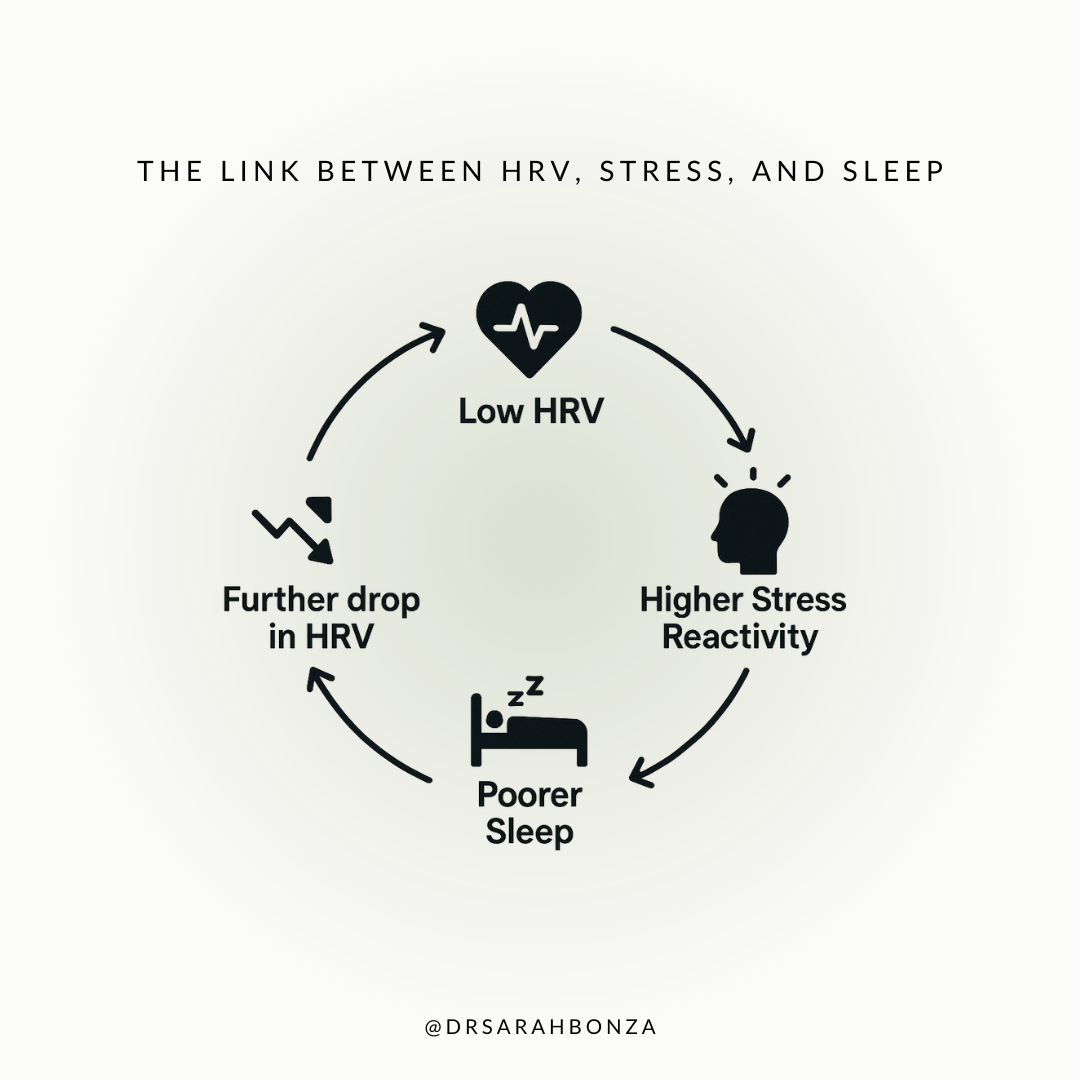
Low HRV → Higher stress reactivity → Poorer sleep → Further drop in HRV
Practical Takeaways
Track your HRV: Use wearables to understand your unique rhythms.
Support parasympathetic tone: Add daily moments such as breathing, gentle movement, and mindful pauses.
Protect sleep: Cool, comfortable routine, sleepwear designed for your needs.
Self-compassion: Progress is not linear; honor your body’s seasons.
Try an HRV-boosting habit this week: Notice how your body, mind, and sleep respond…and celebrate each small win.
Your Next Steps
Perimenopause invites you to tune in, not push through. By honoring your body’s signals and using HRV as a guide, you have the power to retrain your nervous system, restore sleep, and recover joy in midlife.
If you want a cycle-based recovery plan that integrates HRV insights with hormone therapy, fitness, and emotional supports, let’s partner for your optimal wellness. Book your consult today.

Reclaim your vitality in perimenopause using our free 12-step Behavior Change workbook.
References:
[1] K. Wieczorek, A. Targonskaya, and K. Maslowski, “Reproductive hormones and female mental wellbeing,” Women, vol. 3, no. 3, p. 432, Sep. 2023, https://doi.org/10.3390/women3030033.
[2] L. Brown et al., “Promoting good mental health over the menopause transition,” The Lancet, Mar. 2024, https://doi.org/10.1016/s0140-6736(23)02801-5.
[3] K. G. Schwarz, S. Vicencio, N. C. Inestrosa, P. Villaseca, and R. D. Río, “Autonomic nervous system dysfunction throughout menopausal transition: A potential mechanism underpinning cardiovascular and cognitive alterations during female ageing,” The Journal of Physiology, vol. 602, no. 2, p. 263, Dec. 2023, https://doi.org/10.1113/jp285126.
[4] K. Yalamudi, “Study of comparison between autonomic dysfunction and dyslipidemia in healthy postmenopausal women,” J Midlife Health, May 2025. Accessed: Aug. 16, 2025. [Online]. Available: https://doi.org/10.4103/jmh.jmh_67_15.
[5] A. Hamidovic, J. M. Davis, M. C. Wardle, A. Naveed, and F. Soumare, “Periovulatory subphase of the menstrual cycle is marked by a significant decrease in heart rate variability,” Biology, vol. 12, no. 6, p. 785, May 2023, https://doi.org/10.3390/biology12060785.