Reclaiming Your Spark: A Physician’s Guide to Libido in Menopause
Written and edited by Sarah Bonza MD, MPH, MSCP, FAAFP, DipABLM, NBC-HWC

As a physician specializing in menopause care, I’ve sat across from countless women who whisper the same frustrated question: “Why has my desire disappeared?” For many, menopause isn’t just hot flashes and sleepless nights—it’s a silent thief stealing confidence, intimacy, and joy. But here’s what I tell my patients: Your libido isn’t gone—it’s waiting to be rediscovered. Let’s explore the science and solutions to reignite your spark.
The Hormone Changes that Zap Desire
Menopause reshapes your hormonal landscape. Estrogen decline thins vaginal tissues, reduces lubrication, and dulls sensitivity—a trifecta that can make sex feel like a chore.[1,9] Progesterone fluctuations disrupt sleep and amplify anxiety, while testosterone—yes, women need it too—plummets, sapping desire and arousal.[1,2] By menopause, testosterone levels are roughly half those of a woman’s 20s directly impacting sexual motivation and satisfaction.[1,2]
But hormones alone don’t tell the whole story. Last year, a patient named Claire (name changed) confessed, “I miss feeling wanted, but I’m too exhausted to care.” Her bloodwork showed low testosterone, but her real barriers were stress and self-doubt.
Rebuilding Desire: A Three-Pronged Approach
1. The Muscle-Libido Connection
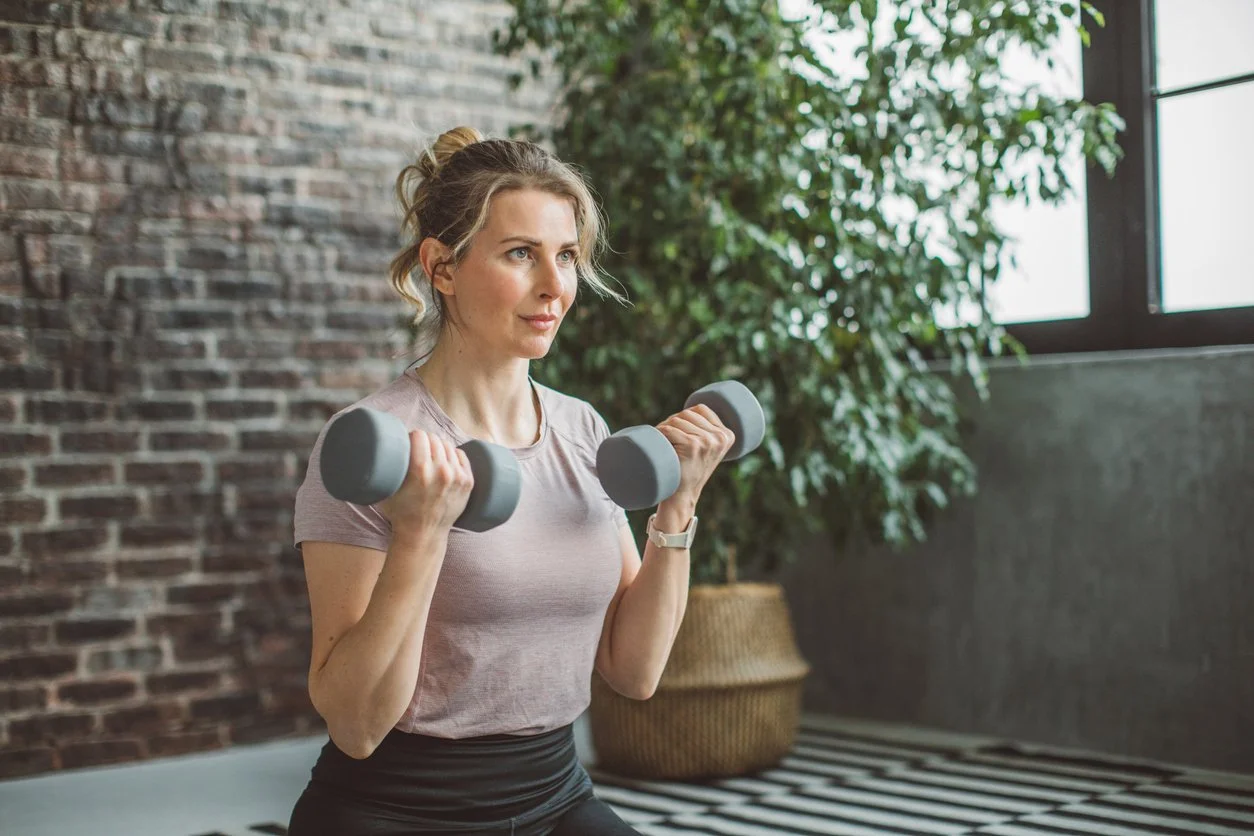
Claire hated gyms, so we started small: resistance bands while watching TV, bodyweight squats during phone calls. Within months, her strength improved—and so did her confidence.
Why it works: Strength training boosts natural testosterone production.[3,4] Even 2–3 weekly sessions enhance blood flow to pelvic tissues and amplify arousal.[4] A 2023 study found postmenopausal women who strength-trained reported 30% higher sexual satisfaction than sedentary peers.[3]
Pro tip: Compound movements (squats, lunges) engage multiple muscle groups, maximizing hormonal benefits.[4]
2. Stress: The Invisible Libido Killer
Chronic stress floods the body with cortisol, which suppresses testosterone and shrinks your capacity for pleasure.[5,6] Claire’s cortisol levels were sky-high from caregiving for her aging mother.
Solutions we tried:
Kundalini meditation: Twice-weekly sessions focused on activating the root (security) and sacral (creativity) chakras. “It’s like unlocking energy I forgot I had,” she remarked. Research shows mindfulness practices reduce cortisol by up to 22%.[6]
Scheduled intimacy: Planning “connection time” with her partner reduced performance anxiety. Studies confirm that structured intimacy improves sexual satisfaction by lowering stress.[10]
3. When Biology Needs a Boost
Despite progress, Claire still struggled with vaginal dryness. We added localized estrogen cream and a low-dose testosterone gel. “It’s not ‘cheating’—it’s leveling the field,” she laughed.
HRT fast facts:
Testosterone therapy improves desire in 60% of postmenopausal women.[1,7]
Vaginal estrogen restores tissue elasticity within weeks, reducing dyspareunia (painful sex) in 80% of users.[1,9]

The Mind-Body-Spirit Trio
Libido thrives when three pillars align:
Safety: A patient once admitted, “How can I relax when I’m worried about leaking urine during sex?” Pelvic floor therapy and open dialogue with her partner rebuilt trust. Studies link emotional security to 50% higher sexual frequency.[10]
Spirituality: Whether through Kundalini mantras or prayer (many find resonance in the Song of Solomon’s celebration of intimacy), connecting to a higher purpose reignites creative—and sexual—energy.
Playfulness: One couple revived their spark by taking salsa classes. Another used a “desire diary” to track turn-ons.

Case Study: Claire’s Renaissance
Six months post-treatment, Claire’s transformation was profound. She’d gained muscle mass, yes—but more importantly, she’d shed shame. “I’m 52 and having the best sex of my life,” she shared. Her secret? Combining HRT with strength training, meditation, and candid conversations with her husband.
Lab results:
Your Toolkit for Reignition
Try this: 10-minute daily meditation (root chakra visualization: imagine red light at your pelvis).
Eat this: Zinc-rich foods (pumpkin seeds, lentils) to support testosterone synthesis.[3]
Ask your doctor: About testosterone testing if lifestyle changes stall. The North American Menopause Society recommends testing free testosterone in symptomatic women.[1,12]
Menopause isn’t an ending—it’s an invitation to rewrite the rules. At Bonza Health, we don’t just treat symptoms; we collaborate with you to rebuild desire from the ground up. Because every woman deserves to feel vibrant, connected, and unapologetically alive.
Schedule a consultation at BonzaHealth.com to craft your personalized libido revival plan.

References
[1] Leventhal JL. Management of Libido Problems in Menopause. Perm J. 2000;4(3):29-34. https://pmc.ncbi.nlm.nih.gov/articles/PMC6220606/
[2] Cappelletti M, Wallen K. Increasing women's sexual desire: The comparative effectiveness of estrogens and androgens. Horm Behav. 2016;78:178-193. doi:10.1016/j.yhbeh.2015.11.003
[3] InsideTracker. Why women should care about testosterone. https://www.insidetracker.com/a/articles/why-women-should-care-about-testosterone
[4] Tapper J, Huang G, Pencina KM, et al. The effects of testosterone administration on muscle areas of the trunk and pelvic floor in hysterectomized women with low testosterone levels: proof-of-concept study. Menopause. 2019;26(12):1405-1414. doi:10.1097/GME.0000000000001410
[5] Bonafide. Can stress affect sex drive during menopause? https://hellobonafide.com/blogs/news/can-stress-affect-sex-drive-during-menopause
[6] Hamilton LD, Meston CM. Chronic stress and sexual function in women. J Sex Med. 2013;10(10):2443-2454. doi:10.1111/jsm.12249
[7] Rupa Health. How to address low libido caused by menopause. https://www.rupahealth.com/post/a-functional-medicine-approach-to-menopause-a-case-study
[8] Kindra. 5 ways to boost libido through menopause. https://ourkindra.com/blogs/journal/boosting-your-libido-in-menopause
[9] Healthline. An OB-GYN’s 3 strategies for making sex better after menopause. https://www.healthline.com/health/menopause/sex-after-menopause
[10] The Australasian Menopause Society. Sexual difficulties in the menopause. https://www.menopause.org.au/hp/information-sheets/sexual-difficulties-in-the-menopause