The Untold Power of Testosterone for Women: What Every Perimenopausal and Menopausal Woman Should Know
Written and edited by Sarah Bonza MD, MPH, FAAFP, MSCP, DipABLM, NBC-HWC

When testosterone levels are restored to a physiologic range, perimenopausal and menopausal women often describe feeling like themselves again.
Testosterone isn’t just a “male hormone.” It’s an essential part of every woman’s hormonal orchestra—powerfully influencing libido, mood, cognition, and energy. As a Menopause Society Certified Physician, I often see women who have optimized their estrogen and progesterone therapy yet still feel their spark is missing. That missing piece? Often testosterone.
The Hidden Hormone Decline in Midlife
By the time most women reach their 40s, testosterone levels have fallen to nearly half their youthful levels, declining steadily until menopause. Produced by both the ovaries and adrenal glands, testosterone supports energy, confidence, sexual desire, and focus long before menopause begins.
This decline can cause:
Persistent fatigue and loss of motivation
Reduced sexual desire or satisfaction
“Brain fog” and forgetfulness
Increased anxiety or low mood
Loss of muscle tone and bone mass
Women often describe feeling like “something changed” even when their estrogen is perfectly balanced—testosterone is frequently that missing element.

Low testosterone levels can cause fatigue, low libido, brain fog, and many other symptoms.
Backed by Emerging Research
Recent data continue to validate testosterone’s benefits for midlife women. A 2024 UK menopause clinic study (Glynne et al., 2024) found that after four months of low-dose transdermal testosterone:
47% reported improved mood
39% noted enhanced cognitive clarity
52% experienced improved libido.[1]
These results echo prior research confirming testosterone’s efficacy in treating Hypoactive Sexual Desire Disorder (HSDD)—the only evidence-based indication endorsed by international menopause societies, including The Menopause Society and the Australasian Menopause Society.
However, clinical experience and newer observational studies highlight broader benefits—especially when testosterone is carefully balanced with estrogen and progesterone.
How Testosterone Works in Women
Testosterone acts as a master regulator of several key systems:
Cognition: Supports memory, mental clarity, and multitasking
Mood: Increases motivation, confidence, and resilience
Energy: Enhances stamina, drive, and recovery from stress
Muscle and Bone: Preserves lean mass and bone density, protecting against age-related decline
Sexual Wellness: Improves desire, arousal, and orgasmic function. [1-4]
When testosterone levels are restored to a physiologic range, women often describe feeling “like themselves again”—more present, passionate, and mentally engaged.

Testosterone acts as a master regulator of key systems that regulate cognition, mood, energy levels, muscle and bone health, and sexual function.
Why It’s Often Off-Label in the U.S.
Currently, the FDA has not approved a testosterone product for women. As a result, clinicians prescribe testosterone “off-label,” adapting formulations approved for men at much lower, carefully calculated doses. This distinction is why insurance rarely covers treatment, leaving most women to pay out of pocket—typically around $130 per month. Sites like GoodRx.com often offer significant savings.
Because testosterone is a controlled substance, pharmacies must dispense a 30-day supply, even though patients often receive enough medication to last longer at lower dosing. Women are advised to follow their menopause specialist’s instructions—not the pharmacy label—to ensure accurate application.
How It’s Used
Apply a pea-sized amount (0.5 g) of gel each morning to clean, dry skin on the upper arm or shoulder.
Each packet typically lasts about 10 days.
Allow the gel to dry completely before dressing and avoid skin contact with others until absorbed.
Blood levels are checked after 3 months to ensure safety and efficacy.
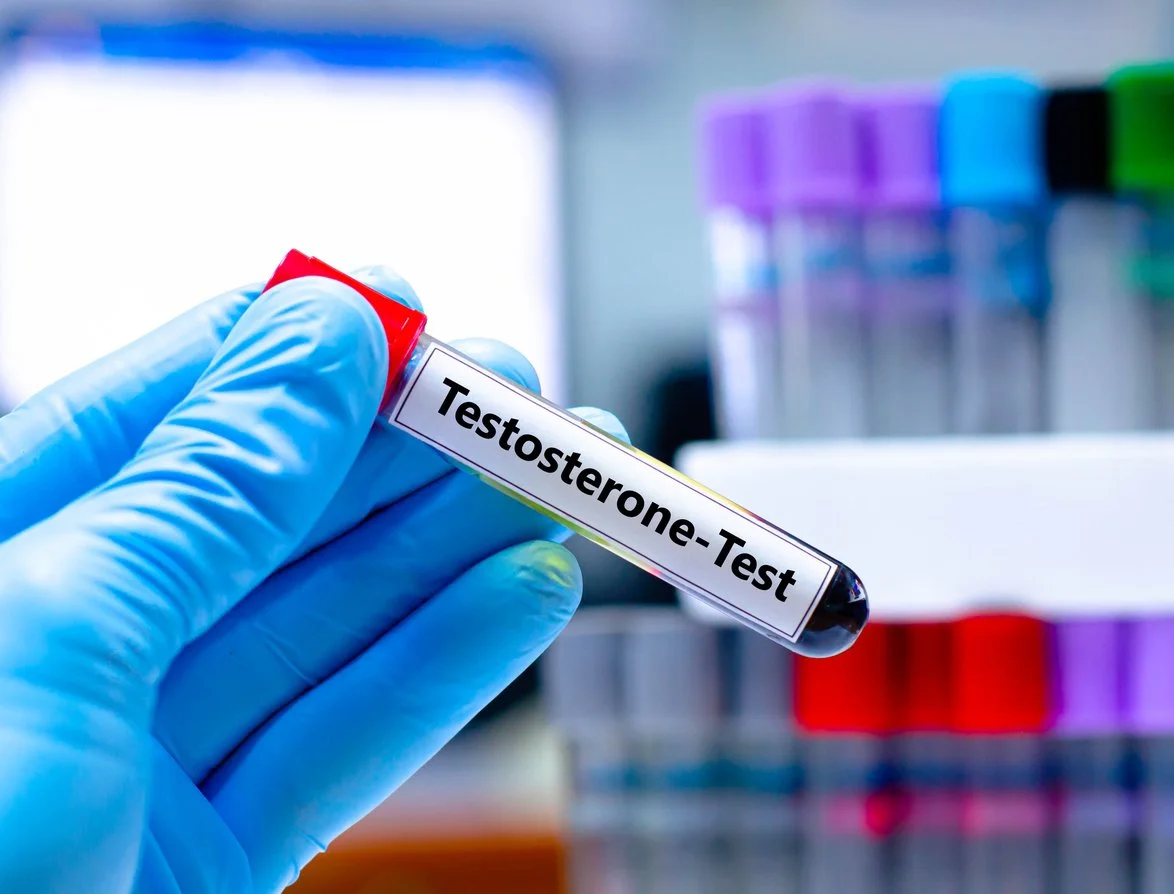
To ensure safety and efficacy, testosterone levels should be checked after three months of testosterone replacement therapy.
The Role of DHEA: The Unsung Hero
Dehydroepiandrosterone (DHEA) is another androgen precursor produced by the adrenal glands. It naturally converts into both testosterone and estrogen in the body, helping to maintain balance even as ovarian hormone production diminishes. DHEA levels drop even earlier than testosterone—often starting in the late 30s—and low levels have been linked to decreased libido, fatigue, and cognitive changes.
Supplemental micronized DHEA (such as vaginal DHEA or oral forms) has shown benefits for:
Vaginal lubrication and elasticity
Sexual comfort and arousal
Mood and stress resilience[5]
Unlike testosterone, vaginal DHEA (Prasterone, Intrarosa®) is FDA-approved for genitourinary syndrome of menopause (GSM), offering local estrogen and androgen support without significant systemic absorption. For some women, combining low-dose testosterone and DHEA enhances outcomes synergistically, targeting both systemic and local hormone deficiency.

Supplemental micronized DHEA (such as vaginal DHEA or oral forms) has shown benefits for vaginal lubrication and elasticity, arousal, and mood support.
What About Safety?
When monitored by a certified menopause specialist, physiologic testosterone therapy is considered safe and well-tolerated. Risks increase only when levels exceed the female physiologic range or when unregulated formulations (like pellets) are used.
Potential side effects at higher exposures include:
Mild acne or oily skin
Increased facial hair growth
Scalp hair thinning
Voice changes (rare)
Mood changes if levels rise too high
Regular monitoring of hormone levels and symptoms ensures therapy remains in balance—effective without masculinizing effects.
Always work with a Menopause Society Certified Physician to ensure personalized, evidence-based, and safe care.
Key Takeaways for Midlife Women
Testosterone naturally declines during the 40s, preceding estrogen decline.
Low-dose, transdermal testosterone can improve libido, energy, cognition, and mood.
Use is off-label in the U.S. but endorsed internationally when monitored appropriately.
DHEA complements testosterone, particularly for vaginal health and overall vitality.
Always work with a Menopause Society Certified Physician to ensure personalized, evidence-based, and safe care.
The Bonza Health Perspective
At Bonza Health, we believe midlife is not a decline—it’s a transition to greater vitality. Testosterone and DHEA therapy, when judiciously prescribed and monitored, can help women thrive again—restoring confidence, intimacy, and mental sharpness.
If you’ve optimized estrogen and progesterone but still feel like something’s missing, consider asking whether testosterone or DHEA might be your missing link.
Your vitality matters: let’s reclaim it together.

At Bonza Health, we believe midlife is not a decline: it’s a transition to greater vitality. Menopause hormone therapy can help you thrive once again.
References
[1] S. Glynne, A. Kamal, A. Kamel, D. Reisel, and L. Newson, “Effect of transdermal testosterone therapy on mood and cognitive symptoms in peri- and postmenopausal women: a pilot study,” Archives of Women s Mental Health, Sep. 2024, https://doi.org/10.1007/s00737-024-01513-6
[2] A. Scott and L. Newson, “Should we be prescribing testosterone to perimenopausal and menopausal women? A guide to prescribing testosterone for women in primary care,” British Journal of General Practice, vol. 70, no. 693, p. 203, Mar. 2020, https://doi.org/10.3399/bjgp20X709265
[3] R. L. Glaser and C. Dimitrakakis, “Testosterone therapy in women: Myths and misconceptions,” Maturitas, vol. 74, no. 3. Elsevier BV, p. 230, Feb. 04, 2013. https://doi.org/10.1016/j.maturitas.2013.01.003
[4] S. R. Davis and S. Wåhlin-Jacobsen, “Testosterone in women—the clinical significance,” The Lancet Diabetes & Endocrinology, vol. 3, no. 12. Elsevier BV, p. 980, Sep. 07, 2015. https://doi.org/10.1016/s2213-8587(15)00284-3
[5] U. Sauer, V. Talaulikar, and M. Davies, “Efficacy of intravaginal dehydroepiandrosterone (DHEA) for symptomatic women in the peri- or postmenopausal phase,” Maturitas, vol. 116. Elsevier BV, p. 79, Jul. 31, 2018. https://doi.org/10.1016/j.maturitas.2018.07.016