Understanding Body Shape Changes During Menopause: Hormones, Leptin, and Evidence-Based Strategies
Written and edited by Sarah Bonza MD, MPH, MSCP, FAAFP, DipABLM, NBC-HWC
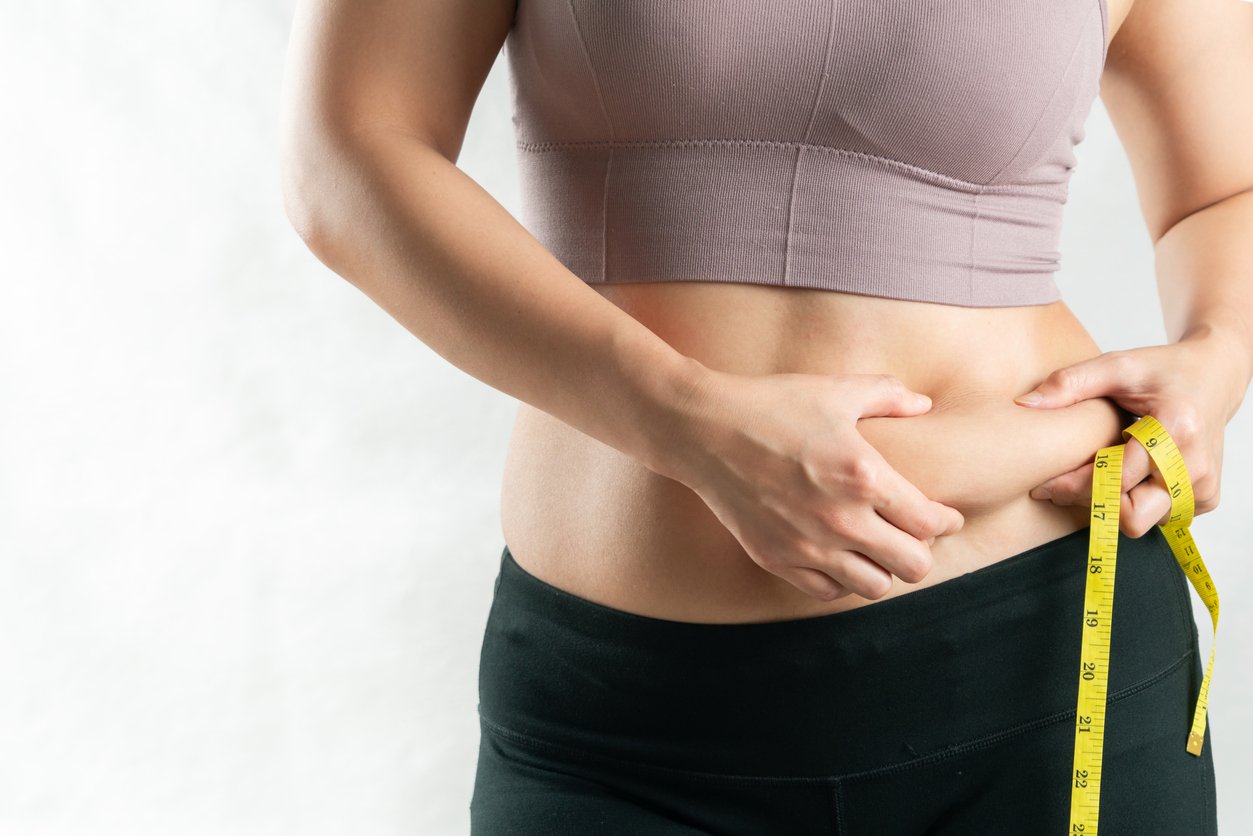
Feeling frustrated by body shape changes such as weight gain during perimenopause? You are definitely not alone. Nearly all women experience these weight-related shifts during the menopausal transition, typically due to fluctuating hormone levels.[1]
We often hear about estrogen, but there's a more complex picture involving hormones you might not know are working against you. One of these hormones is called leptin.
Understanding these hidden signals is the first step to taking control. Let's explore how these hormonal fluctuations create a challenging environment for weight management in perimenopause and menopause, focusing on the often-misunderstood role of leptin.
What Happens During Perimenopause?
Perimenopause is the time leading up to menopause when hormones like estrogen, progesterone, and testosterone begin to fluctuate and decline, affecting many different pathways in your body. Menopause is when you haven't had a period for at least 12 months, typically because your ovaries have stopped producing these hormones.[2,3]
The hormonal fluctuations that occur during the menopausal transition create a challenging environment for weight management. For example, fluctuating or declining ovarian estrogen levels affect pathways in the body that commonly lead to symptoms such as increased fat around the middle.

The Hormonal Symphony Goes Off-Key: More Than Just Estrogen
Estrogen decline gets a lot of attention during the menopausal transition, and for good reason. However, several other hormones (e.g., testosterone, leptin, and ghrelin) and lifestyle factors (e.g., stress and sleep quality) must also be considered.[1,4]
Declining testosterone levels during perimenopause can lead to a decrease in muscle mass and reduced energy levels. This, in turn, can reduce your baseline metabolic rate, meaning fewer calories are burned even with the same food intake as before perimenopause.[5]
The picture gets even more complicated when we look at your "hunger hormones" and other chemical messengers.
Leptin: The Signal That Can Get Confused
Leptin is a protein hormone produced by fat cells. It helps regulate our metabolism and plays a fundamental role in controlling appetite by monitoring energy intake and fat stores. Leptin acts directly on receptors in the hypothalamus to signal satiety, acting as an appetite suppressant.[6-10]
Ghrelin, another hormone, acts as an appetite stimulant.[10] Sleep plays an important part in regulating these two hormones, as poor sleep can increase ghrelin and decrease leptin. As a result, this makes us feel hungry and prevents us from feeling full even after we’ve eaten.[10]

The Perimenopausal Paradox: Lower Leptin, Higher Weight, and Resistance?
Studies show that leptin levels are significantly lower in postmenopausal women compared to their premenopausal counterparts.[11-13] You might think lower levels of an appetite suppressant hormone would lead to weight gain—and while it could be a factor—it’s arguably less important than other hormones like estrogen.[14]
However, the situation is much more complex. Despite potentially lower circulating levels overall, studies consistently show a positive correlation between leptin concentration and Body Mass Index (BMI) in postmenopausal women.[11,15,16] This means that as BMI increases, leptin levels tend to increase as well.[17-20]
Leptin Resistance and Weight Gain
The challenge arises when you are overweight or gaining weight. Overweight individuals may have chronically high levels of leptin and can develop a tolerance to leptin, known as leptin resistance.[21] When leptin isn't working properly, the signals that normally tell the brain you are full become disrupted.[10]
The brain might not register that you have enough fat stored, telling you to eat more, even when leptin levels are high. This can make it difficult to lose weight.[21]
This confusing state of having potentially lower overall leptin (due to ovarian changes), yet higher leptin levels and leptin resistance (if overweight), is a key part of why perimenopausal weight loss feels so difficult.[13,17]

The Stress-Sleep-Craving Connection: Adding to the Confusion
The hormonal changes of perimenopause can also affect other systems that interact with hunger signals:
Stress Hormones: Lower estrogen can trigger a “fight/flight/freeze” stress reaction, releasing adrenaline and cortisol.[4] Cortisol releases glucose for energy; if this isn't used, it triggers insulin, which packages glucose away as fat.[21-24]. Chronic stress can lead to insulin resistance.[8]
Poor Sleep: Estrogen deficiency can disrupt sleep due to hot flushes, night sweats, disrupted melatonin, and raised cortisol.[24] As mentioned, poor sleep increases ghrelin (hunger) and decreases leptin (satiety).[10] Anxiety from cortisol imbalance can even cause night hunger cravings.[24]
Mood and Cravings: Fluctuating estrogen and testosterone influence neurotransmitters like dopamine (linked to reward/comfort eating), serotonin (affecting mood and appetite regulation), and oxytocin.[6] These shifts can lead to increased cravings, especially for sugary or unhealthy fatty foods that the body may attempt to lay down as fat to produce estrogen.[4] Supporting gut health, where serotonin and oxytocin are also produced, can help stabilize mood and affect cravings.[25]
This complex interplay of declining ovarian hormones, disrupted hunger signals (leptin and ghrelin), stress hormones (cortisol), sleep issues, and mood neurotransmitters creates a challenging environment that traditional "eat less, move more" advice often fails to address effectively.
Quick-fix weight loss plans can even trigger increased ghrelin and hunger—and reduce your metabolic rate—leading to muscle breakdown, increased cortisol, and stubborn fat deposition.[10,26] Finding a solution requires an understanding of these interconnected pathways.

Navigating the Complexity: A Holistic Approach
Tackling perimenopausal weight changes requires looking beyond simple calorie counting. It's about understanding and supporting your body's complex hormonal communication system.
The following strategies are all important pieces of the puzzle:[26-32]
Keeping a food diary to identify patterns.
Adopting healthy eating habits and including complex carbohydrates, protein, and healthy fats in meals for fullness.
Supporting gut health.
Staying hydrated throughout the day.
Managing stress with activities like walking in nature, yoga, and meditation.
Avoiding excess alcohol.
Practicing positive self-talk.
Avoiding quick fixes.
Body identical hormone replacement therapy (HRT) can also be a key factor in stabilizing pathways, though studies suggest it doesn't directly change leptin levels independently of body fat.[15,33]
Combatting body shape changes during menopause is a long-term journey, not a quick fix.[31] It requires a comprehensive approach that addresses the unique hormonal and metabolic landscape of perimenopause.
The Perimenopause Vitality Code
If you're tired of fighting against confusing signals and want to understand how to support your body for sustainable weight management, we invite you to our free Vitality Code webinar. Let us help you decode your body's signals and build a sustainable path to feeling your best during this transformative time in your life!

References
[1] N. Santoro, S. Epperson, and S. Mathews, “Menopausal Symptoms and Their Management,” JAMA, vol. 325, no. 4, pp. 397–398, 2021.
[2] R. D. Lobo, “Menopause and aging: changes and treatment considerations,” Endocrinology and Metabolism Clinics, vol. 44, no. 3, pp. 523–537, 2015.
[3] The North American Menopause Society, “The 2022 Hormone Therapy Position Statement of The North American Menopause Society,” Menopause, vol. 29, no. 7, pp. 767–794, 2022.
[4] M. D. Zsido, S. Telek, D. Csatho, et al., “The role of estrogen, cortisol, and the metabolic axis in perimenopausal body composition changes,” Front. Endocrinol., vol. 13, Article 819031, 2022.
[5] R. D. Lobo, “Hormone-replacement therapy: current thinking,” Nat. Rev. Endocrinol., vol. 13, pp. 220–231, 2017.
[6] P. M. Wise, “Neuroendocrine control of aging,” Exp. Gerontol., vol. 37, no. 10–11, pp. 1223–1228, 2002.
[7] J. M. Friedman and J. L. Halaas, “Leptin and the regulation of body weight in mammals,” Nature, vol. 395, no. 6704, pp. 763–770, 1998.
[8] M. J. Kivimäki and M. R. Hamer, “Stress and insulin resistance: a review of epidemiological evidence,” Psychoneuroendocrinology, vol. 35, no. 10, pp. 1226–1235, 2010.
[9] K. J. Laughlin and M. R. Yen, “Hypothalamic regulation of energy balance and body weight,” Endocr. Rev., vol. 15, no. 4, pp. 456–487, 1994.
[10] K. Taheri, L. Lin, D. Austin, T. Young, and E. Mignot, “Short sleep duration is associated with reduced leptin, elevated ghrelin, and increased BMI,” PLoS Med., vol. 1, no. 3, p. e62, 2004.
[11] E. Erel and G. Senturk, “Changes in plasma leptin levels in postmenopausal women,” Gynecol. Endocrinol., vol. 22, no. 3, pp. 145–149, 2006.
[12] A. L. Saad et al., “Circulating leptin levels and adiposity in perimenopausal and postmenopausal women,” Metabolism, vol. 52, no. 7, pp. 801–805, 2003.
[13] A. M. Sowers et al., “Hormonal profiles and BMI changes during the menopausal transition,” J. Clin. Endocrinol. Metab., vol. 93, no. 3, pp. 883–887, 2008.
[14] G. C. Wildman et al., “Weight, estrogen, and the leptin paradox in menopause,” Obesity (Silver Spring), vol. 16, no. 6, pp. 1325–1332, 2008.
[15] Y. M. Huh et al., “The association between BMI and serum leptin levels in menopausal women,” Maturitas, vol. 59, no. 2, pp. 201–206, 2008.
[16] M. D. Pradhan et al., “Adipokines and menopause: implications for metabolic health,” Am. J. Obstet. Gynecol., vol. 217, no. 5, pp. 489.e1–489.e7, 2017.
[17] M. T. Abella et al., “Leptin resistance in obesity: mechanisms and therapeutic strategies,” Nat. Rev. Endocrinol., vol. 17, pp. 377–391, 2021.
[18] J. H. Lee et al., “Leptin signaling and resistance in obesity,” J. Clin. Invest., vol. 120, no. 5, pp. 1533–1541, 2010.
[19] C. R. Buxton and E. Marcelli, “Hormones, leptin resistance, and fat gain in middle-aged women,” J. Women’s Health, vol. 23, no. 2, pp. 123–130, 2014.
[20] K. Y. Kwok, “Understanding leptin resistance,” Obes. Rev., vol. 16, no. 3, pp. 145–156, 2015.
[21] C. M. Flier, “Obesity and the hypothalamus: novel peptides for new pathways,” Cell, vol. 92, pp. 437–440, 1998.
[22] L. Lustig, “Fructose: metabolic, hedonic, and societal parallels with ethanol,” J. Am. Diet. Assoc., vol. 110, no. 9, pp. 1307–1321, 2010.
[23] A. D. Bjorntorp, “Neuroendocrine abnormalities in visceral obesity,” Int. J. Obes., vol. 20, pp. S60–S65, 1996.
[24] R. S. Rosenfield and P. E. Ehrmann, “The hormonal basis of menstrual irregularities in perimenopausal women,” Endocrinol. Metab. Clin. North Am., vol. 25, no. 1, pp. 37–67, 2011.
[25] J. Cryan and T. Dinan, “Mind-altering microorganisms: the impact of the gut microbiota on brain and behavior,” Nat. Rev. Neurosci., vol. 13, pp. 701–712, 2012.
[26] K. D. Hall and C. M. Chow, “Weight loss and metabolic adaptation: how leptin, ghrelin, and adaptive thermogenesis challenge sustained results,” Obesity, vol. 21, no. 2, pp. 218–228, 2013.
[27] M. Hassed et al., “Mindfulness improves stress regulation and health: a review,” Clin. Psychol. Rev., vol. 33, no. 6, pp. 763–771, 2013.
[28] D. K. Bonder et al., “Gut microbiota, menopause, and hormonal therapies,” Cell. Mol. Gastroenterol. Hepatol., vol. 7, no. 3, pp. 547–562, 2019.
[29] A. W. Kurzer, “Phytoestrogen supplementation and reproductive hormones in pre- and postmenopausal women,” Nutr. Rev., vol. 60, no. 1, pp. 1–14, 2002.
[30] M. Mosconi et al., “Menopause impacts human brain structure, connectivity, energy metabolism, and amyloid-beta deposition,” Sci. Rep., vol. 10, Article 15751, 2020.
[31] R. Wing and L. Phelan, “Long-term weight loss maintenance,” Am. J. Clin. Nutr., vol. 82, no. 1 Suppl, pp. 222S–225S, 2005.
[32] L. M. Neuhouser et al., “Health outcomes following low-fat dietary pattern in postmenopausal women,” JAMA, vol. 295, no. 6, pp. 629–642, 2006.
[33] S. D. Hodis et al., “Vascular effects of early vs late postmenopausal treatment with estradiol,” N. Engl. J. Med., vol. 368, no. 19, pp. 1781–1791, 2013.