The Scale Didn't Move — And You Did Everything They Told You To
Written and edited by Sarah Bonza MD, MPH, FAAFP, DipABLM, NBC-HWC

Your weight barely changed. Your body changed a lot. Here's what's actually happening — and why lifting heavy is the answer.
You put on the same jeans you've worn for three years, and they fit differently now.
There's a roll at the waistband that wasn't there before. Your bra band digs in. The blazer you loved pulls across the back. Your arms look softer than you remember, and your middle has changed shape in a way you can't quite describe to anyone.
Then you step on the scale, and it says roughly what it's always said.
That combination is maddening. Your body clearly changed. The one number you've been taught to trust says nothing happened. And when you mentioned it, someone probably told you it was normal, or suggested you eat less and do more cardio.
So you did. And it didn't work the way it used to.
I want to show you what's actually going on, because you were right — and because the fix is not what you've been told.
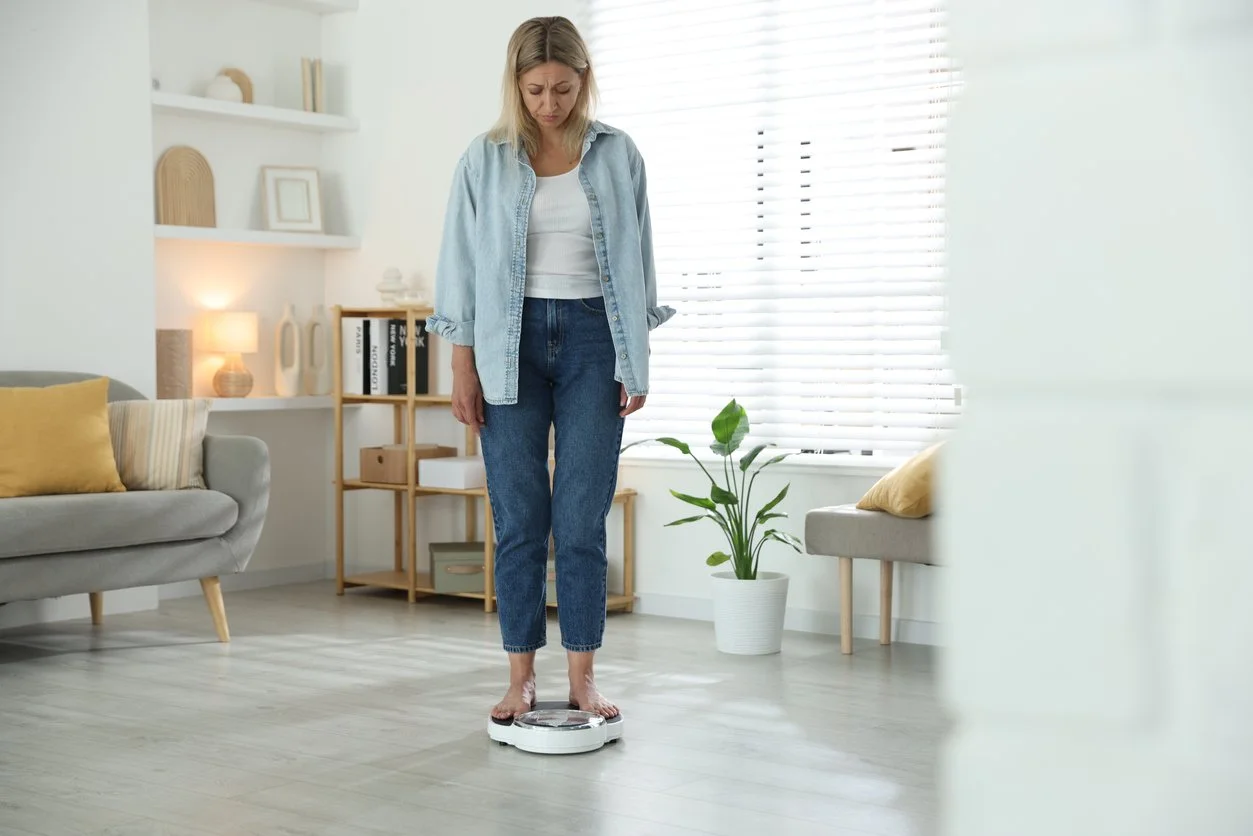
Your body composition has changed. The instrument you were using to check on yourself is, by design, incapable of showing it to you.
You're not imagining it. Here's the proof.
Researchers followed 1,246 women through menopause. They didn't just weigh them. They scanned them, with a DXA scanner, over and over across the years — so they could see fat and muscle as separate things [1].
Two things happened at once, starting about two years before the last period.
Fat gain roughly doubled. It had been creeping up at about 1% a year. It jumped to about 1.7% a year [1].
Muscle went into reverse. For your whole adult life, lean tissue had been slowly increasing. Now it started going down [1].
This lasted about three and a half years. Then — and this matters — it settled down. After the transition, the average woman's fat and muscle stopped changing [1].
And here is the part that explains your jeans.
Body weight showed no change at all.
Not slower. Not faster. The researchers looked specifically for a change in the weight trend at this moment, and there wasn't one [1].
Why your scale is the wrong tool
Look at the top of that picture, then the bottom.
Up top, two things are happening at once. Muscle is going down. Fat is going up.
Down below, the scale sees one number: the total.
And when one thing goes up about as fast as another comes down, the total barely budges. In this study, the difference worked out to roughly 80 grams a year. About three ounces. Invisible [1].
So your body composition genuinely changed — and the instrument you were using to check on yourself was, by design, incapable of showing it to you.
You weren't imagining it. You were measuring it with the wrong tool.
Two honest notes
The amounts are small. Over the transition itself, the average woman gained about 1.6 kg of fat and lost about 0.2 kg of muscle [1]. That's not dramatic. What matters isn't the size — it's the direction. You spent thirty years slowly building muscle. Around fifty, that flips. And from there, it keeps going.
Not everyone follows the average. The researchers found real differences between groups — Japanese participants in the study didn't show the same accelerated fat gain [1]. Your experience may not match the average, and that's normal.
Why swapping muscle for fat matters
Here's the thing nobody explains: these two tissues are not interchangeable. They don't do the same job.
Muscle handles your food. After you eat, most of the sugar in that meal gets pulled into your muscles — about 80% of it. Fat tissue takes less than 5% [2]. Muscle is where your food goes.
So when you have less muscle, your body needs more insulin to deal with the same plate of food. In a study of nearly 14,000 adults, people with more muscle relative to their body size had meaningfully lower insulin resistance — and that held true even after accounting for how much fat they carried [3].
Two women. Same weight. Same waist. Different amounts of muscle. Different situations underneath.
Muscle pulls on your bone. Bone responds to force, and muscle is what applies it. Less muscle means less signal telling your skeleton to stay strong — during the exact years you're losing bone fastest.
Muscle is your reserve. Every single thing you want to still be doing at eighty — stairs, groceries, grandkids, getting up off the floor, catching yourself when you trip — comes out of an account you're filling right now.

Why "eat less and do more cardio" made things worse
Now you can see the trap.
When the scale creeps up, we tell women to cut calories and add cardio.
But weight you lose that way isn't only fat. A real portion of it is muscle — the exact tissue you'd just started losing anyway.
So you get lighter. The scale congratulates you. And underneath, you're worse off than when you started.
That's not a willpower problem. That's being handed the wrong instructions.
(This matters even more if you're on a GLP-1 medication. Losing weight quickly without lifting and eating enough protein can leave you at a lower weight with a worse muscle-to-fat ratio.)
Why it has to be heavy
Now the part I really want you to hear.
Light weights aren't nothing. But the three-pound dumbbells and the twenty-rep "toning" class won't get you what you need now. Two reasons.
Your muscle has gotten harder to reach. As we age, muscle stops responding as readily to signals. We can measure this with food: older adults need roughly 67% more protein in a single meal to get the same muscle-building response a younger person gets [4].
The same is true of lifting. The effort that worked at thirty is now below the threshold. You don't need a gentler signal at fifty-five. You need a louder one.
Bone only listens to real force. Bone builds in response to heavy load applied quickly. Gentle and sustained doesn't send the message.
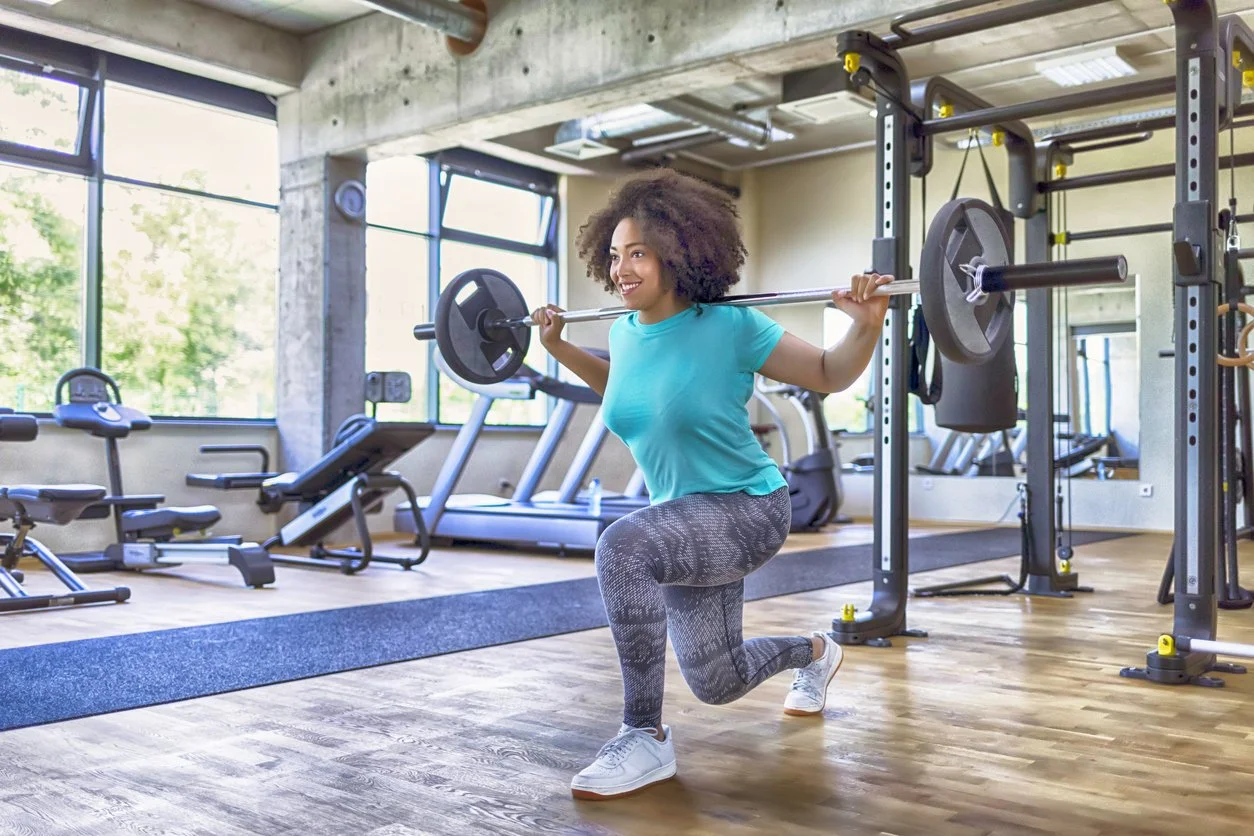
Light weights aren't nothing. But the three-pound dumbbells and the twenty-rep "toning" class won't get you what you need now.
The study that should give you permission
Researchers enrolled 101 postmenopausal women. Average age 65. Every single one of them had low bone mass — osteopenia or osteoporosis [5].
These are exactly the women who get told they're too fragile to lift.
They were randomly assigned to twice a week, thirty minutes, supervised: deadlift, back squat, and overhead press at over 80–85% of their maximum. Five sets of five. Plus jumping chin-ups with drop landings. The first month was body-weight only, just learning the movements [5].
Eight months later:
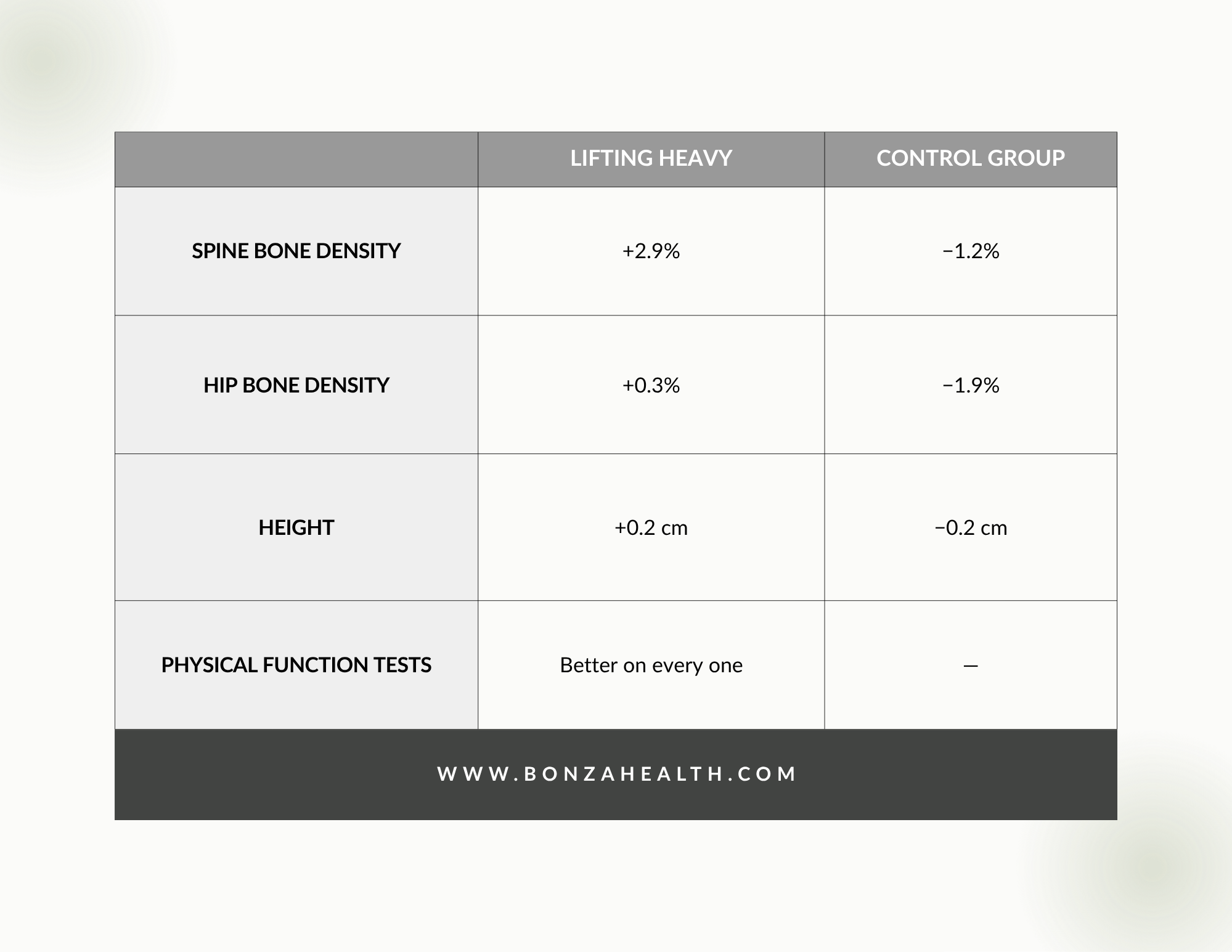
All differences statistically significant [5].
Read the height row again. The women lifting heavy got slightly taller. The control group got shorter.
And the safety record: across eight months, the lifting group had one problem — a minor back muscle spasm that cost two sessions out of seventy. No fractures. Nothing serious. Ninety-two percent of them showed up [5].
The researchers concluded that the standard advice to keep these women on light exercise needs to change [5].
If women averaging 65, with diagnosed osteoporosis, can deadlift heavy and build bone doing it — the question was never whether you're too fragile.
The three things stopping you
"I'll bulk up." You won't. The muscle-building you're picturing requires a hormone environment you are actively moving away from. What you'll notice is that heavy things get lighter and stairs get easier.
"I'll get hurt." The women above had osteoporosis, and had one minor strain between all of them in eight months. Two things made that possible: they started light for a month, and they were properly coached. Those two things are the entire answer.
"It's too late." The average woman in that study was 65 and already losing bone. She gained bone density in eight months. It is not too late.
What "heavy" actually means
Heavy is relative to you. A simple working definition:
A weight you could lift about seven times — and you do five.
Five sets of five. The last rep of each set should be genuinely hard.
Four movements cover almost everything:
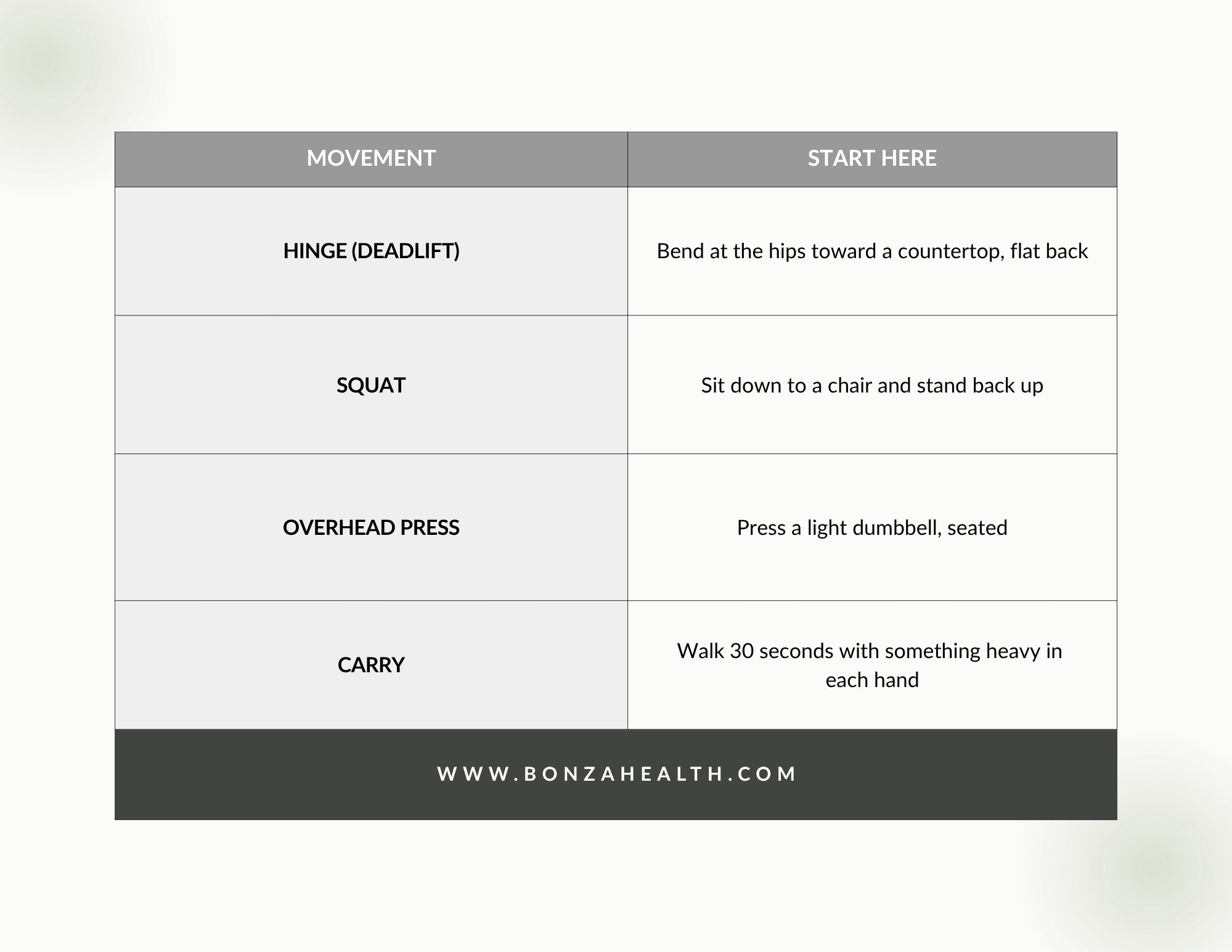
These four movements cover almost everything.
Twice a week. Thirty minutes. That's an hour a week — the same dose that worked in the study.
Month one isn't heavy at all. It's learning the movements with almost no weight. Then you add. There's no rush; the trial ran eight months.
Eat protein at every meal, not just dinner. Because your muscle is harder to reach now, spreading protein across the day matters more than the daily total. The research figure is roughly 0.4 grams per kilogram of body weight per meal [4]. Ask your clinician for your number, especially if you have kidney problems.
Get coached. Every good result above happened with supervision. This is the best money you'll spend on your health in this decade.
What to watch instead of your weight
Since the scale is blind to this, use better instruments:
What you can lift. Month one versus month six. The most honest number you have.
Sit-to-stand. How many times can you stand from a chair, no hands, in thirty seconds?
Waist measurement, which picks up the shape change the scale hides.
A DXA scan, if you can get one — it measures muscle, fat, and bone separately.
“Pick up something heavy. Then pick up something heavier.”
The bottom line
Your jeans were telling you the truth. Your scale wasn't lying, exactly — it just can't see the thing that's happening to you.
There's a window, roughly two years either side of your last period, when the direction flips. And afterward, things settle. What you carry into that settled state is largely up to you.
Almost everything women are told in midlife is about subtraction. Eat less. Weigh less. Shrink. Take up less room.
Here's the opposite instruction: Pick up something heavy. Then pick up something heavier.
Dr. Sarah Bonza is a board-certified family medicine physician focused on women's health and longevity. This article is educational and is not a substitute for individualized medical advice. Please talk with your clinician before starting resistance training, especially if you have osteoporosis, a previous spine fracture, uncontrolled high blood pressure, heart disease, kidney disease, recent surgery, or take a GLP-1 medication.

Want to know what your body composition is actually doing — not what the scale says? Book a consultation at Bonza Health.
References
[1] G. A. Greendale, B. Sternfeld, M. Huang, W. Han, C. Karvonen-Gutierrez, K. Ruppert, J. A. Cauley, J. S. Finkelstein, S. Jiang, and A. S. Karlamangla, "Changes in body composition and weight during the menopause transition," JCI Insight, vol. 4, no. 5, art. no. e124865, Mar. 2019, https://doi.org/10.1172/jci.insight.124865. PMID: 30843880.
[2] R. A. DeFronzo and D. Tripathy, "Skeletal muscle insulin resistance is the primary defect in type 2 diabetes," Diabetes Care, vol. 32, suppl. 2, pp. S157–S163, Nov. 2009, https://doi.org/10.2337/dc09-s302. PMID: 19875544.
[3] P. Srikanthan and A. S. Karlamangla, "Relative muscle mass is inversely associated with insulin resistance and prediabetes. Findings from the Third National Health and Nutrition Examination Survey," J. Clin. Endocrinol. Metab., vol. 96, no. 9, pp. 2898–2903, Sep. 2011, https://doi.org/10.1210/jc.2011-0435. PMID: 21778224.
[4] M. C. Devries, C. McGlory, D. R. Bolster, A. Kamil, M. Rahn, L. Harkness, S. K. Baker, and S. M. Phillips, "Leucine, not total protein, content of a supplement is the primary determinant of muscle protein anabolic responses in healthy older women," J. Nutr., vol. 148, no. 7, pp. 1088–1095, Jul. 2018, https://doi.org/10.1093/jn/nxy091. PMID: 29901760.
[5] S. L. Watson, B. K. Weeks, L. J. Weis, A. T. Harding, S. A. Horan, and B. R. Beck, "High-intensity resistance and impact training improves bone mineral density and physical function in postmenopausal women with osteopenia and osteoporosis: The LIFTMOR randomized controlled trial," J. Bone Miner. Res., vol. 33, no. 2, pp. 211–220, Feb. 2018, https://doi.org/10.1002/jbmr.3284. PMID: 28975661.