Your Gut, Neurotransmitters, and Perimenopause: What Every Woman Should Know
Written and edited by Sarah Bonza MD, MPH, FAAFP, MSCP, DipABLM, NBC-HWC

Understanding the blocks your brain needs to thrive
In Blog 1, we discussed how the erratic estrogen fluctuations of perimenopause disrupt the production of serotonin and dopamine — two neurotransmitters essential for mood, motivation, sleep, and emotional well-being. The good news is that in addition to hormone therapy, there are evidence-based nutritional supplements that can support your body’s ability to produce these critical brain chemicals.
Your body builds serotonin and dopamine from amino acid precursors, with the help of specific vitamins and minerals as cofactors. When these nutrients are insufficient — which becomes more common during perimenopause due to increased metabolic demands, gut changes, and stress — neurotransmitter production suffers [1,2].

The estrobolome: how estrogen and your gut microbiome connect
Supplements That Support Serotonin Production
5-HTP (5-Hydroxytryptophan): This is the direct precursor to serotonin. Derived from the Griffonia simplicifolia seed, 5-HTP crosses the blood-brain barrier more efficiently than tryptophan and bypasses the rate-limiting step in serotonin synthesis. Studies suggest efficacy comparable to some antidepressants for mild to moderate depression [1,3]. Note: Do not combine 5-HTP with SSRI medications without medical supervision.
L-Tryptophan: This essential amino acid is the upstream precursor for serotonin. Found in protein-rich foods, supplemental tryptophan can support serotonin synthesis, especially when combined with cofactors like vitamin B6 [1,3].
Vitamin B6 (Pyridoxine): A critical cofactor for the enzyme aromatic amino acid decarboxylase (AADC), which converts 5-HTP into serotonin. Without adequate B6, the conversion stalls [1,3].
Magnesium: Essential for hundreds of enzymatic reactions, including neurotransmitter production. Research links magnesium to healthy serotonin levels and improved mood. Many perimenopausal women are deficient [4].
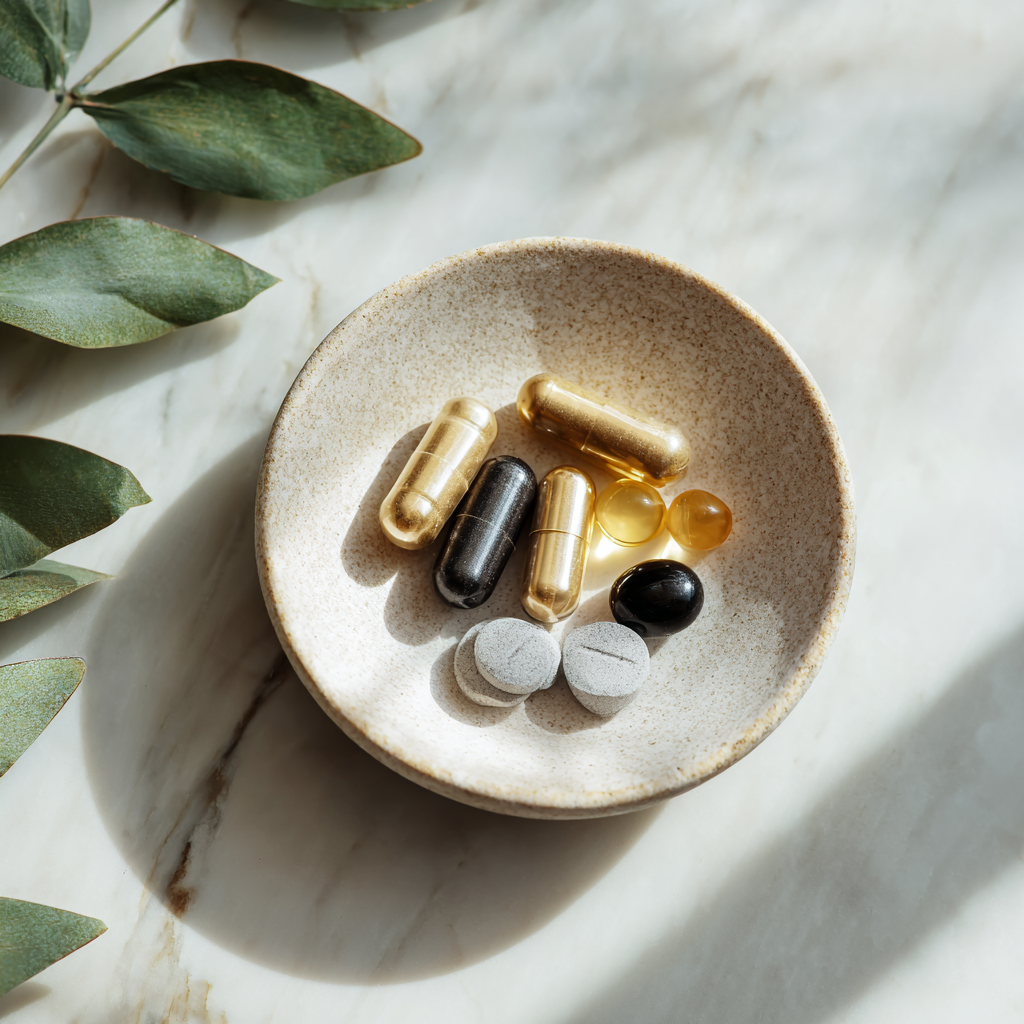
Your body builds serotonin and dopamine from amino acid precursors, with the help of specific vitamins and minerals as cofactors.
Supplements That Support Dopamine Production
L-Tyrosine: This amino acid is the primary building block for dopamine. In the body, tyrosine is converted to L-DOPA, then to dopamine, norepinephrine, and epinephrine. Supplementation can enhance cognitive performance under stress and improve mental clarity [5].
Mucuna Pruriens: A tropical legume that is a natural source of L-DOPA, the direct precursor to dopamine. It offers a more potent dopamine-boosting effect than tyrosine alone [5].
Vitamin D: Plays a regulatory role in dopaminergic neuron function and differentiation. Vitamin D deficiency is extremely common and has been associated with mood disorders. A study found that vitamin D3 supplementation can increase serum dopamine levels [6].
Omega-3 Fatty Acids (EPA/DHA): Support neuronal membrane integrity and have been shown to have antidepressant effects, possibly through modulation of dopamine signaling and reduction of neuroinflammation [7].

Supplements that support serotonin and dopamine production
Dual-Support Nutrients
B-Complex Vitamins: B6, B12, and folate are involved in the synthesis of both serotonin and dopamine. B12 deficiency has been found in many patients with depression and impaired cognition. Folate is required for the enzyme tyrosine hydroxylase, which converts tyrosine to L-DOPA [1,3].
Probiotics: Specific probiotic strains, including Lactobacillus and Bifidobacterium species, have been shown to support both serotonin and dopamine production in the gut and improve mood outcomes in clinical trials [2,8,9].
Iron (when deficient): Iron is a required cofactor for tryptophan hydroxylase (serotonin synthesis) and tyrosine hydroxylase (dopamine synthesis). Ferritin levels should be checked and optimized [1].
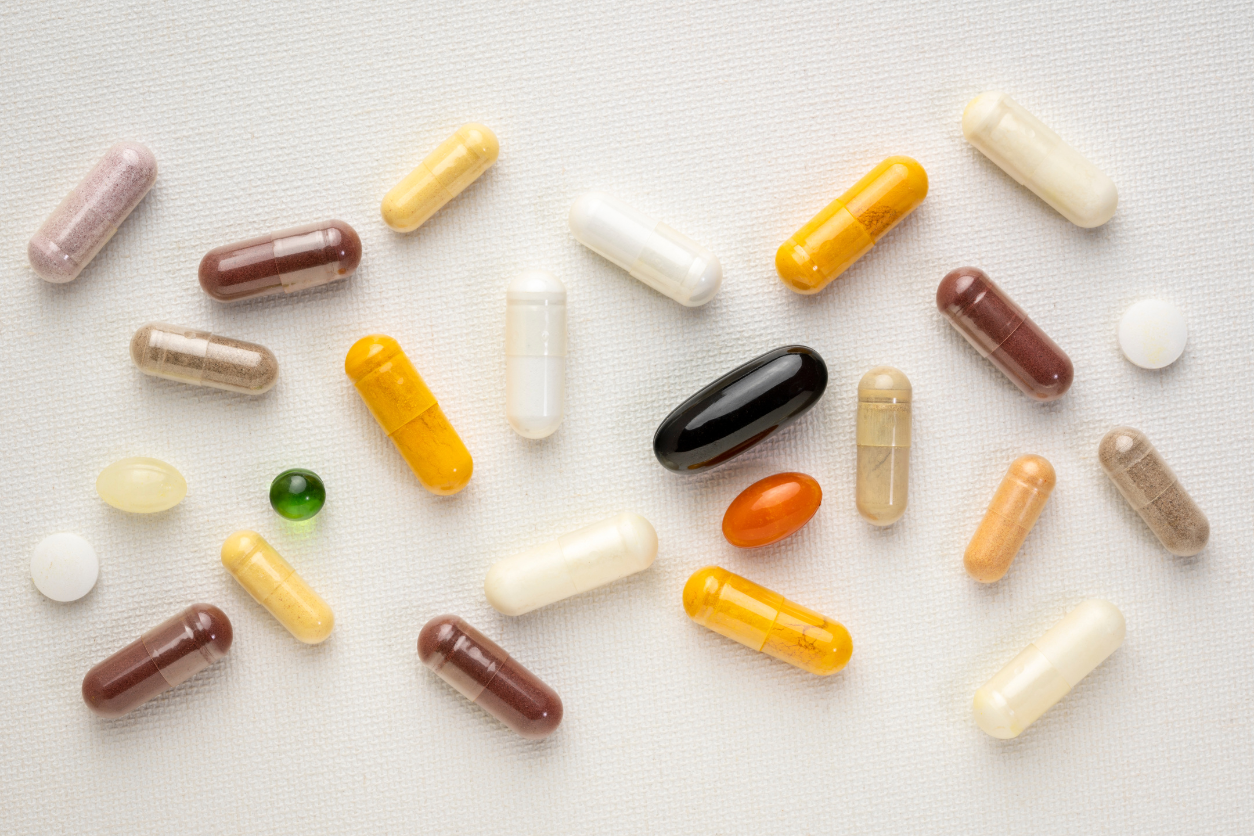
Certain nutrients, like B complex vitamins, probiotics, and iron, may help support mood and cognition during perimenopause.
The Bottom Line
Supporting your neurotransmitter production during perimenopause is not about replacing medical treatment — it is about giving your brain every possible advantage. Combine targeted supplementation with gut health optimization, and when appropriate, have a conversation with your provider about whether transdermal estradiol and micronized progesterone may be right for you.
You do not have to accept feeling unlike yourself. Your hormones are changing, but that does not mean you are powerless. There is help, there is science, and there is a path forward.
Book your evaluation with Dr. Bonza
References:
[1] A comprehensive review of nutritional influences on the serotonergic system,” Adv. Nutr., 2025. [Online]. Available: https://www.sciencedirect.com/science/article/pii/S2161831325001620
[2] M. Y. Lam et al., “Gut microbiota as an endocrine organ: Unveiling its role in human physiology and health,” Appl. Sci., vol. 14, no. 20, art. no. 9383, 2024. doi: 10.3390/app142093830.
[3] Pharmacy Times, “Supplements can help maintain ideal levels of neurochemicals,” 2025. [Online]. Available: https://www.pharmacytimes.com/view/supplements-can-help-maintain-ideal-levels-neurochemicals
[4] G. Pickering et al., “Magnesium status and stress: The vicious circle concept revisited,” Nutrients, vol. 12, no. 12, 2020. [Online]. Available: https://pmc.ncbi.nlm.nih.gov/articles/PMC7761127/
[5] ReNue Rx, “4 natural ways to increase serotonin & dopamine: Supplement solutions,” 2024. [Online]. Available: https://renuerx.com/supplements/4-natural-ways-to-increase-serotonin-dopamine-supplement-solutions/
[6] M. Mohammadpour et al., “The effect of vitamin D3 supplementation on serum BDNF, dopamine, and serotonin in children with ADHD,” Complement. Ther. Med., vol. 47, art. no. 102260, 2019. [Online]. Available: https://pubmed.ncbi.nlm.nih.gov/31779890/
[7] S. Mehdi et al., “Omega-3 fatty acids supplementation in the treatment of depression,” Nat. Prod. Bioprospect., 2023. [Online]. Available: https://pmc.ncbi.nlm.nih.gov/articles/PMC9962071/
[8] O. G. Ogunrinola et al., “Impact of probiotics and prebiotics on gut microbiome and hormonal regulation,” Challenges, vol. 6, no. 4, art. no. 56, 2024. doi: 10.3390/challe6040056.
[9] J. M. Baker, L. Al-Nakkash, and M. M. Herbst-Kralovetz, “Estrogen–gut microbiome axis: Physiological and clinical implications,” Maturitas, vol. 103, pp. 45–53, 2017. [Online]. Available: https://pubmed.ncbi.nlm.nih.gov/28778332/
[10] R. K. Kaliannan et al., “From gut to hormones: Unraveling the role of gut microbiota in (phyto)estrogen modulation in health and disease,” Mol. Nutr. Food Res., 2024. [Online]. Available: https://pubmed.ncbi.nlm.nih.gov/38342595/