When "The Pill" Isn't the Only Answer: Your Guide to Graduating from Birth Control to Menopause Hormone Therapy
Written and edited by Sarah Bonza MD, MPH, FAAFP, MSCP, DipABLM, NBC-HWC
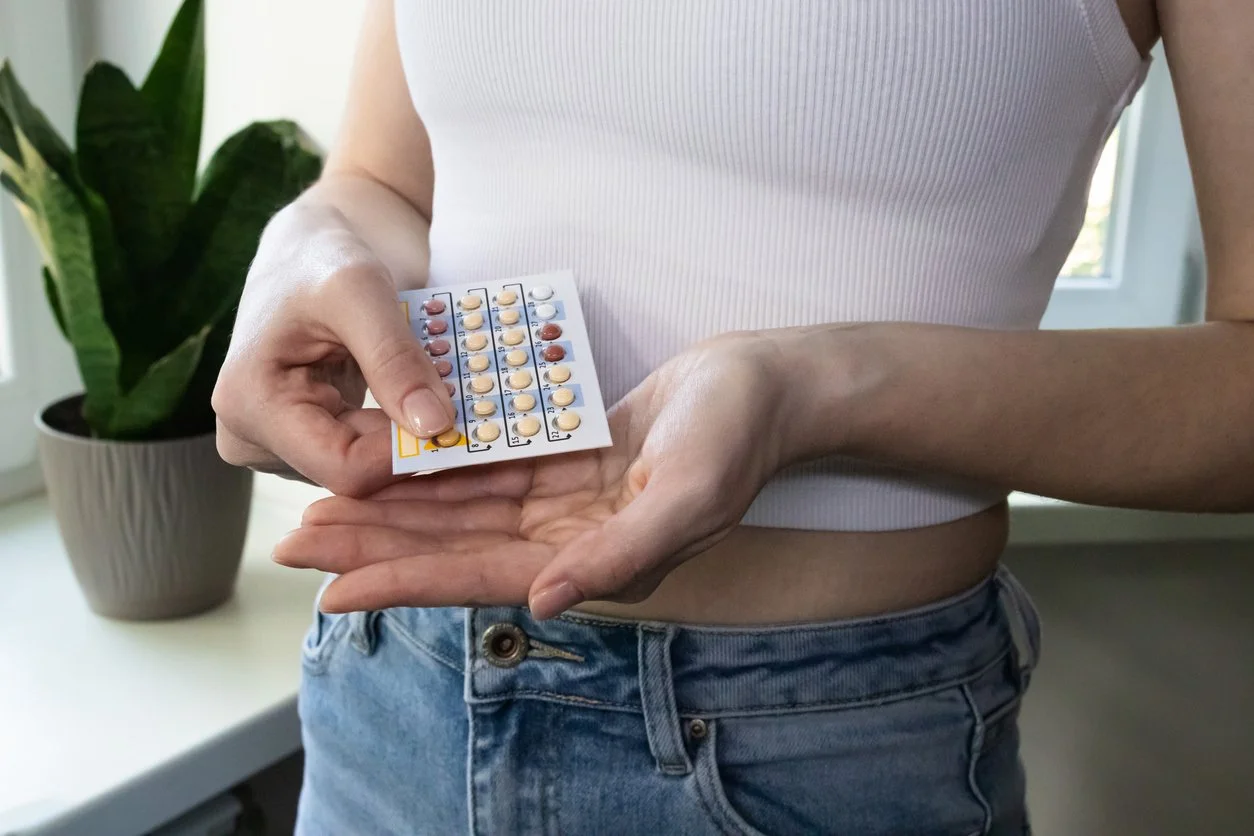
Combined oral contraceptives (COCs) and menopause hormone therapy both contain estrogen and a progesterone-like hormone. However, there are crucial differences in design and purpose.
The conversation usually starts the same way. A woman in her mid-to-late 40s sits across from me and says something like, "My gynecologist says I'm fine on the pill. But I'm exhausted. My libido has tanked. I'm worried about blood clots because my sister had one. And honestly, I don't even know if I'm close to menopause."
I hear this often—so often, in fact, that it's become one of the most important conversations I have with perimenopausal women. Because here's the truth: the pill can be excellent for certain seasons of life, but it isn't the best tool for every woman at every age. When your goal shifts from preventing pregnancy to thriving through midlife and protecting your long-term health, it may be time to consider a different approach.
This isn't about the pill being "bad." It's about asking an essential question: Is this medication still serving your current goals?
Understanding the Fundamental Difference
Let me start by demystifying what separates these two medication approaches. On the surface, combined oral contraceptives (COCs) and menopause hormone therapy both contain estrogen and a progesterone-like hormone. Both can reduce hot flashes, heavy bleeding, and night sweats. Both support bone health in the short term. But beneath that surface similarity lies a crucial difference in design and purpose.
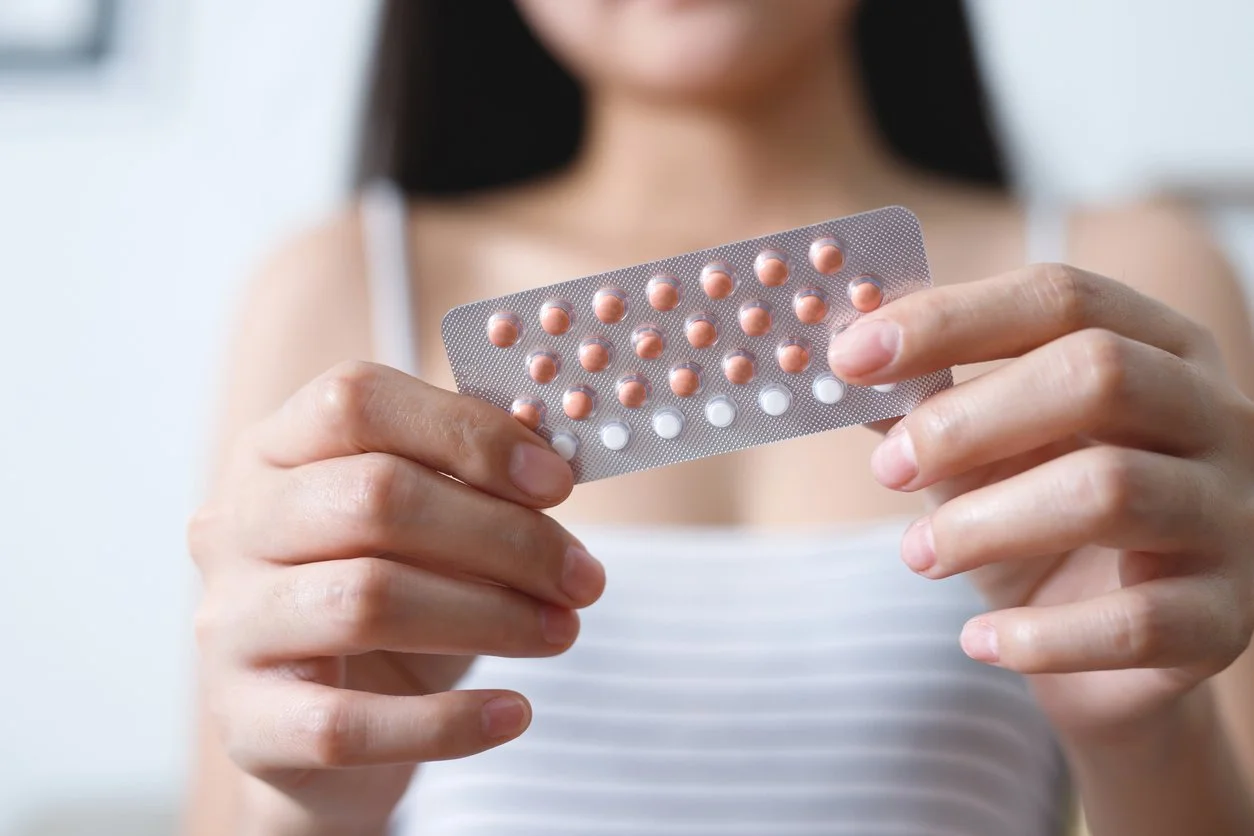
Combined oral contraceptives use potent synthetic hormones to suppress ovulation, prevent pregnancy, force predictable withdrawal bleeding, and maintain cycle control.
Combined oral contraceptives use potent synthetic hormones to:
Completely suppress ovulation
Prevent pregnancy
Force predictable withdrawal bleeding
Maintain cycle control
Think of them as a complete hormonal override system. The estrogen dose is deliberately high because the goal is to shut down your entire cycle.

Menopause hormone therapy replaces the hormones that gradually decline in perimenopause, rather than suppressing what's still partially working.
Menopause hormone therapy, by contrast, is designed to:
Replace what's gradually declining, not suppress what's still partially working
Provide symptom relief at lower, physiologic doses
Support long-term health outcomes (bone, brain, cardiovascular)
Use bioidentical hormones delivered transdermally to bypass liver metabolism

Both COCs and MHT can reduce hot flashes, heavy bleeding, and night sweats. Both support bone health in the short term. But beneath that surface similarity lies a crucial difference in design and purpose.
Why Gynecologists Reach for the Pill in Perimenopause
The reasoning isn't wrong. For women in their late 30s and early 40s, COCs truly shine. They offer several genuine advantages:
Benefits of COCs in Early-to-Mid Perimenopause:
Highly effective contraception when surprise pregnancies can still happen[1]
Tames erratic, heavy periods that feel unmanageable[1]
Provides predictable bleeding instead of random spotting
Eases hot flashes and night sweats for many women[2]
Improves acne and PMS with certain formulations
Protects bone density while you're on them
Reduces risk of ovarian, endometrial, and colorectal cancers[3]
For a 42-year-old drowning in cycle chaos, suffering night sweats, and terrified of an unplanned pregnancy, the pill can feel like a life raft. Your gynecologist isn't wrong to suggest it. In that moment, for that woman, it may be exactly right.
But here's what happens next: years pass. The goal changes. You stop worrying about pregnancy prevention. Now what bothers you most isn't your period—it's your sleep, your mood, your energy, your worry about heart health and bone strength over the next 20 years.

COCs can truly shine for many women in their late 30s and early 40s. However, issues can arise with long-term use in late perimenopause.
The Concerns I Have About Long-Term Synthetic Hormones in Late Perimenopause
I don't oppose COCs in perimenopause. But I'm more cautious about using them as long-term symptom management past age 45 or 50, and here's why.
1. The Clot Risk Issue
Ethinyl estradiol, the estrogen in most COCs, is remarkably potent—about 40 to 50 times more potent than the estradiol your ovaries produce. When it goes through your liver first (oral delivery), it increases your risk of blood clots in the legs or lungs—venous thromboembolism, or VTE[4].
Who is at higher risk?
Current smokers
Those with obesity or being overweight
Family history of clots
Migraine with aura
Personal history of VTE
The newer natural estrogen formulations in some COCs (estradiol valerate) do show lower VTE risk than ethinyl estradiol. Transdermal estradiol appears substantially safer from a clot and cardiovascular standpoint.
2. The Mood and Libido Puzzle
Not every woman struggles with this—some do beautifully on the pill. But many don't.
What synthetic progestins can do:
Dampen mood in some women
Worsen anxiety or depression
Lower free testosterone via increased SHBG (sex hormone-binding globulin)
Blunt sexual desire and satisfaction
Create a sense of emotional numbness for some[5]
If you've ever noticed your mood tanked when you went on the pill, or your interest in sex disappeared—you're not imagining it. It's real, documented, and physiologically sound.

Mood changes are a common sign of perimenopause.
3. The Menopause Masking Problem
Here's something many women don't realize: if you're on the pill, you cannot tell from your bleeding pattern whether you're approaching menopause.
Why?
That "period" you get each month is a withdrawal bleed, not a true menstrual cycle
Your ovaries are completely suppressed
Your natural hormonal signal is completely muted
Lab testing (FSH, estradiol) drawn while on the pill is unreliable[6]
It's like driving toward menopause with the dashboard lights off.
Why I Usually Prefer Transdermal Estradiol and Oral Micronized Progesterone
When a woman tells me, "I want my life back. I want to sleep. I want stable mood. I want to feel sexual again. I want strong bones for my 60s and beyond"—that's when I typically recommend transdermal estradiol paired with oral micronized progesterone.
Benefits of Transdermal Estradiol used in Menopause Hormone Therapy:
Bypasses your liver entirely, so it doesn't affect clotting factors or triglycerides
Lower VTE risk compared to oral hormones
Lower cardiovascular risk compared to oral estrogen
Excellent symptom relief: hot flashes, night sweats, sleep disruption, brain fog
Helps preserve bone density over time
May improve cardiovascular risk markers[7-9]

There are many benefits of transdermal estradiol used in menopause hormone therapy in comparison to ethinyl estradiol used in the pill.
Why Oral Micronized Progesterone of Menopause Hormone Therapy Is Different
Oral micronized progesterone is bioidentical—structurally identical to what your body makes.
Taken at night, micronized progesterone has a naturally calming effect via GABA receptors, which is why so many women report dramatically better sleep. And here's something many women don't know: progesterone is a bone-building hormone. It stimulates osteoblasts (bone-forming cells) and works synergistically with estrogen to increase bone density—about 0.68% per year more than estrogen alone[10].

Taken at night, micronized progesterone has a naturally calming effect via GABA receptors.
As we lose estrogen in midlife, we're not just dealing with hot flashes—we're dealing with bone loss, brain changes, and vascular shifts. The combination of physiologic estradiol and progesterone addresses all of that.
Here's what sets oral micronized progesterone apart from synthetic progestins in combined oral contraceptives:

Oral micronized progesterone is bioidentical, meaning it’s structurally identical to what your body makes.
A Special Option: The Hormonal IUD Plus Transdermal Estradiol
Some women ask, "Do I have to give up contraception if I switch?" The answer is no. One option is combining a levonorgestrel-releasing intrauterine system (LNG-IUS) with transdermal estradiol.
Why this combination works:
Provides highly effective contraception
Manages heavy bleeding locally
Protects your endometrium during estrogen therapy
Minimizes systemic progestin effects that might affect mood or libido
Studies show excellent relief of vasomotor symptoms
Maintains excellent endometrial protection
Avoids the increased VTE risk of combined oral contraceptives
For perimenopausal women with cardiovascular risk factors, this approach can be ideal.

Transdermal estradiol can be combined with an IUD to provide contraception in perimenopause.
Knowing When It's Time to Transition
There's no single answer for every woman, but certain scenarios make me think, "Let's have a conversation about MHT."
Consider transitioning if:
You're 45–55 and your primary concern is symptom relief rather than contraception
You have migraine with aura, personal/family history of blood clots, or cardiovascular risk factors
Your mood has worsened or your libido has plummeted since starting the pill—and it bothers you
You're ready to think about bone health, metabolic health, and longevity—not just managing this month's periods
You want to know where you truly are in the menopause transition
Importantly, transitioning doesn't mean you made a wrong choice by taking the pill. It means your body and goals have evolved. Your treatment should evolve with you.
Combined oral contraceptives are a solid, legitimate choice for cycle control and reliable contraception during early-to-mid perimenopause. But as symptom relief and long-term health become your main priorities, estradiol paired with micronized progesterone may be best.
How to Have This Conversation with Your Doctor
You deserve thoughtful, collaborative care—not a 60-second dismissal.
Start with clarity about your goals:
Is pregnancy prevention still essential for me?
What bothers me most—my period, hot flashes, mood, sleep, brain fog?
Am I thinking about this month, or the next 10–20 years?
Ask directly:
"I'm concerned about my long-term health on synthetic hormones. Can we explore transdermal estradiol with micronized progesterone instead?"
"How would we know if I'm actually approaching menopause if I stay on the pill?"
"Can we talk about my VTE risk given my personal/family history?"
Share your specific concerns:
"I'm worried about clots given my [family history/migraine/smoking status]."
"I've noticed my mood and libido have changed since starting this pill."
"I want to think about my bones and heart health long-term."
If your clinician isn't familiar with these distinctions, you're not being difficult—you're being informed and advocating for yourself.

You deserve thoughtful, collaborative care. You deserve a clinician who listens, explains, and personalizes your care.
A Practical Path Forward
If you decide to transition, here's a general framework (always discuss specifics with your doctor):
Step 1: Clarify Goals
Review with your doctor whether pregnancy prevention is still essential
Step 2: Review Risk Profile
Blood pressure, BMI, smoking status
Personal/family history of breast cancer, clotting, stroke, heart disease
Migraine history, neurologic issues
Current medications, mental health history
Step 3: Decide on Contraception
Copper IUD + transdermal estradiol
Hormonal IUD + transdermal estradiol
Partner vasectomy (if already done)
Barrier methods (if acceptable)
Step 4: Plan the Switch
Finish your current pill pack
Don't start a new one
Begin transdermal estradiol at low-to-moderate dose
Add oral micronized progesterone, usually taken at night
Adjust doses over 6–12 weeks based on response
Step 5: Monitor and Fine-Tune
Track for the first few months:
Sleep quality and ease of falling asleep
Mood and emotional stability
Libido and sexual satisfaction
Any unexpected bleeding
Share this data with your clinician. Hormones aren't "set it and forget it"—we personalize and adjust.

Transitioning from COCs to MHT doesn't mean you made a wrong choice by taking the pill. It means your body and goals have evolved. Your treatment should evolve with you.
The Bottom Line
Combined oral contraceptives are a solid, legitimate choice for cycle control and reliable contraception during early-to-mid perimenopause.
But as symptom relief and long-term health become your main priorities, lower-dose, transdermal estradiol paired with micronized progesterone often offers:
Better cardiovascular safety
Lower clot risk
Improved mood and sleep
Maintained sexual desire
Stronger bone protection
Ability to track menopause progression
Transitioning from the pill to menopause hormone therapy isn't a failure. It's a natural evolution. It's asking your healthcare provider to match your treatment to your current life stage, your goals, and your health priorities.
You deserve a clinician who listens, explains, and personalizes your care. You deserve to feel like yourself again—energized, clear-headed, confident in your choices, connected to your sexuality, sleeping through the night, and moving toward your next decades with strength and vitality.
That's what Bonza Health is dedicated to: helping you reclaim your vitality at every stage of midlife.

Ready to explore what's possible for you? Let's start the conversation!
References
[1] M. K. Cho, “Use of Combined Oral Contraceptives in Perimenopausal Women,” Chonnam Medical Journal, vol. 54, no. 3. p. 153, Jan. 01, 2018. https://doi.org/10.4068/cmj.2018.54.3.153
[2] K. Maguire and C. Westhoff, “The state of hormonal contraception today: established and emerging noncontraceptive health benefits,” American Journal of Obstetrics and Gynecology, vol. 205, no. 4. Elsevier BV, Sep. 29, 2011. https://doi.org/10.1016/j.ajog.2011.06.056
[3] S. Jahanfar et al., “Assessing the impact of contraceptive use on reproductive cancer risk among women of reproductive age—a systematic review,” Frontiers in Global Women s Health, vol. 5. Frontiers Media, p. 1487820, Nov. 13, 2024. https://doi.org/10.3389/fgwh.2024.1487820
[4] Ø. Lidegaard, L. Nielsen, C. W. Skovlund, F. E. Skjeldestad, and E. Løkkegaard, “Risk of venous thromboembolism from use of oral contraceptives containing different progestogens and oestrogen doses: Danish cohort study, 2001-9,” BMJ, vol. 343, Oct. 2011, https://doi.org/10.1136/bmj.d6423
[5] R. Grikšienė, R. Mončiunskaitė, and O. Rukšėnas, “What is there to know about the effects of progestins on the human brain and cognition?,” Frontiers in Neuroendocrinology, vol. 67. Elsevier BV, p. 101032, Aug. 25, 2022. https://doi.org/10.1016/j.yfrne.2022.101032
[6] M. D. Creinin, “Laboratory criteria for menopause in women using oral contraceptives,” Fertility and Sterility, vol. 66, no. 1, p. 101, Jul. 1996, https://doi.org/10.1016/s0015-0282(16)58394-0
[7] A. R. Genazzani, P. Monteleone, A. Giannini, and T. Simoncini, “Hormone therapy in the postmenopausal years: considering benefits and risks in clinical practice,” Human Reproduction Update, vol. 27, no. 6, p. 1115, Jul. 2021, https://doi.org/10.1093/humupd/dmab026
[8] M. Š. Goldštajn et al., “Effects of transdermal versus oral hormone replacement therapy in postmenopause: a systematic review,” Archives of Gynecology and Obstetrics, vol. 307, no. 6. Springer Science+Business Media, p. 1727, Jun. 17, 2022. https://doi.org/10.1007/s00404-022-06647-5
[9] D. V. Menon and W. Vongpatanasin, “Effects of Transdermal Estrogen Replacement Therapy on Cardiovascular Risk Factors,” Treatments in Endocrinology, vol. 5, no. 1, p. 37, Jan. 2006, https://doi.org/10.2165/00024677-200605010-00005
[10] V. Seifert‐Klauss and J. C. Prior, “Progesterone and Bone: Actions Promoting Bone Health in Women,” Journal of Osteoporosis, vol. 2010, p. 1, Jan. 2010, https://doi.org/10.4061/2010/845180