Your Heart’s Hidden Language: How Heart Rate Variability Reveals What Perimenopause Is Doing to Your Body
Written and edited by Sarah Bonza, MD, MPH, FAAFP, MSCP, DipABLM, NBC-HWC

Tracking your HRV can tell you a lot about your health
If you’ve noticed your sleep getting worse, your anxiety creeping up, or your body taking longer to bounce back from a workout, you’re not imagining things. Something real is shifting inside your body during perimenopause — and there’s a simple, trackable number that can help you see it happening: Heart Rate Variability, or HRV.
HRV isn’t just for fitness enthusiasts with fancy watches. It’s a powerful window into how well your nervous system is coping with everything life (and hormones) are throwing at it. And the best part? You can track it from your wrist and take real steps to improve it.
So, What Exactly Is HRV?
You might assume your heart beats like a clock — perfectly even, tick-tick-tick. But a healthy heart actually has tiny variations in the timing between each beat. If your heart rate is 70 beats per minute, the gap between beats might be 0.82 seconds, then 0.90 seconds, then 0.85 seconds. Those millisecond differences are your heart rate variability.
Here’s the counterintuitive part: more variation is actually better. A higher HRV means your heart is flexible and responsive — like a car that can smoothly speed up and slow down as needed. A lower HRV means your heart is beating more rigidly, like it’s stuck in one gear. That rigidity is your body’s way of telling you it’s under strain.

Moderate-intensity aerobic exercise can help improve HRV
Your Nervous System: The Gas Pedal and the Brake
To understand why HRV matters, it helps to know a little about your autonomic nervous system — the part of your brain and body that runs on autopilot, controlling your heart rate, digestion, breathing, and stress responses.
It has two main branches. Your sympathetic nervous system is the gas pedal. It’s your fight-or-flight mode — it speeds your heart up, sharpens your focus, and prepares you to deal with a threat (even if that threat is just a packed inbox). Your parasympathetic nervous system is the brake. It’s your rest-and-digest mode — it slows your heart, calms your body, and helps you recover and repair.
A high HRV means your brake is working well. Your body can shift smoothly between “go” and “rest” depending on what you need. A low HRV often means the gas pedal is stuck down — your body is living in a constant low-grade stress state, even when you’re lying on the couch [1].

The parasympathetic nervous system, your rest-and-digest mode, slows your heart, calms your body, and helps you recover and repair
Why Athletes Swear by It
If you follow any fitness accounts, you may have noticed athletes and coaches talking about HRV. There’s a good reason. Research shows that tracking HRV helps athletes figure out when their body is ready to train hard and when it needs a rest day. A study published in Sensors found that athletes who adjusted their training based on HRV data recovered better and were less likely to overtrain compared to those following rigid schedules [2].
A separate meta-analysis confirmed that HRV-guided training was more effective at improving the body’s rest-and-recovery capacity than simply following a preset plan [3]. The takeaway for the rest of us? HRV is essentially a daily readout of how recovered and resilient your body is. And that information is just as valuable for a woman managing perimenopause as it is for a professional athlete.

Heart rate variability is a daily window into how your nervous system is handling the hormonal shifts of perimenopause
The Longevity Connection: Why This Number Matters for Your Future
Here’s where HRV gets really interesting. It’s not just about today’s workout — it may be connected to how long you live.
A major meta-analysis involving over 38,000 people found that people with lower HRV had a significantly higher risk of dying from any cause, regardless of their age, sex, or where they lived [4]. The famous Framingham Heart Study — one of the most important heart studies ever conducted — found that people with reduced HRV had a 1.7 times greater risk of death [5].
Even research on centenarians (people who live to 100) has found a connection. Those with better HRV had significantly better survival odds. In fact, centenarians whose HRV fell below a certain level had five times the mortality risk of those whose HRV stayed higher [6].
In simple terms: a more adaptable heart seems to be a longer-living heart.

What your HRV is telling you
The Estradiol-HRV Connection: The Missing Piece of the Perimenopause Puzzle
Now here’s the part that most women never hear about. Your estradiol — the most active form of estrogen — doesn’t just regulate your menstrual cycle. It plays a direct role in keeping your nervous system balanced. And when estradiol starts to fluctuate and decline during perimenopause, your HRV can take a real hit.
A 2022 study published in Physiological Reports compared heart rate variability in premenopausal and postmenopausal women. The results were striking: postmenopausal women had significantly lower nervous system flexibility at rest. Even more concerning, when the researchers introduced a mild cardiovascular stressor, the postmenopausal women’s hearts were unable to maintain the same protective variability that premenopausal women could [7].
Another study found that women experiencing active menopausal symptoms — hot flashes, sleep disruption, mood changes — had measurably more sympathetic nervous system dominance (the gas pedal stuck down) compared to women of the same age without those symptoms [8]. In other words, the worse your symptoms, the more your nervous system may be struggling.
The hopeful news: Research suggests this shift is at least partially reversible. A study in the Bratislava Medical Journal showed that women who received estrogen therapy saw their nervous system balance improve — their HRV patterns began to look more like those of premenopausal women — in as little as two months [9]. Additional research confirmed that hormone therapy reduced the stress-dominant state in symptomatic postmenopausal women within four months of treatment [10].
One important caveat: Not all hormone therapy is created equal. Research published in The Lancet found that while estrogen-only therapy improved HRV, adding certain progestogens actually reversed those benefits and left women worse off than no treatment at all [11]. This is a crucial conversation to have with your healthcare provider — the type and combination of hormones matters.
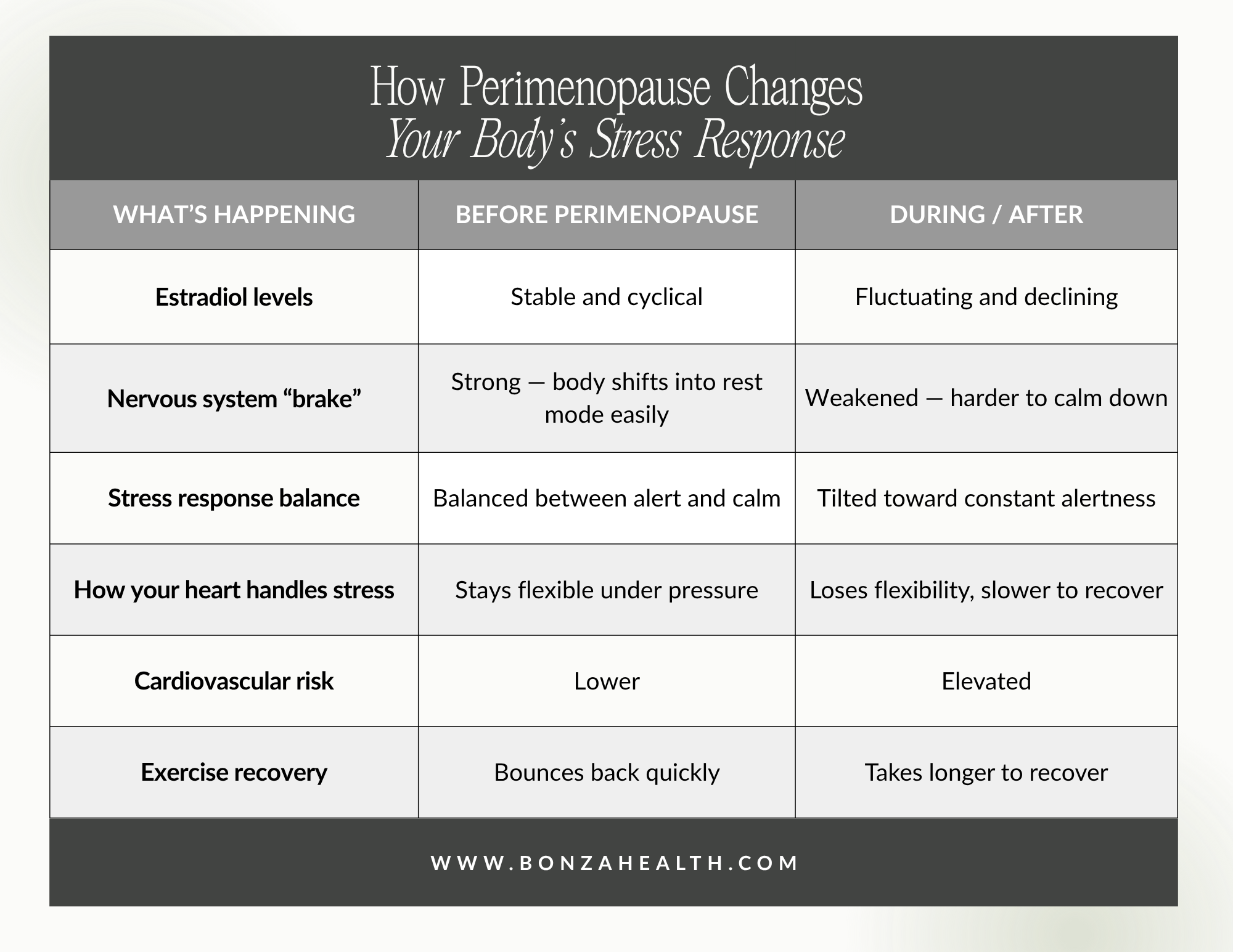
How perimenopause changes your body’s stress response
How to Start Tracking Your HRV
The great news is that you don’t need a lab or a doctor’s visit to track your HRV. Modern wearable technology has made this incredibly accessible.
Wearable devices: The Apple Watch, WHOOP band, Oura Ring, and Garmin watches all measure HRV automatically, typically while you sleep. Most give you a daily readout and track trends over time. For the most consistent data, look at your morning readings taken while you’re still lying in bed [2].
Chest strap monitors: If you want the most accurate readings, a chest strap like the Polar H10 paired with an app like Elite HRV or HRV4Training offers research-grade precision.
Tips for reliable tracking: Measure at the same time each day (right when you wake up is best). Stay in the same position. Check it before coffee or exercise. Don’t stress over a single day’s number — look at your 7-day rolling average instead. And keep a simple log of your sleep, stress, cycle phase, and exercise alongside your HRV to spot patterns.
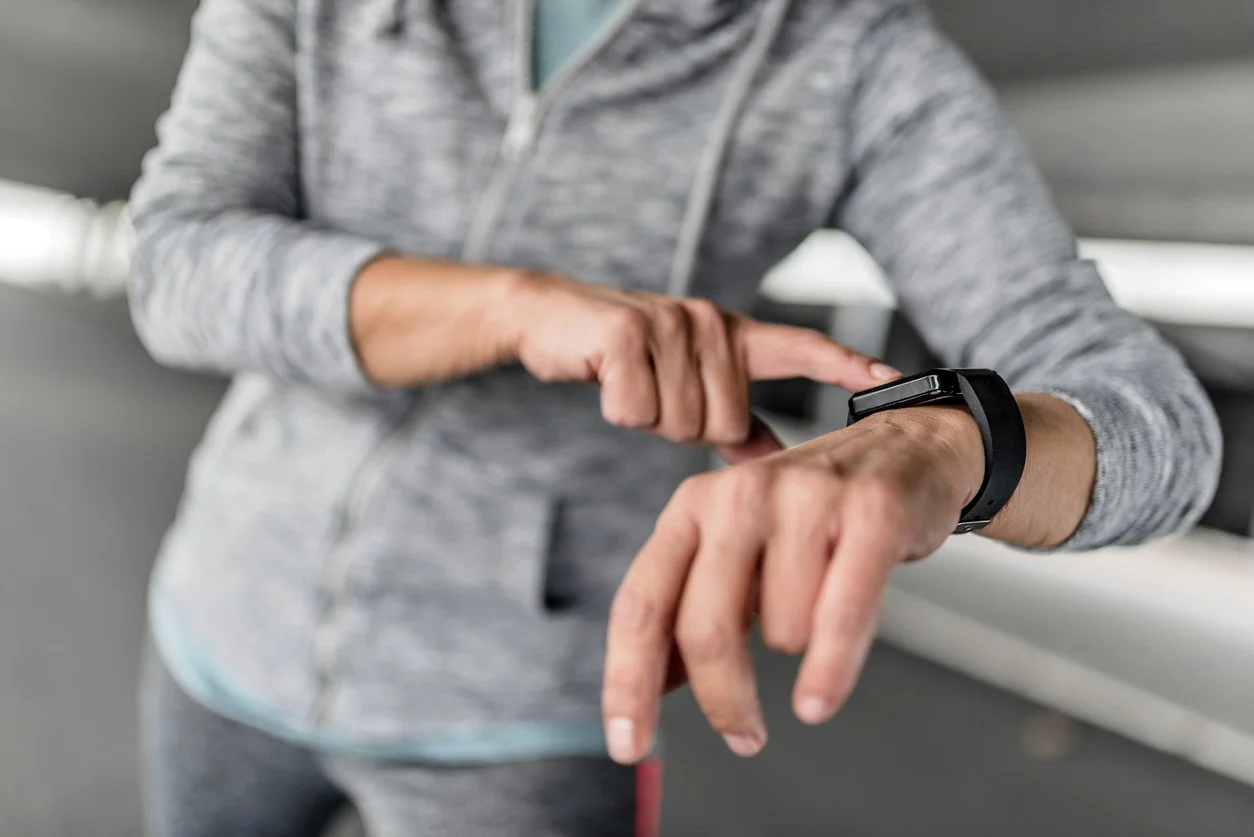
Wearable devices can automatically measure your HRV, typically while you sleep
5 Evidence-Based Ways to Improve Your HRV
1. Move your body regularly. You don’t need to run marathons. A randomized controlled trial showed that moderate-intensity aerobic exercise (think brisk walking, swimming, or cycling) three times a week for 12 weeks significantly improved both HRV and sleep quality in middle-aged and older adults [12]. Consistency beats intensity.
2. Try slow, rhythmic breathing. This is one of the simplest and most effective tools. Breathing at about 5–6 breaths per minute (roughly 5 seconds in, 5 seconds out) has been shown to improve HRV in as little as four weeks [14]. It directly activates your parasympathetic nervous system — like pressing the brake pedal for your body. Try it for five minutes before bed.
3. Prioritize your sleep. This one is a bit of a two-way street: poor sleep lowers HRV, and lower HRV disrupts sleep. Research shows that exercise improves both simultaneously [12]. Prioritize consistent bedtimes, a cool dark room, and avoiding screens before sleep.
4. Manage your stress — any way that works for you. A randomized trial compared physical activity, mindfulness meditation, and HRV biofeedback (using a device that coaches your breathing) for stress reduction. All three worked equally well at reducing stress, anxiety, and depressive symptoms [15]. The best approach is the one you’ll actually do consistently.
5. Talk to your doctor about hormone therapy. Given the evidence that estradiol directly supports nervous system balance, this is a conversation worth having, especially if you’re experiencing significant perimenopause symptoms. Remember: the type and formulation of hormone therapy matters — estrogen-only therapy showed HRV benefits in research, while certain combination therapies did not [9][11]. Your provider can help you weigh the options.
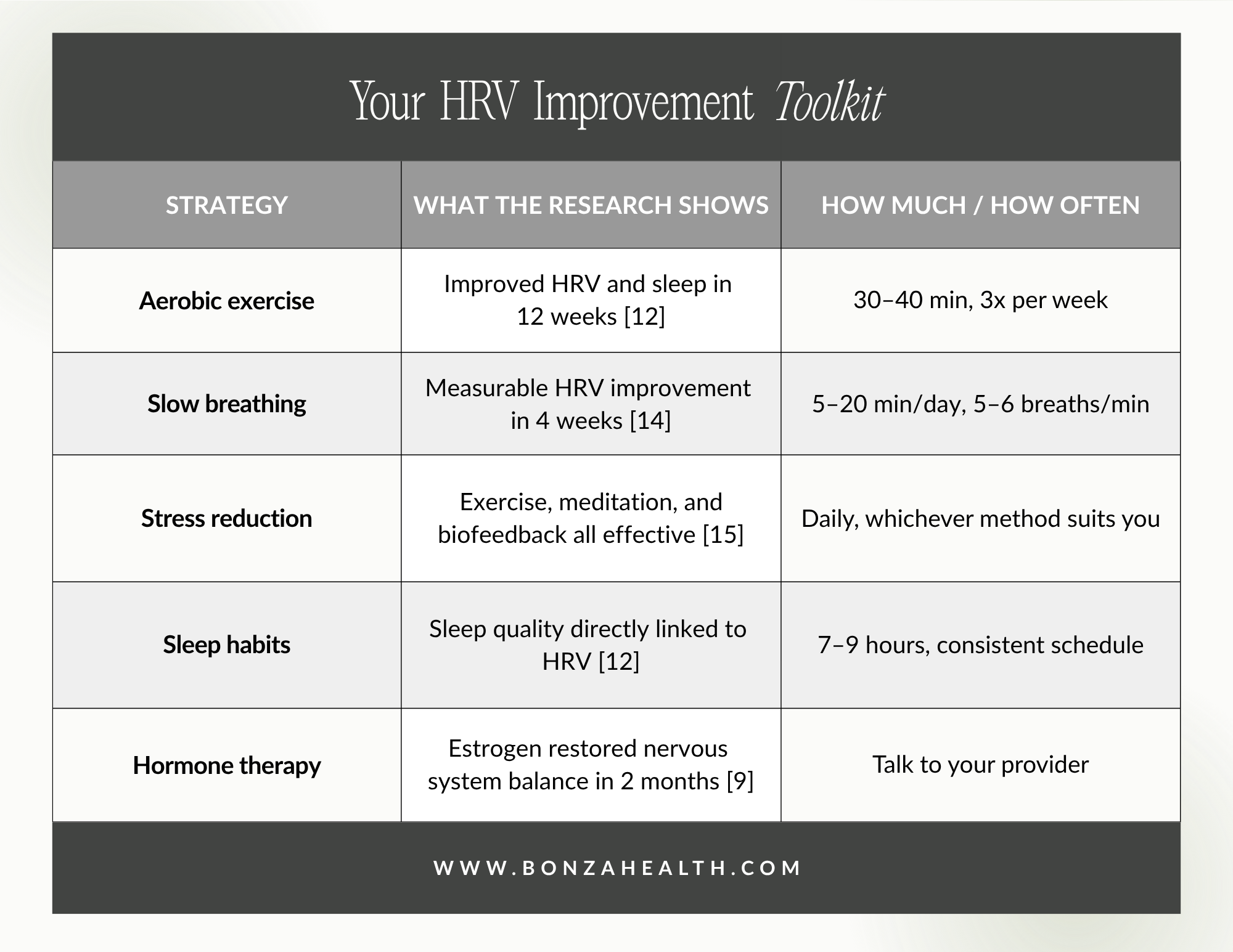
Your HRV improvement toolkit
The Research We Still Need for Women’s Health
As encouraging as this research is, we’re still in the early stages of understanding HRV and women’s hormonal health. Most of the existing studies compare premenopausal women to postmenopausal women in a single snapshot. What we really need are large-scale studies that follow women through the entire perimenopausal journey, tracking how HRV shifts week by week alongside hormonal changes.
We also need research on whether HRV-guided exercise programs — the kind that have helped athletes — could be adapted for women going through hormonal transitions. Imagine a fitness app that adjusts your workout intensity based on where you are in your cycle and how your nervous system is responding that day.
Additionally, we need much better data on how different types and combinations of hormone therapy affect the nervous system. The finding that certain progestogen combinations may worsen HRV deserves far more investigation. And critically, we need studies that include women of diverse racial, ethnic, and socioeconomic backgrounds — most of the existing research has limited diversity.
Finally, combining HRV data with other health markers — inflammation levels, metabolic health, bone density — could help create more complete, personalized health profiles for women navigating this transition.

When estradiol starts to fluctuate and decline during perimenopause, your HRV may take a hit
Your Heart Is Talking. Are You Listening?
Heart rate variability is more than a number on your smartwatch. It’s a daily window into how your nervous system is handling the hormonal shifts of perimenopause. The research is clear: as estradiol fluctuates and declines, your body’s ability to shift between “go” and “rest” can weaken, and that has real consequences for your sleep, your stress levels, your recovery, and your long-term cardiovascular health.
But here’s the most important thing to know: HRV is not fixed. It responds to how you live. Regular movement, slow breathing, quality sleep, stress management, and the right medical support can all help you strengthen your nervous system’s flexibility during this stage of life.
Start tracking your HRV. Look for your patterns. Have the conversation with your healthcare provider. Your heart is already telling you what it needs — now you know how to listen.

For more evidence-based health insights for women, visit www.bonzahealth.com
References
[1] Task Force of the European Society of Cardiology and the North American Society of Pacing and Electrophysiology, “Heart rate variability: Standards of measurement, physiological interpretation, and clinical use,” Eur. Heart J., vol. 17, pp. 354–381, 1996.
[2] J. Fryer et al., “Heart rate variability applications in strength and conditioning: A narrative review,” Sensors, vol. 24, no. 12, 2024, Art. no. 3888.
[3] D. J. Plews, B. Laursen, A. E. Kilding, and M. Buchheit, “Heart rate variability-guided training for enhancing cardiac-vagal modulation, aerobic fitness, and endurance performance: A methodological systematic review with meta-analysis,” Int. J. Sports Physiol. Perform., vol. 16, no. 12, pp. 1735–1747, 2021.
[4] M. N. Jarczok et al., “Heart rate variability in the prediction of mortality: A systematic review and meta-analysis of healthy and patient populations,” Neurosci. Biobehav. Rev., vol. 143, Art. no. 104907, 2022.
[5] H. Tsuji et al., “Reduced heart rate variability and mortality risk in an elderly cohort: The Framingham Heart Study,” Circulation, vol. 90, no. 2, pp. 878–883, 1994.
[6] J. M. Hernandez-Vicente et al., “Heart rate variability and exceptional longevity,” Front. Physiol., vol. 11, Art. no. 566399, 2020.
[7] S. Ramesh et al., “Heart rate variability as a function of menopausal status, menstrual cycle phase, and estradiol level,” Physiol. Rep., vol. 10, Art. no. e15298, 2022.
[8] S. Moodithaya and S. T. Avadhany, “The relationship between menopausal symptoms and heart rate variability in middle-aged women,” J. Menopausal Med., vol. 18, no. 2, pp. 92–98, 2012.
[9] T. Fialova et al., “Estrogen can modulate menopausal women’s heart rate variability,” Bratisl. Lek. Listy, vol. 114, no. 10, pp. 599–603, 2013.
[10] Y. Liu et al., “Effect of hormone replacement therapy on heart rate variability in postmenopausal women,” Int. J. Cardiol., vol. 84, no. 1, pp. 1–5, 2002.
[11] M. Christ et al., “Heart rate variability and hormone replacement therapy,” Lancet, vol. 354, no. 9188, pp. 1498–1499, 1999.
[12] S. H. Shen et al., “Effects of exercise training on sleep quality and heart rate variability in middle-aged and older adults with poor sleep quality: A randomized controlled trial,” J. Clin. Sleep Med., vol. 17, no. 5, pp. 985–998, 2021.
[13] F. Aubert, B. Seps, and F. Beckers, “Heart rate variability in athletes,” Sports Med., vol. 33, no. 12, pp. 889–919, 2003.
[14] A. Agarwal, A. Ranjan, and M. Siddiqui, “Effect of resonance breathing on heart rate variability and cognitive functions in young adults: A randomized controlled study,” Cureus, vol. 14, no. 3, Art. no. e22916, 2022.
[15] J. E. van der Zwan et al., “Physical activity, mindfulness meditation, or heart rate variability biofeedback for stress reduction: A randomized controlled trial,” BMC Complement. Altern. Med., vol. 15, Art. no. 461, 2015.