
Bonza Health Blog
Gain the tools and understanding you need to help manage the challenges of perimenopause and beyond.
Women experiencing perimenopause or menopause can reclaim their health and vitality. At Bonza Health, we help women see hormone changes as a natural midlife transition and provide the doctor-backed information women need to navigate hormonal health conditions with confidence.
Check out our latest blog posts from our leading physician’s best tips and tools for easing hormonal symptoms, special announcements on our courses and services, and much more! Be a part of our ever-growing community of like-minded women who are thriving in health -- even with perimenopause or menopause conditions.





Her Hair Was Thinning at 37. It Wasn't Genetic
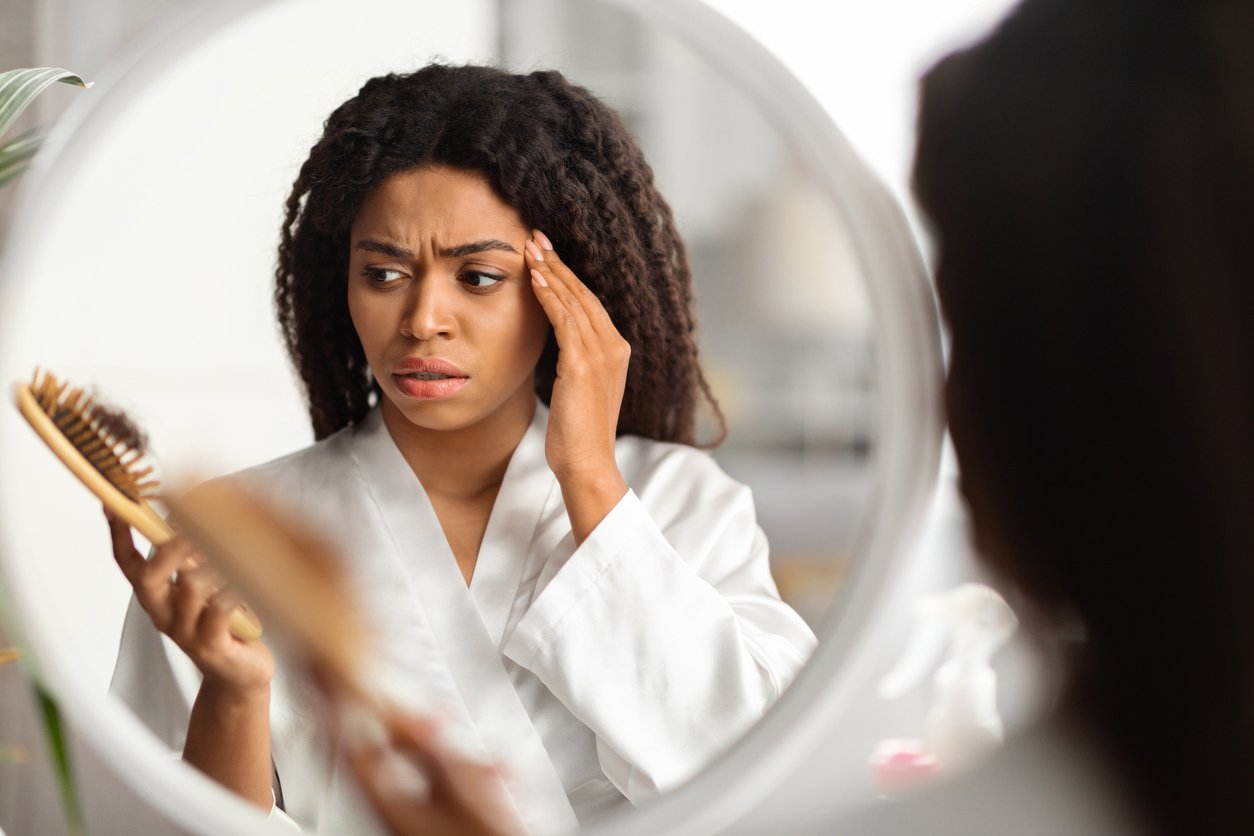
She was 37. She brought a plastic bag of hair to her appointment — collected from the shower drain over four days, because she was afraid I wouldn't believe her. Her previous visit had lasted eleven minutes and ended with "everyone sheds, it's probably stress, try to relax." That is not a diagnosis. That is a scheduling constraint wearing a lab coat. I want to name something clinicians often skip. Hair loss is not cosmetic. For women in midlife, hair is bound up with identity, professional presence, sexual confidence, and the private terror of visibly aging faster than you expected. Women describe hair loss with language they reserve for grief. When a woman is told to relax about it, she hears that her distress is the problem — rather than the shedding.
She's Already Lifting, Already Eating Well, and Still Gaining. This Isn't Vanity — It's Physiology
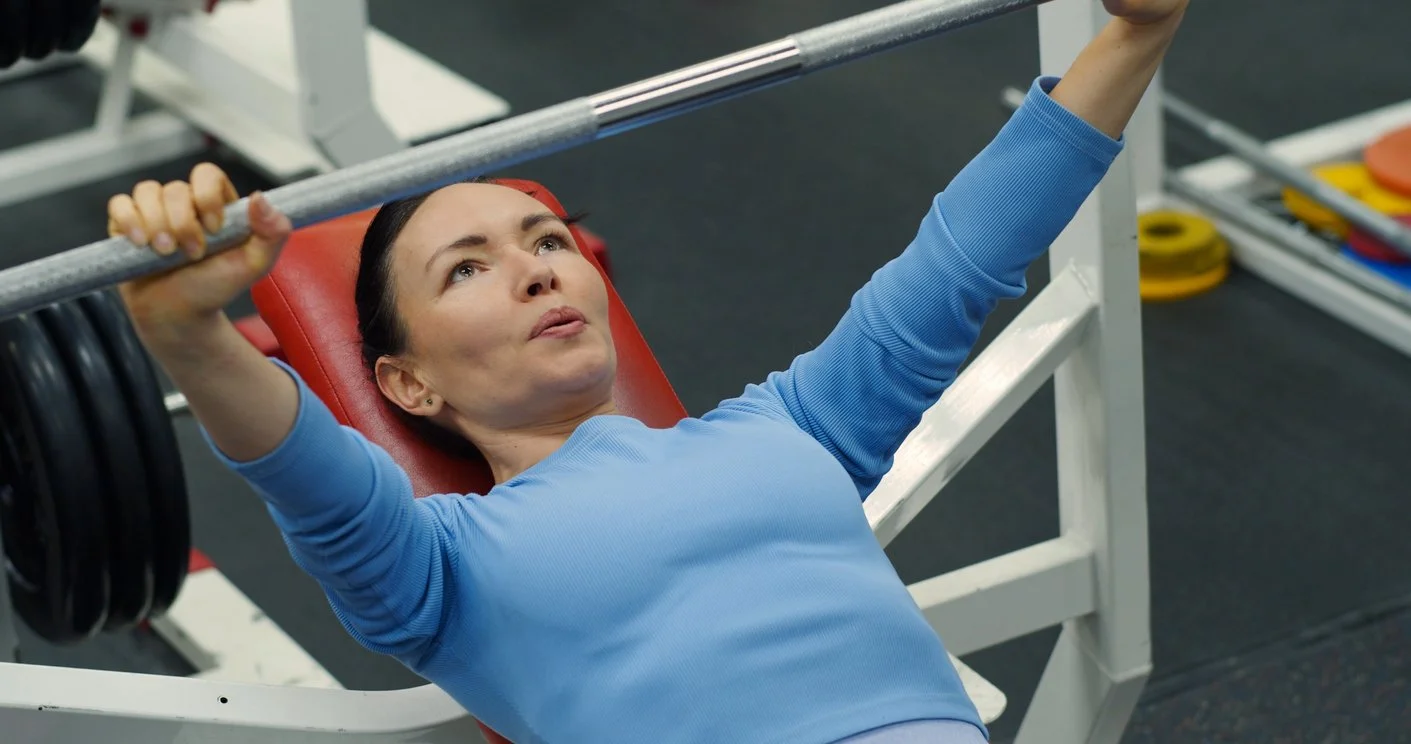
She is forty-six. She lifts three days a week and has for a decade. She tracks her protein. She walks the dog twice a day. Her labs, by most standards, look fine. And over the last two years she has gained eleven pounds that will not move — most of it through her midsection, in a pattern her body has never done before. Then she says the sentence I hear more than any other in my exam room: "I know it sounds vain, but—". I want to answer that sentence carefully, because it deserves two separate answers and most physicians only give the second one.

Oxytocin for Perimenopause: The "Love Hormone" That May Help Libido, Mood, and Vaginal Atrophy
Oxytocin is a nine–amino-acid peptide hormone produced in the hypothalamus and released by the posterior pituitary gland. Most of us learned about it in two contexts: labor and breastfeeding. Synthetic oxytocin (Pitocin) has been used clinically for more than fifty years to induce contractions and support milk letdown. What we didn't learn in medical school is that oxytocin receptors are found throughout the body — in the brain, the cardiovascular system, the gut, the bones, the skin, and the vaginal epithelium. This receptor distribution is the reason oxytocin has been investigated for an unusually wide range of conditions: chronic pain, social anxiety, postpartum depression, autism spectrum traits, gastroparesis, weight regulation, and — most relevant to us — sexual function and vaginal tissue health in women.

When PMDD Gets Worse in Perimenopause: The Estrogen-Histamine Connection
A patient came into my office recently — 43 years old, regular cycles since adolescence, diagnosed with PMDD in her late twenties. She had spent more than a decade managing it well: an SSRI during the luteal phase, consistent sleep, regular exercise, a diet that worked for her. She knew her pattern. But in the past year, that pattern had changed. This presentation is common in my practice, and the reason for it is something most clinicians were never taught: the relationship between estrogen and histamine, and what happens to that relationship during perimenopause.

Is It ADHD, Perimenopause, or Both? What the Science Actually Says About the Diagnosis Surge in Midlife Women
If you've spent any time on social media in the past year, you've seen the wave: women in their 40s describing the same cluster of symptoms — losing words mid-sentence, missing deadlines for the first time in their lives, drowning in browser tabs and unfinished tasks — and asking the same question: Is this ADHD, or is this perimenopause? As a menopause-trained physician, here's how I think about it, drawing on traditional medicine, lifestyle medicine, and functional medicine.

Your Heart’s Hidden Language: How Heart Rate Variability Reveals What Perimenopause Is Doing to Your Body
If you’ve noticed your sleep getting worse, your anxiety creeping up, or your body taking longer to bounce back from a workout, you’re not imagining things. Something real is shifting inside your body during perimenopause — and there’s a simple, trackable number that can help you see it happening: Heart Rate Variability, or HRV. HRV isn’t just for fitness enthusiasts with fancy watches. It’s a powerful window into how well your nervous system is coping with everything life (and hormones) are throwing at it. And the best part? You can track it from your wrist and take real steps to improve it.

The Silent Thief: Why We Must Advocate for Earlier DEXA Screening in Women
Osteoporosis is often called “the silent thief” because it steals bone density without warning — no pain, no symptoms, and no red flags — until a fracture occurs. Despite affecting over 200 million people worldwide and causing more than 8.9 million fractures annually, our screening guidelines remain reactive rather than proactive, particularly for women under 65 who carry significant risk factors. As clinicians, we must ask ourselves: are we waiting too long to look?

Your Body in Transition: A System-by-System Guide to Perimenopause
Yesterday, a patient in her early forties sat across from me describing something she had never experienced before: her heart would suddenly race for no apparent reason, jolting her awake at 2 a.m. She could not fall back asleep. She felt foggy at work. She wondered if something was seriously wrong. Nothing was wrong with her heart. What she was experiencing were some of the earliest signals of perimenopause. The purpose of this blog is to walk you through the major body systems affected by perimenopause and to show you what to expect at each phase. My hope is that by understanding these changes, you will feel empowered rather than frightened, and that you will recognize the signals your body is sending you as it moves through this natural, but sometimes disorienting, transition.
Why Women Shouldn’t Have to Wait: The Case for Menopause Hormone Therapy During Perimenopause
If you’re a woman in your late thirties or forties experiencing mood swings, brain fog, weight gain, insomnia, crushing fatigue, or a vanishing libido, you’ve probably been told one of two things: “It’s just stress,” or “You’re too young for menopause.” As a clinician who works with women navigating the perimenopause transition every day, I want to be clear: that advice is outdated, and it is leaving millions of women suffering unnecessarily. The research is catching up to what many of us are seeing in practice—and what women have been telling us about their own bodies for years.

Navigating the Intersection of PCOS & Perimenopause
Polycystic ovary syndrome (PCOS) is one of the most prevalent endocrine disorders affecting women of reproductive age, impacting an estimated 8-13% of women worldwide. For decades, it has been framed primarily as a fertility issue. But PCOS is, at its core, a lifelong metabolic condition, and nowhere does that become more apparent than when it collides with perimenopause. This blog is for the woman who has been told she 'may outgrow her PCOS'—you haven't. It is for the woman entering her 40s noticing new weight gain, worsening insulin resistance, and irregular cycles being dismissed as 'just perimenopause.' Your body is telling you something. Let's listen.
The Great Mimicker: When Hashimoto's Hides in Perimenopause
For many women in their 40s, the "midlife shift" begins with a specific brand of exhaustion—the kind that coffee can't fix and a full night's sleep barely touches. Usually, the first suspect is perimenopause. And while declining estrogen is often to blame, there is a "Great Mimicker" lurking in the background for millions of women: Hashimoto's Thyroiditis.

Why Your Body Is Saying 'No More': The Science of Overwhelm in Perimenopause
What feels like breakdown during perimenopause is actually your body's desperate attempt to protect you from a lifetime of chronic stress it can no longer sustain. Learn why your overwhelm has real physiological causes—and what you can do about it.

When Your Mind Feels Like a Stranger: The Neurobiology of Perimenopause and Mood
The anxiety, rage, and depression that arrive in perimenopause are not signs of a new psychiatric disorder—they are predictable neurobiological responses to hormonal change. Understanding the science is the first step toward effective treatment.

Prioritizing Plant-Based Protein in Perimenopause: A Lifestyle Medicine Approach to Metabolic Health
A whole-food, plant-based (WFPB) diet with an emphasis on plant-based proteins is a superior approach to managing perimenopausal metabolic changes compared to intermittent fasting (IF). While IF may be effective in younger populations, its impact on insulin resistance, muscle loss, and cortisol levels makes it less ideal for perimenopausal women. Prioritizing nutrient-dense, protein-rich plant foods supports metabolic stability, preserves muscle mass, and aligns with the hormonal needs of this transitional phase.

Working with a Trainer During Perimenopause: Why Strength Matters and How Guidance Can Help
This blog offers practical guidance and personal reflections on working with an exercise trainer during the physical shifts of perimenopause. It explains why strength training matters at this stage, not only to maintain muscle and manage changes in body composition, but also to support bone health and help prevent osteoporosis. Readers will find straightforward discussions on technique, form, and how a trained professional can provide steady support, accountability, and tailored programs to keep them progressing safely.

The Power of Magnesium in Perimenopause
This blog explores the vital role of magnesium for women in perimenopause, highlighting how it supports metabolism, stress management, heart health, and muscle relaxation. Magnesium helps ease common symptoms such as sleep disturbances, muscle cramps, and fatigue, making it essential for maintaining energy and resilience in midlife. We’ll also cover recommended forms, like magnesium glycinate, for optimal absorption and digestive comfort.

Darwin’s Theory of Natural Selection: What It Means for Us as Our Reproductive Years Wind Down
This blog explores how Darwin’s theory of natural selection and the concept of entropy relate to the menopausal transition, reframing this life stage as a powerful new beginning rather than an end. By understanding menopause as an opportunity to enhance both lifespan and healthspan, women can embrace this phase with renewed vitality, focusing on proactive health strategies to mitigate entropy’s effects and reclaim their well-being.

Reimagining Menopause: Insights from the New Pause Symposium Experience
Highlights from the New Pause symposium on October 19, 2024

Endometriosis & Perimenopause: Unlocking Relief with Traditional and Functional Medicine Approaches
Understand the intersection of endometriosis and perimenopause, focusing on traditional versus functional medicine approaches for diagnosis and treatment. Combining both approaches offers women an integrative path to managing endometriosis and hormonal fluctuations during perimenopause.

The Biological Functions of Estrogen: Understanding It’s Role in Perimenopause and Beyond
Estrogen is often referred to as the "fountain of youth" due to its vital role in maintaining cognitive function, bone strength, skin elasticity, and cardiovascular health. As women approach menopause and estrogen levels decline, the protective effects of this powerful hormone wane, making it essential to explore ways to support estrogen levels and reclaim vitality during this life stage.