GHK-Cu and Perimenopause: What the Evidence Actually Shows About the Copper Peptide for Skin, Hair, and Collagen
Written and edited by Sarah Bonza, MD, MPH, FAAFP, MSCP, DipABLM, NBC-HWC
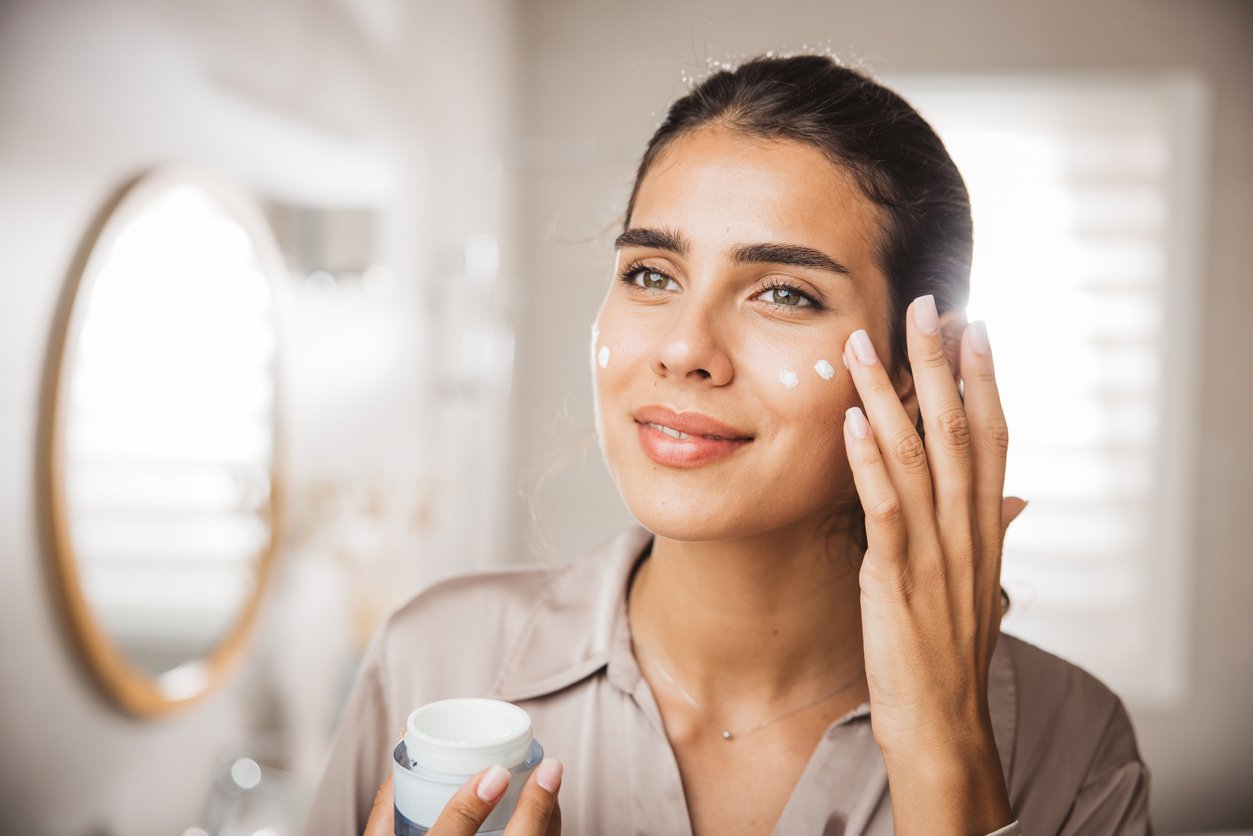
A cautiously curious clinical look at one of the oldest peptides in regenerative medicine — and the new wave of marketing around it.
A patient came into my office a few months ago, opened a folder on her phone, and showed me a long list of skincare products she had been cycling through for the past two years. Retinol. Vitamin C. Bakuchiol. Three different growth factor serums. A peptide moisturizer. A red light mask. She was 46. She told me she felt like she was "throwing money at her face" without understanding any of it. She had just heard about copper peptides on a podcast and wanted to know if it was the next thing to try or the next thing to ignore.
This is one of the most common conversations I have now. Women in perimenopause notice their skin and hair changing — sometimes suddenly, sometimes gradually — and they enter a marketplace that is genuinely overwhelming. Copper peptides, and specifically GHK-Cu, are one of the more interesting compounds in that marketplace because they are not new, they are not synthetic, and they have a body of research stretching back over fifty years. They are also being marketed in ways that often outrun the evidence.
Here is what I actually think about GHK-Cu in perimenopause: where the data is strongest, where it is weaker, and how I think about it in my own practice.
Why GHK-Cu is relevant in perimenopause
Two things are happening to your skin and hair in midlife, and they are happening at the same time.
The first is the estrogen story. Estrogen receptors are densely distributed in skin fibroblasts and hair follicles. As estrogen declines through perimenopause and into menopause, women lose an estimated 30% of dermal collagen in the first five years after their final menstrual period, with continued loss of roughly 2% per year thereafter. Skin thins. Elasticity decreases. Wound healing slows. Hair follicles cycle differently. This is the change your patients describe when they tell you, "my skin is just different now" or "my hair won't grow back the way it used to."
The second story is less well-known. GHK-Cu — a small tripeptide that your body manufactures naturally — is involved in tissue repair, collagen synthesis, anti-inflammatory signaling, and a remarkable range of gene expression patterns associated with regeneration. Plasma levels of GHK have been documented to decline from approximately 200 ng/mL at age 20 to roughly 80 ng/mL at age 60, a 60% drop [1]. This decline is independent of menopause. It happens in men, too. But for women in perimenopause, the GHK decline compounds the estrogen-related changes — you are losing repair signaling on two fronts at once.
This is why GHK-Cu has accumulated such interest in the regenerative medicine and aesthetic dermatology literature. The peptide your skin makes less of with age is one of the same peptides being studied to restore some of what was lost. That is not the same as a miracle. But it is a clinically interesting story.

Two things are happening to your skin and hair in midlife, and they are happening at the same time.
What GHK-Cu actually is
GHK-Cu was first isolated from human plasma albumin in 1973 by biochemist Loren Pickart, who noticed that liver cells from older donors began functioning more like younger tissue when exposed to plasma from younger donors [1,2]. The active fraction turned out to be a tiny tripeptide — three amino acids called glycine, histidine, and lysine — bound to a copper ion. The copper binding is essential. GHK alone has limited biological activity. GHK-Cu, the copper complex, is the form your body uses and the form used therapeutically.
What makes GHK-Cu unusual is the breadth of what it does. It is not a single-pathway molecule. A 2018 review in the International Journal of Molecular Sciences analyzed available gene expression data and found that GHK-Cu at clinically relevant concentrations affected the expression of approximately 31.2% of human genes [2]. Genes associated with tissue repair, antioxidant defense, and anti-inflammatory pathways are upregulated. Genes linked to tissue destruction and fibrosis are suppressed. This is a wider biological footprint than most therapeutic peptides, which is part of why GHK-Cu has been investigated for everything from skin and hair to wound healing, bone repair, and even cognitive function.
For practical purposes in perimenopausal women, three application areas matter most: skin, hair, and the connective-tissue repair that underlies both.
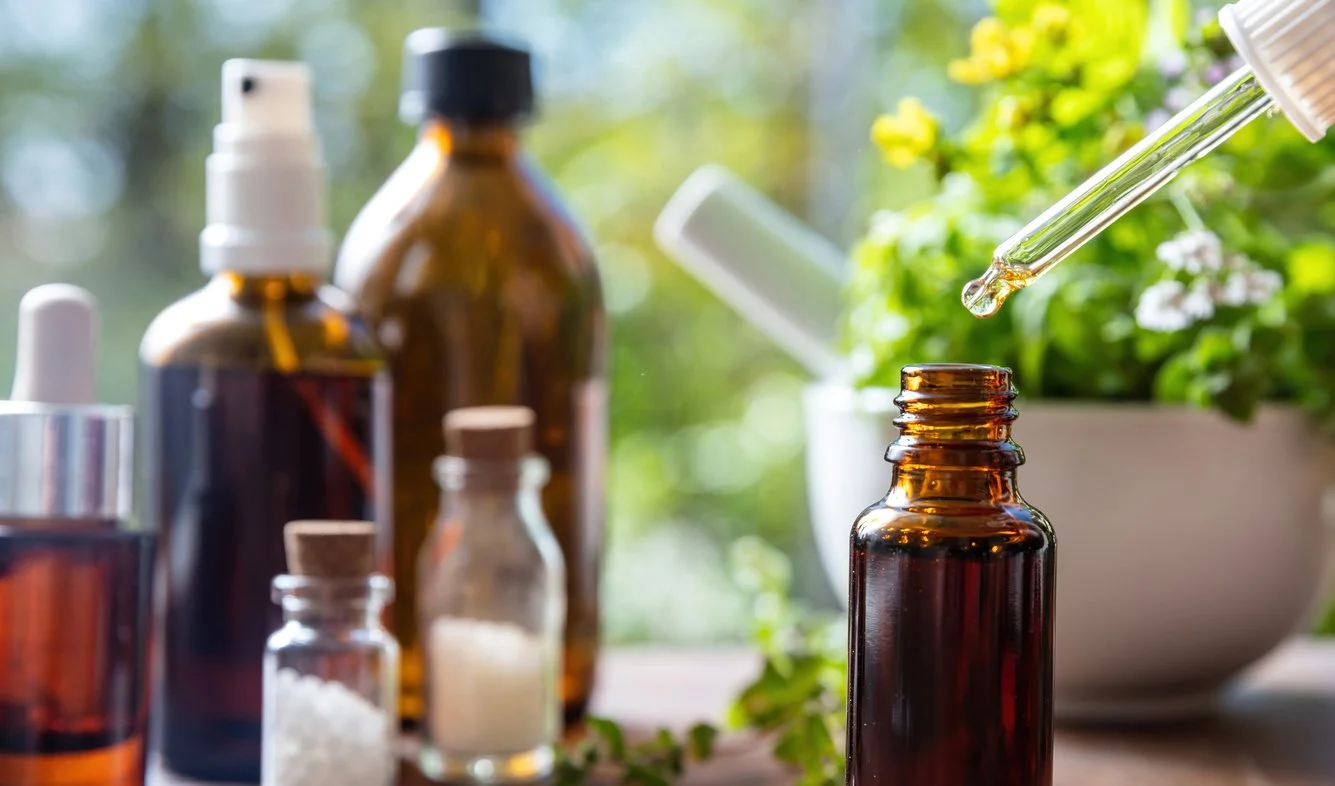
GHK-Cu is often used for skin, hair, and tissue regeneration in perimenopause.
The evidence: where it's strongest, where it's weaker
1. Skin: the strongest evidence
This is where the data on GHK-Cu is most compelling, and where I am most willing to discuss it as a meaningful adjunct in midlife skin care.
GHK-Cu stimulates both collagen and elastin production in human dermal fibroblasts, at concentrations as low as 0.01 nM [3]. It also performs a dual action that distinguishes it from simple collagen-boosting ingredients: it upregulates the matrix metalloproteinases (MMP-1 and MMP-2) that clear damaged collagen, while simultaneously upregulating tissue inhibitors (TIMP-1) that prevent excessive degradation [3]. In plain language, it both removes old, damaged collagen and protects newly formed collagen. That is a more sophisticated mechanism than most ingredients on the shelf in a skincare aisle.
The clinical trial most often cited is Leyden and colleagues' 2002 randomized 12-week trial of a GHK-Cu facial and eye cream in 71 women with photoaged skin [4]. The treatment group demonstrated measurable improvements in skin density, thickness, laxity, and fine lines compared to vehicle control. This is the study that anchors most of the clinical confidence in topical GHK-Cu for skin aging. A 2024 review in BioImpacts synthesizing the topical GHK-Cu evidence concluded that the peptide has consistent anti-wrinkle and skin-rejuvenating activity in human studies, though formulation and delivery remain ongoing challenges [5].
Compared to the gold-standard ingredient for anti-aging — topical retinoids — GHK-Cu is less well-studied but has a substantially gentler side effect profile. It does not cause the irritation, photosensitivity, or barrier disruption associated with retinoids. In my practice, I view it as a complementary, not competitive, ingredient: a reasonable addition for women who cannot tolerate retinoids, or as part of a layered approach for those who can.

For practical purposes in perimenopausal women, three GHK-Cu application areas matter most: skin, hair, and the connective-tissue repair that underlies both.
2. Hair: the more interesting but more limited evidence
This is where I want to exercise caution, because GHK-Cu is being marketed for hair loss in midlife women with a confidence that the human evidence does not quite support yet.
The mechanism is plausible and well-described. In animal and cell culture studies, GHK-Cu stimulates the proliferation of dermal papilla cells, the structures at the base of each hair follicle that govern its growth cycle. It activates the Wnt/β-catenin signaling pathway, which is central to hair follicle cycling [6]. Pyo and colleagues showed that GHK-Cu at concentrations as low as 1 μM promoted dermal papilla cell proliferation and beta-catenin signaling in mouse models. Some preclinical comparative studies have suggested that GHK-Cu performs comparably to 5% minoxidil in stimulating hair follicle growth in organ culture, though through a different mechanism — minoxidil opens potassium channels and increases blood flow, while GHK-Cu acts on growth factor signaling and matrix remodeling.
What we lack is the large randomized controlled trial evidence for GHK-Cu in human hair loss that we have for minoxidil and finasteride. The published clinical work in humans is mostly small, often industry-sponsored, and frequently confined to skin endpoints rather than hair-count endpoints. There are clinical signals — women using topical GHK-Cu for several months sometimes report subjective improvements in density and quality, but I would not promise a specific outcome on the basis of the current evidence.
When I discuss GHK-Cu for hair loss in perimenopause, I am honest about this: the mechanism is real, the safety profile is excellent, the early human signals are promising, but the head-to-head trial evidence is not where it needs to be. For most patients with significant midlife hair changes, I still address the underlying hormonal picture, iron and ferritin status, thyroid function, and consider standard therapies like minoxidil and the appropriate use of hormone therapy first. GHK-Cu is an adjunct, not a replacement.
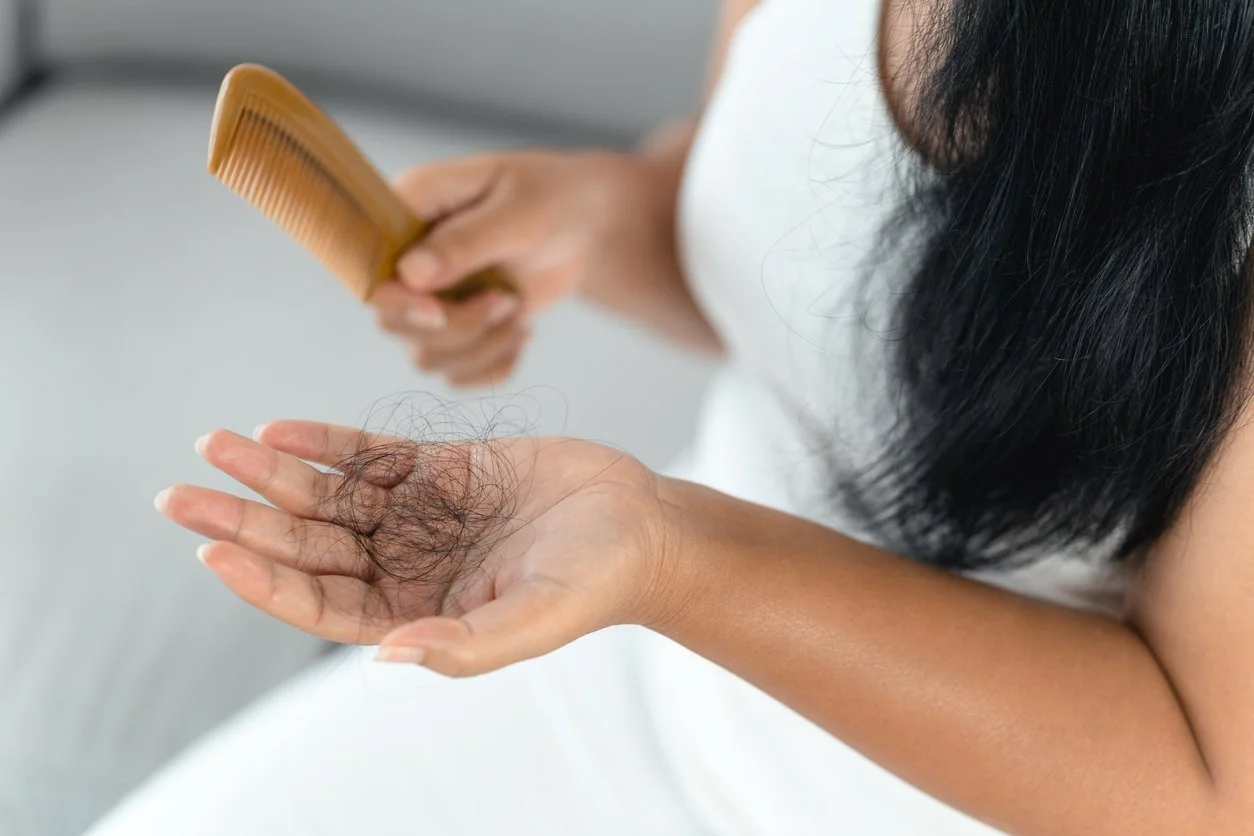
When I discuss GHK-Cu for hair loss in perimenopause, I am honest about this: the mechanism is real, the safety profile is excellent, the early human signals are promising, but the head-to-head trial evidence is not where it needs to be.
3. Wound healing and tissue regeneration: the mechanistic foundation
The evidence that gave rise to all the rest of the GHK-Cu literature is the wound-healing evidence, and it is the strongest of all [1,2]. GHK-Cu accelerates wound closure, supports angiogenesis (the formation of new blood vessels), reduces scarring, and modulates the inflammatory response of tissue injury. For most midlife women, this is not a primary reason to consider GHK-Cu — but it is the biological context that explains why a single small peptide has effects ranging from skin to hair to broader tissue repair. The same regenerative machinery is at work in all of them.
GHK-Cu may accelerate wound closure, support angiogenesis (the formation of new blood vessels), reduce scarring, and modulate the inflammatory response of tissue injury.
How GHK-Cu is supplied
Compounding pharmacies and dermatologic suppliers offer GHK-Cu in several formulations. The route matters because GHK-Cu, like most peptides, is poorly absorbed orally — digestive enzymes break it down before it can act systemically. Effective delivery is topical (for skin and hair) or sublingual/buccal (for systemic effects).

Standardized dosing has not been firmly established in randomized trials, and what is available in compounding pharmacies reflects clinical convention more than regulatory consensus. Individualized dosing under prescriber direction is appropriate.
It is worth saying clearly: GHK-Cu in compounded formulations is not FDA-approved for any specific indication. Cosmetic over-the-counter products containing low concentrations of GHK-Cu have been available for decades. Higher-concentration compounded preparations require a prescriber and informed consent.
Who should be cautious
GHK-Cu has a strong safety profile, but it is not for everyone.

The most common adverse effects from topical GHK-Cu are mild — localized irritation, transient redness at the application site. Most patients tolerate it well, which is part of why I am willing to discuss it more freely than peptides with more challenging side effect profiles.
How GHK-Cu fits with everything else in perimenopausal skin and hair care
This is the conversation that matters most clinically.
For skin, the foundation of perimenopausal skin care is not a single ingredient. It is sun protection, smoking cessation, adequate sleep, hydration, sufficient dietary protein, and — for the women who are appropriate candidates — systemic hormone therapy, which independently improves dermal collagen, skin thickness, and elasticity. GHK-Cu, retinoids, vitamin C, and other active ingredients are layered on top of that foundation. They are useful additions. They are not substitutes for the underlying physiology.
For hair, the same logic applies, more so. If a woman is losing hair in midlife, my first questions are about thyroid, ferritin, vitamin D, hormone levels, autoimmune history, stress, sleep, and protein intake. The answer to perimenopausal hair loss is rarely a single peptide. It is a workup, a plan, and an appropriate combination of treatments — which may include GHK-Cu, may include minoxidil, may include hormone therapy, and almost always includes the basics most clinicians skip.
For both, the temptation in midlife is to add more products. The clinical reality is usually that addressing the foundation does more than any individual ingredient on top of it.

If a woman is losing hair in midlife, my first questions are about thyroid, ferritin, vitamin D, hormone levels, autoimmune history, stress, sleep, and protein intake.
My honest take
GHK-Cu is one of the more legitimate peptides in the current midlife wellness conversation. The mechanistic data is strong. The topical skin evidence is meaningful. The hair evidence is interesting, but earlier than the marketing suggests. The safety profile is reassuring. And critically, this is a molecule your own body manufactures, declines with age, and may benefit from being supplemented — biologically, that is a coherent story rather than a marketing one.
If you are a perimenopausal woman noticing skin and hair changes and trying to decide what to add to your routine, GHK-Cu is one of the more reasonable evidence-supported additions to consider. But please do not let it replace the work of understanding your underlying hormonal picture, your nutrition, your sleep, and the basics of skin and scalp health. The women who get the best outcomes in my practice are the ones who treat the foundation first and add adjuncts second.
That is the conversation I am here to have.
Ready to figure out what would actually help your skin and hair right now?
If this article describes where you are, I would love to help you sort through what's worth your time and money.
→ Take the Bonza Health hormone quiz to see if a consultation is a good fit.
→ Book a 50-minute consultation with Dr. Bonza — we'll look at your full picture, discuss whether peptides, hormone therapy, or both make sense, and build a plan that is actually personalized to you.
Related reading on Bonza Health:
Dr. Sarah Bonza, MD, MPH, FAAFP, MSCP, DipABLM, NBC-HWC is a board-certified Family Physician and Certified Menopause Practitioner serving women in Ohio and beyond. Bonza Health is licensed to practice in Ohio. Compounded peptide medications, including GHK-Cu formulations, are prescribed only after thorough clinical evaluation and informed consent.
This article is for educational purposes and does not constitute medical advice. Compounded medications, including those discussed here, are not FDA-approved for the indications described and should be used only under the direction of a qualified, licensed healthcare provider.
References
The studies cited here are available through PubMed and the publishers' websites. As always, I encourage curious readers to look at the abstracts themselves — bringing questions to your appointment is something I genuinely welcome.
[1] L. Pickart and A. Margolina, "The effect of the human peptide GHK on gene expression relevant to nervous system function and cognitive decline," Brain Sci., vol. 7, no. 2, art. 20, Feb. 2017, https://doi.org/10.3390/brainsci7020020
[2] L. Pickart and A. Margolina, "Regenerative and protective actions of the GHK-Cu peptide in the light of the new gene data," Int. J. Mol. Sci., vol. 19, no. 7, art. 1987, Jul. 2018, https://doi.org/10.3390/ijms19071987
[3] T. Badenhorst, D. Svirskis, M. Merrilees, L. Bolke, and Z. Wu, "Effects of GHK-Cu on MMP and TIMP expression, collagen and elastin production, and facial wrinkle parameters," J. Aging Sci., vol. 4, no. 3, art. 1000166, 2016, https://doi.org/10.4172/2329-8847.1000166
[4] J. J. Leyden, J. Stephens, M. K. Finkey, and S. Barkovic, "Skin care benefits of copper peptide containing facial cream," presented at the Am. Acad. Dermatol. Annu. Meet., abstract P68, 2002. Subsequently summarized in J. J. Leyden, "Anti-aging benefits of a GHK-Cu facial and eye cream: A randomized 12-week clinical trial," Dermatol. Surg., vol. 31, no. 7, pp. 809–816, 2005.
[5] S. M. Mortazavi, S. A. Mohammadi Vadoud, and H. R. Moghimi, "Topically applied GHK as an anti-wrinkle peptide: Advantages, problems, and prospective," BioImpacts, vol. 15, art. 30071, 2024, https://doi.org/10.34172/bi.30071
[6] Y. Dou, A. Lee, L. Zhu, J. Morton, and W. Ladiges, "The potential of GHK as an anti-aging peptide," Aging Pathobiol. Ther., vol. 2, no. 1, pp. 58–61, Mar. 2020, https://doi.org/10.31491/apt.2020.03.014