When PMDD Gets Worse in Perimenopause: The Estrogen-Histamine Connection
Written and edited by Sarah Bonza, MD, MPH, FAAFP, MSCP, DipABLM, NBC-HWC

Women with a history of PMDD already have a heightened neurobiological response to hormonal change. Layered onto perimenopause, that sensitivity meets a hormonal environment more chaotic than anything they experienced in their twenties or thirties.
A patient came into my office recently — 43 years old, regular cycles since adolescence, diagnosed with PMDD in her late twenties. She had spent more than a decade managing it well: an SSRI during the luteal phase, consistent sleep, regular exercise, and a diet that worked for her. She knew her pattern.
In the past year, that pattern had changed. The two weeks before her period had taken on a new quality. Migraines she had never had before. Hives across her chest the morning after a glass of red wine. Waking at 2 a.m. with a racing heart. The familiar irritability was now layered with something that felt physical — flushed skin, congested sinuses, a kind of itchy restlessness she could not put into words. Her cycles were shorter. Sometimes she skipped one. She was not in menopause. By every measure, she should have been managing better than she was.
This presentation is common in my practice, and the reason for it is something most clinicians were never taught: the relationship between estrogen and histamine, and what happens to that relationship during perimenopause.
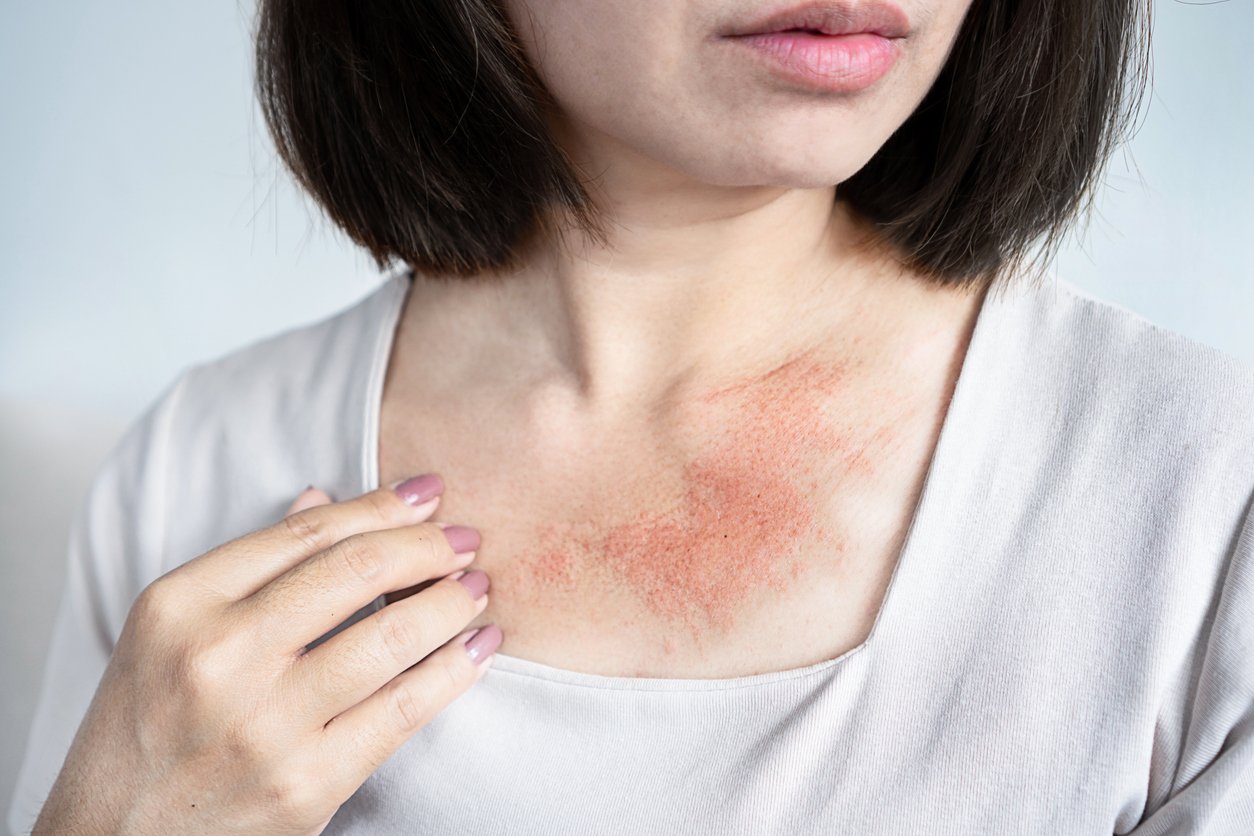
Histamine is not only an allergy mediator. It is also a neurotransmitter and an immune signaling molecule that influences mood, sleep, gut motility, ovulation, and stomach acid production.
What's actually changing in perimenopause
The conventional understanding is that PMDD ends with menopause. That is true. Once the ovaries stop cycling, the hormonal triggers for PMDD are gone. What is less widely understood is that the years leading up to menopause — perimenopause — are often when PMDD becomes harder to manage than at any other point in a woman's life.
The reason is variability. In perimenopause, estrogen does not simply decline. It fluctuates, sometimes dramatically, with peaks two to three times higher than typical premenopausal levels and sudden drops that follow within days.¹,² A growing body of research has shown that this variability — not low estrogen alone — is what predicts mood symptoms during the menopause transition. Women with greater week-to-week shifts in estradiol show significantly more depressive and irritability symptoms than women with stable levels, regardless of where the absolute value sits.³
Women with a history of PMDD already have a heightened neurobiological response to hormonal change. Layered onto perimenopause, that sensitivity meets a hormonal environment more chaotic than anything they experienced in their twenties or thirties. The result is often a worsening of symptoms that can feel sudden and inexplicable.

In the years leading up to menopause, PMDD often becomes much harder to manage.
How estrogen affects histamine
This is the part that tends to reframe the conversation for my patients.
Histamine is not only an allergy mediator. It is also a neurotransmitter and an immune signaling molecule that influences mood, sleep, gut motility, ovulation, and stomach acid production. All four histamine receptor types are present in the brain, including in regions that regulate emotion and arousal.
Estrogen interacts with the histamine system in two specific ways.
First, estrogen activates mast cells. Mast cells carry estrogen receptors on their surface, and when estradiol binds, it primes them to release histamine and other inflammatory mediators. This has been demonstrated in vitro in both human basophils and uterine mast cells, where estrogen pretreatment produces a two- to three-fold increase in histamine release after immune challenge.⁴,⁵
Second, estrogen suppresses diamine oxidase (DAO), the enzyme primarily responsible for breaking histamine down in the gut and bloodstream.⁶ With less DAO activity, histamine accumulates rather than clearing.
These mechanisms produce a measurable signal in human physiology. Urinary histamine and its metabolites have been shown to correlate with estrogen across the menstrual cycle, with significant elevations at midcycle.⁷ Skin-prick reactivity to histamine increases noticeably in the days surrounding ovulation, when estrogen peaks.⁸ Histamine, in turn, stimulates ovarian estrogen production, which creates a self-reinforcing loop: estrogen drives histamine release and reduces histamine clearance, and histamine drives more estrogen.

In perimenopause, estrogen does not simply decline. It fluctuates, sometimes dramatically, with peaks two to three times higher than typical premenopausal levels and sudden drops that follow within days.
Why progesterone normally buffers this — and why it often doesn't in perimenopause
In a typical ovulatory cycle, progesterone provides a counterweight. It stabilizes mast cells and supports DAO activity, which is one reason many women feel calmer and less reactive in the second half of their cycle when they are younger.⁹
Perimenopause changes that. As ovulation becomes less reliable, progesterone production becomes inadequate or absent, even when estrogen continues to surge. Estrogen peaks then occur without the progesterone buffer that previously kept mast cell activity in check. Histamine accumulates, DAO is further suppressed, and women who have always had PMDD often find themselves with new or amplified symptoms that don't fit the mood-only model they're used to.

As ovulation becomes less reliable in perimenopause, progesterone production becomes inadequate or absent, even when estrogen continues to surge
The clinical pattern
When I take a careful history, the women in my practice who turn out to have a histamine component to their PMDD tend to describe some combination of the following in the luteal phase: migraines or worsening headaches, flushing, hives or unexplained itchy skin, congestion or sinus pressure, 2 to 4 a.m. waking with a fast heart rate, anxiety with a strong physical component, bloating, reflux, and worsening reactions to foods like wine, aged cheese, fermented foods, and leftovers. They often describe the mood symptoms as feeling "bigger" or more physical than they used to — agitation rather than sadness, rage rather than weepiness.
Histamine and mast cell involvement has now been documented in conditions ranging from endometriosis to interstitial cystitis to PMDD itself,⁹ and recognizing this connection often changes the treatment plan substantially.
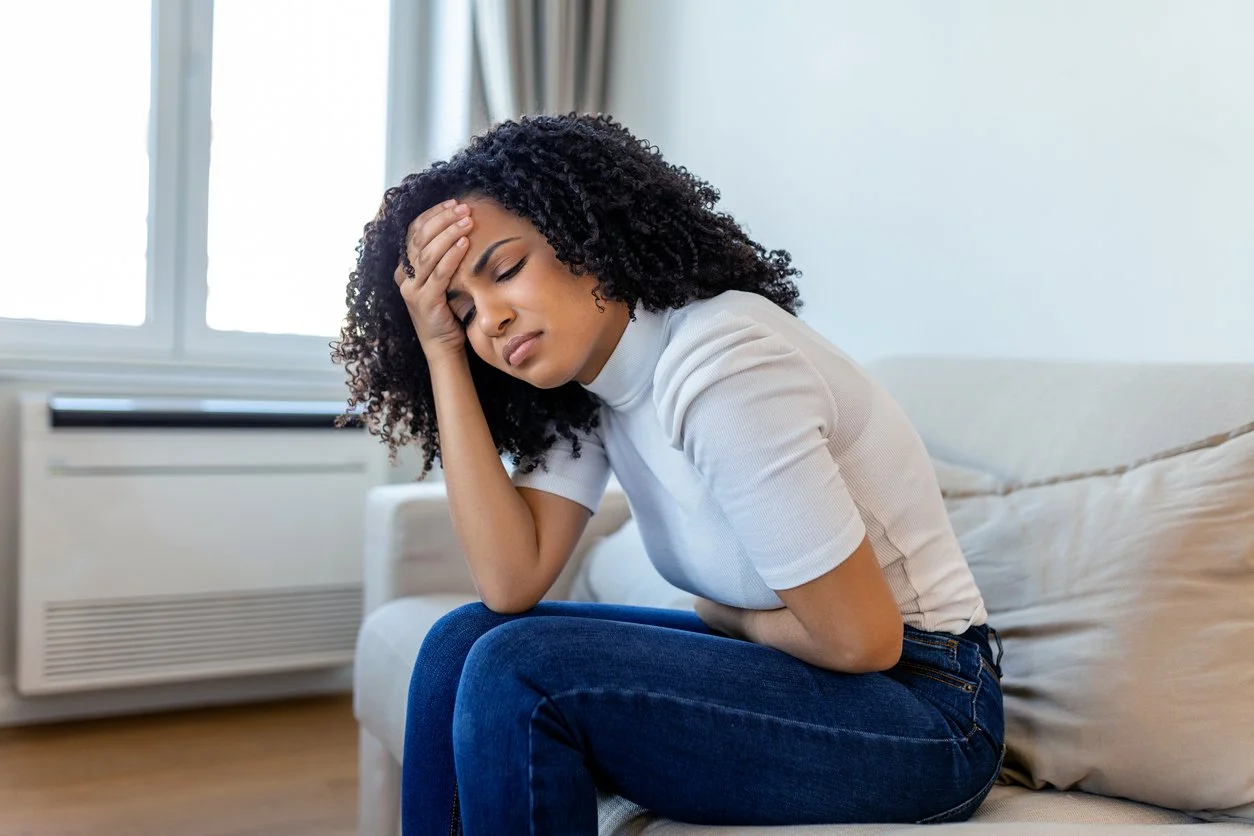
Bloating, reflux, and worsening reactions to foods like wine, aged cheese, fermented foods, and leftovers are common among women with histamine and mast cell involvement.
Treatment approach
The clinical strategy is to do four things at once: stabilize mast cells, support histamine clearance, replenish nutrients that estrogen depletes, and modulate the underlying hormonal terrain. Each of the supplements below has randomized controlled trial or mechanistic data behind it. I keep practitioner-grade versions of each in my Fullscript dispensary at preferred patient pricing.
Quercetin
Quercetin is a flavonoid that stabilizes mast cell membranes and inhibits histamine release. In a head-to-head comparison, quercetin outperformed cromolyn — a prescription mast cell stabilizer — at blocking inflammatory cytokine release from human mast cells.¹⁰ It works best taken consistently rather than reactively, and it has the strongest evidence base of any natural mast cell stabilizer.
DAO enzyme
For women whose DAO is suppressed by estrogen, supplemental oral DAO before meals can reduce histamine load. A clinical trial in patients with histamine intolerance found that gastrointestinal, skin, cardiovascular, and neurological symptoms all improved during DAO supplementation, with symptoms returning when supplementation stopped.¹¹
Vitamin B6 (P5P)
B6 is a cofactor for serotonin synthesis and for DAO. A randomized crossover trial of 50 mg/day pyridoxine showed significant benefit on the emotional symptoms of PMS, particularly depression and irritability.¹² The active form, pyridoxal-5-phosphate, is generally preferred, especially in women with methylation issues. I cap dosing at 100 mg/day to avoid neuropathy risk with long-term use.
Magnesium
Estrogen depletes magnesium, and magnesium deficiency contributes to both PMS symptoms and histamine reactivity. A randomized double-blind crossover trial found that 200 mg magnesium with 50 mg B6 produced significant reductions in anxiety-related premenstrual symptoms — nervous tension, mood swings, irritability — beyond either nutrient alone.¹³ A separate trial confirmed that magnesium plus B6 outperformed magnesium alone or placebo for overall PMS severity.¹⁴
Calcium
Calcium dysregulation has been implicated in PMS pathophysiology. The original Thys-Jacobs randomized crossover trial found that calcium supplementation reduced negative affect, water retention, and pain symptoms during the luteal and menstrual phases.¹⁵ A more recent trial showed benefit at doses as low as 500 mg/day.¹⁶
Vitamin D
Vitamin D status matters significantly for both mood symptoms and inflammation in PMS. A randomized trial in adolescents with severe PMS-related mood symptoms and low 25(OH)D showed that high-dose vitamin D over four months reduced symptom severity.¹⁷ A separate trial in vitamin D–insufficient women found that 50,000 IU fortnightly for 16 weeks reduced total PMS symptoms by a substantial margin, with the largest reduction (53%) in depression scores.¹⁸ I test serum 25(OH)D before dosing and target a level of 50–80 ng/mL.
Omega-3 fatty acids (EPA/DHA)
Omega-3s reduce systemic inflammation and have growing evidence in PMS. A 2022 meta-analysis concluded that omega-3 supplementation produced a clinically significant reduction in PMS severity.¹⁹ A randomized trial of 2 g/day showed measurable improvement in depression, anxiety, concentration, and bloating after 45 days, with continued improvement at 90 days.²⁰
Vitex agnus-castus
Vitex remains one of the best-studied botanicals for PMS and PMDD. A meta-analysis of randomized, double-blind, placebo-controlled trials found that women on properly characterized Vitex preparations were 2.57 times more likely to experience symptom remission than those on placebo.²¹ A separate review of 17 RCTs reached similar conclusions.²² It tends to be most useful in perimenopause, where luteal-phase progesterone is often inadequate. Vitex is not appropriate for women on hormonal contraceptives, dopamine-modulating medications, or with hormone-sensitive cancers.
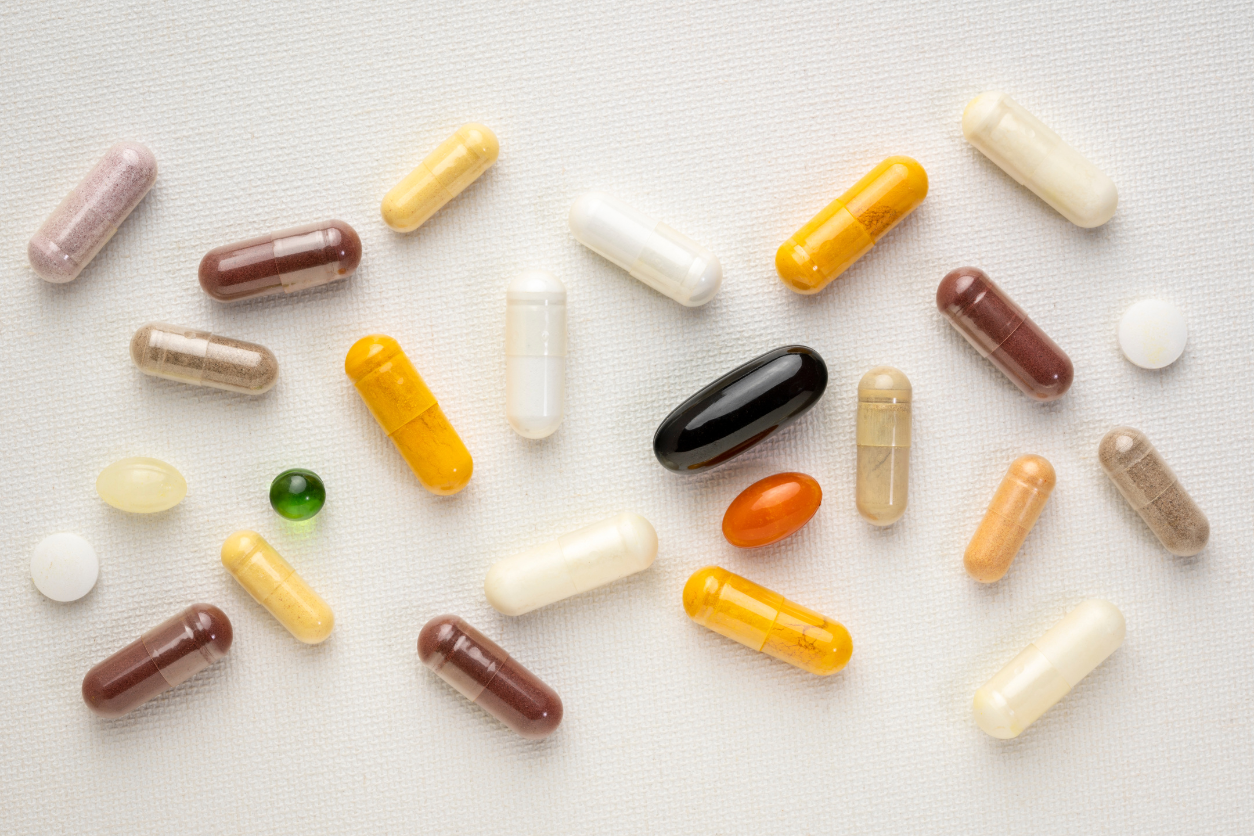
Supplementation can help support women with PMDD throughout the menopausal transition.
A note on next steps
If the pattern in this article looks familiar, the histamine piece is worth investigating. Many women have spent years on standard PMDD protocols with partial relief; identifying and treating the histamine component is often what closes the gap. The supplements above are the foundation of the protocol I use most often in perimenopausal patients with this presentation, but individual histories and contraindications matter, and dosing should be tailored.
To access the full protocol with practitioner-grade supplements at preferred pricing, you can visit my Fullscript dispensary. If you want to work through your individual case, my office is taking new patients, and I'd be glad to see you.
Sign up for Fullscript to access Dr. Bonza’s physician-curated PMDD protocol.
References
Soares CN, Cohen LS. The perimenopause, depressive disorders, and hormonal variability. Sao Paulo Med J. 2001;119(2):78–83. PMID: 11276171.
Greendale GA, Lee NP, Arriola ER. The menopause. Lancet. 1999;353(9152):571–80.
Gordon JL, Rubinow DR, Eisenlohr-Moul TA, et al. Estradiol variability, stressful life events, and the emergence of depressive symptomatology during the menopausal transition. Menopause. 2016;23(3):257–66. PMID: 26529616.
Hantsoo L, Eisenlohr-Moul T. Premenstrual mood symptoms in the perimenopause. Curr Psychiatry Rep. 2021;23(11):73. PMID: 34613495.
Bonini S, Magrini L, Rotiroti G, et al. Modulation of rat peritoneal mast cell and human basophil histamine release by estrogens. Int Arch Allergy Appl Immunol. 1991;94(1–4):293–4. PMID: 1712002.
Vasile S, Letourneau R, Theoharides TC. Oestradiol enhances in vitro the histamine release induced by embryonic histamine-releasing factor (EHRF) from uterine mast cells. Hum Reprod. 1992;7(8):1036–41. PMID: 1383260.
Sessa A, Desiderio MA, Perin A. Estrogenic regulation of diamine oxidase activity in rat uterus. Agents Actions. 1990;29(3–4):162–6.
Jonassen F, Granerus G, Wetterqvist H. Histamine metabolism during the menstrual cycle. Acta Obstet Gynecol Scand. 1976;55(4):297–304. PMID: 973560.
Kalogeromitros D, Katsarou A, Armenaka M, et al. Influence of the menstrual cycle on skin-prick test reactions to histamine, morphine and allergen. Clin Exp Allergy. 1995;25(5):461–6. PMID: 7553250.
Zierau O, Zenclussen AC, Jensen F. Role of female sex hormones, estradiol and progesterone, in mast cell behavior. Front Immunol. 2012;3:169. PMC3377947.
Weng Z, Zhang B, Asadi S, et al. Quercetin is more effective than cromolyn in blocking human mast cell cytokine release and inhibits contact dermatitis and photosensitivity in humans. PLoS One. 2012;7(3):e33805. PMC3314669.
Schnedl WJ, Schenk M, Lackner S, et al. Diamine oxidase supplementation improves symptoms in patients with histamine intolerance. Food Sci Biotechnol. 2019;28(6):1779–84. PMC6859183.
Doll H, Brown S, Thurston A, Vessey M. Pyridoxine (vitamin B6) and the premenstrual syndrome: a randomized crossover trial. J R Coll Gen Pract. 1989;39(326):364–8. PMID: 2558186.
De Souza MC, Walker AF, Robinson PA, Bolland K. A synergistic effect of a daily supplement for 1 month of 200 mg magnesium plus 50 mg vitamin B6 for the relief of anxiety-related premenstrual symptoms: a randomized, double-blind, crossover study. J Womens Health Gend Based Med. 2000;9(2):131–9. PMID: 10746516.
Fathizadeh N, Ebrahimi E, Valiani M, et al. Evaluating the effect of magnesium and magnesium plus vitamin B6 supplement on the severity of premenstrual syndrome. Iran J Nurs Midwifery Res. 2010;15(Suppl 1):401–5. PMID: 22069417.
Thys-Jacobs S, Ceccarelli S, Bierman A, et al. Calcium supplementation in premenstrual syndrome: a randomized crossover trial. J Gen Intern Med. 1989;4(3):183–9. PMID: 2656936.
Shobeiri F, Araste FE, Ebrahimi R, et al. Effect of calcium on premenstrual syndrome: a double-blind randomized clinical trial. Obstet Gynecol Sci. 2017;60(1):100–5. PMID: 28217679.
Tartagni M, Cicinelli MV, Tartagni MV, et al. Vitamin D supplementation for premenstrual syndrome–related mood disorders in adolescents with severe hypovitaminosis D. J Pediatr Adolesc Gynecol. 2016;29(4):357–61. PMID: 26724745.
Bahrami A, Bahrami-Taghanaki H, Khorasanchi Z, et al. Effect of vitamin D supplementation on symptoms severity in vitamin D insufficient women with premenstrual syndrome: a randomized controlled trial. Complement Ther Clin Pract. 2024;55:101840. PMID: 38220382.
Mohammadi MM, Dehghan Nayeri N, Mashhadi M, Varaei S. Effect of omega-3 fatty acids on premenstrual syndrome: a systematic review and meta-analysis. J Obstet Gynaecol Res. 2022;48(6):1293–305. PMID: 35266254.
Sohrabi N, Kashanian M, Ghafoori SS, Malakouti SK. Evaluation of the effect of omega-3 fatty acids in the treatment of premenstrual syndrome: "a pilot trial." Complement Ther Med. 2013;21(3):141–6. PMID: 23642943.
Csupor D, Lantos T, Hegyi P, et al. Vitex agnus-castus in premenstrual syndrome: a meta-analysis of double-blind randomised controlled trials. Complement Ther Med. 2019;47:102190. PMID: 31780016.