Written and edited by Sarah Bonza, MD, MPH, FAAFP, MSCP, DipABLM, NBC-HWC | Bonza Health

What your age, your cycle, and the Greene Climacteric Scale can and can’t tell us.
She is 42. Her periods now come a week early, then late. She wakes at 3 a.m. soaked, heart pounding. She snaps at her kids, then cries in the car. In my office, she completes a Greene Climacteric Scale and scores 31 out of 63. Then she tells me what her last doctor said: “You’re too young for perimenopause.”
I hear a version of this story almost every week. (The woman above is a composite of many patients.) She is not imagining her symptoms, and her doctor was not trying to dismiss her. Most of us were trained to think of menopause as something that happens around 51. Far fewer of us were taught how long and how variable the road to it can be.
This article is for both sides of the exam table. Patients, I want you to understand what perimenopause is and how it is diagnosed, so you can advocate for yourself. Colleagues, I want to lay out the evidence-based approach in one place, so the next conversation goes better for everyone.
Here is the short version. Perimenopause is diagnosed from your age, your menstrual pattern, and your symptoms. It is not solely diagnosed from a single blood test or from a questionnaire score. A high Greene score does not prove perimenopause. But it should never be waved away because of a birthday, either. It tells us something is affecting your life enough to deserve a real evaluation.
What perimenopause actually is
Menopause is one moment: your final menstrual period, confirmed only in hindsight after 12 months without a period. Perimenopause, also called the menopausal transition, is the run-up to that moment. It begins when cycles start to change and ends one year after the final period.
The most important thing to understand is that perimenopause is not a slow, steady fade of estrogen. It is a period of fluctuation. Ovulation becomes unpredictable. Estrogen can surge higher than it ever did in your 20s one month and crash the next. Progesterone falls as ovulation becomes less regular. That hormonal turbulence, not simply “low estrogen,” drives many of the symptoms: night sweats, sleep disruption, heavier or erratic bleeding, anxiety, irritability, and brain fog.
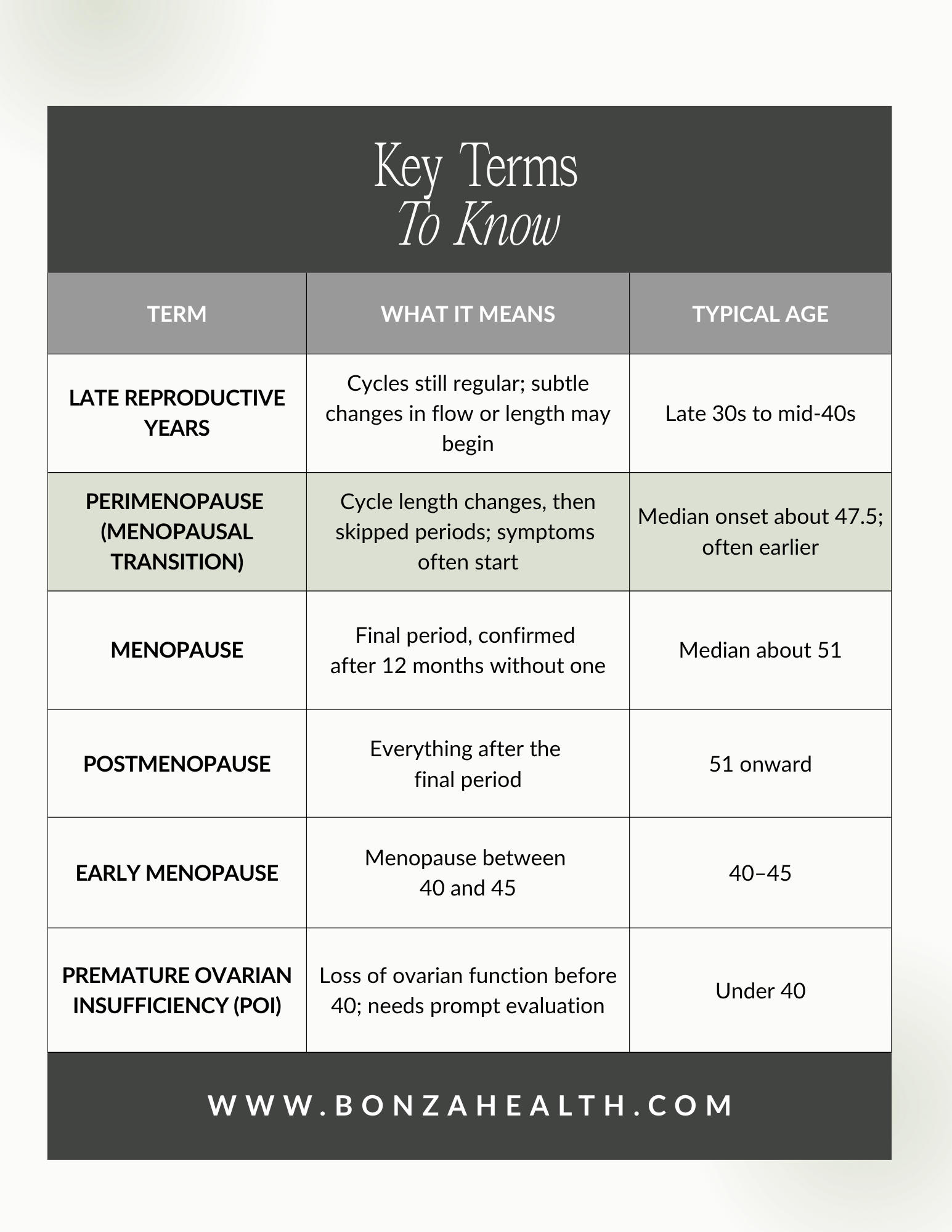
Table 1. Key terms
So when does it start?
In the Massachusetts Women’s Health Study, the median age at which perimenopause began was 47.5, and the median age at natural menopause was 51.3 [1]. Notice the word median. It means half of women started perimenopause earlier than 47.5. A 42-year-old with changing cycles is not an outlier; she is part of the normal curve.
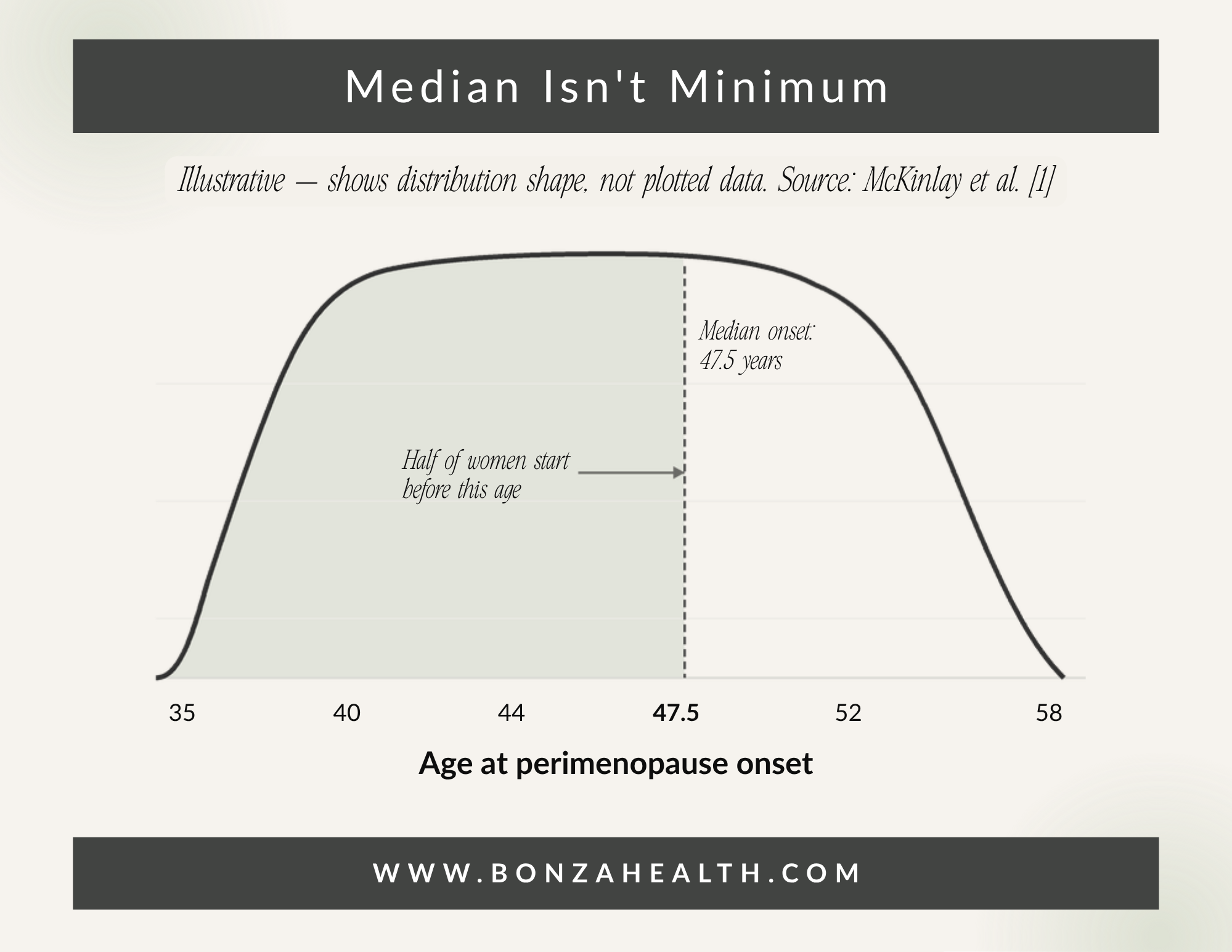
Figure 1: Curve showing half of women begin perimenopause before age 47.5
The international staging system clinicians use, STRAW+10, makes this point directly. Its authors recommended that the stages be applied regardless of a woman’s age, ethnicity, body size, or lifestyle [2]. In other words, the stage is defined by what the ovaries and cycles are doing, not by the number on a driver’s license.
Symptoms can also show up before periods become obviously irregular. In the Study of Women’s Health Across the Nation (SWAN), frequent hot flashes and night sweats lasted a median of 7.4 years overall. Women who first reported them while still premenopausal or early perimenopausal had the longest course, a median of more than 11.8 years [3]. Early symptoms are real, and they can last a long time. That is exactly why they deserve attention.

Table 2. STRAW+10 stages around the transition, simplified
How perimenopause is actually diagnosed
Perimenopause is a clinical diagnosis. That means it is made by a clinician listening to your story: your age, how your cycles have changed, and what symptoms you are having. The reference framework is STRAW+10, which stages women mainly by their bleeding pattern [2].
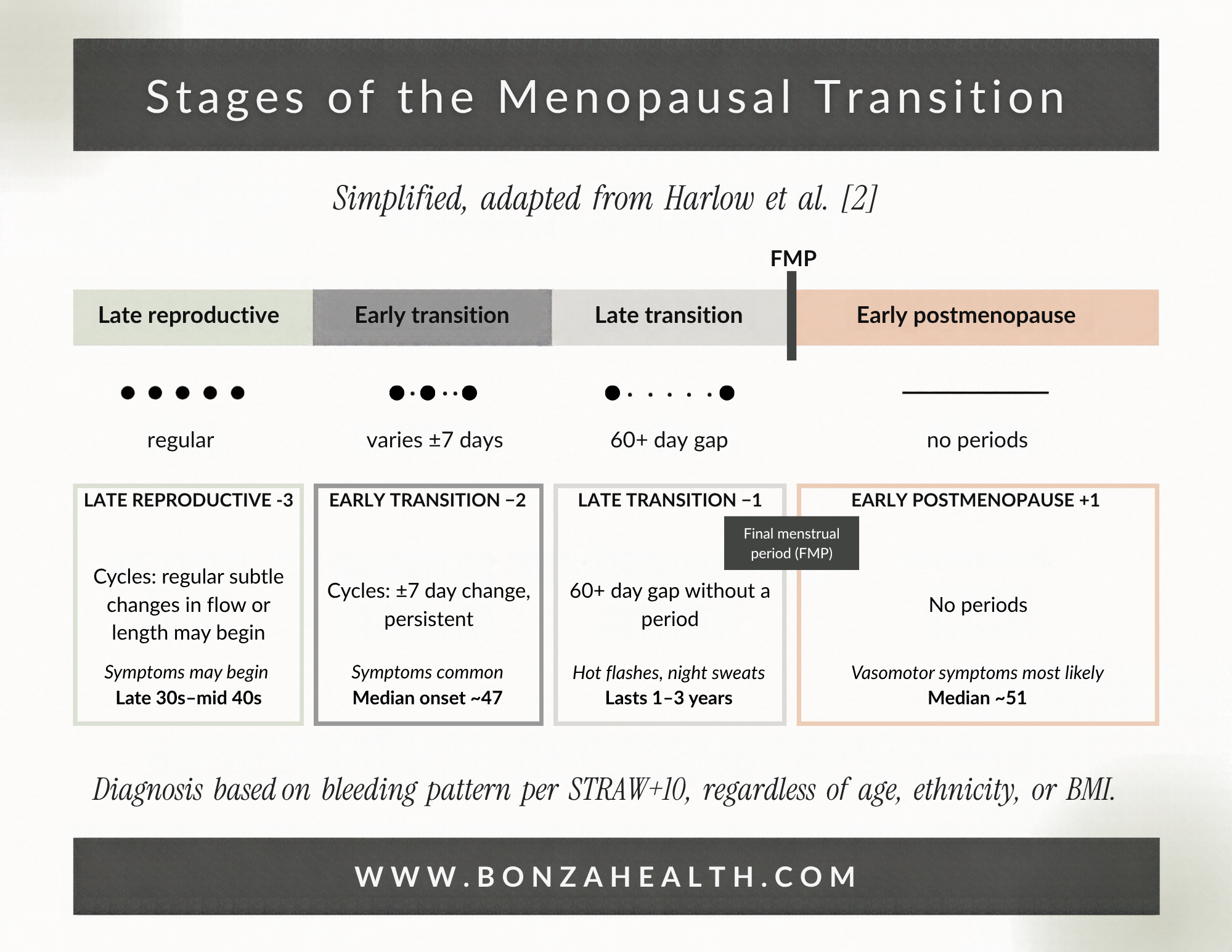
Timeline of the stages from regular cycles to final period
The second piece is age. Major guidelines take a tiered approach, summarized below from the UK’s NICE guideline [4], with similar advice in the JAMA review by Crandall and colleagues [5] and the German S3 guideline [6].
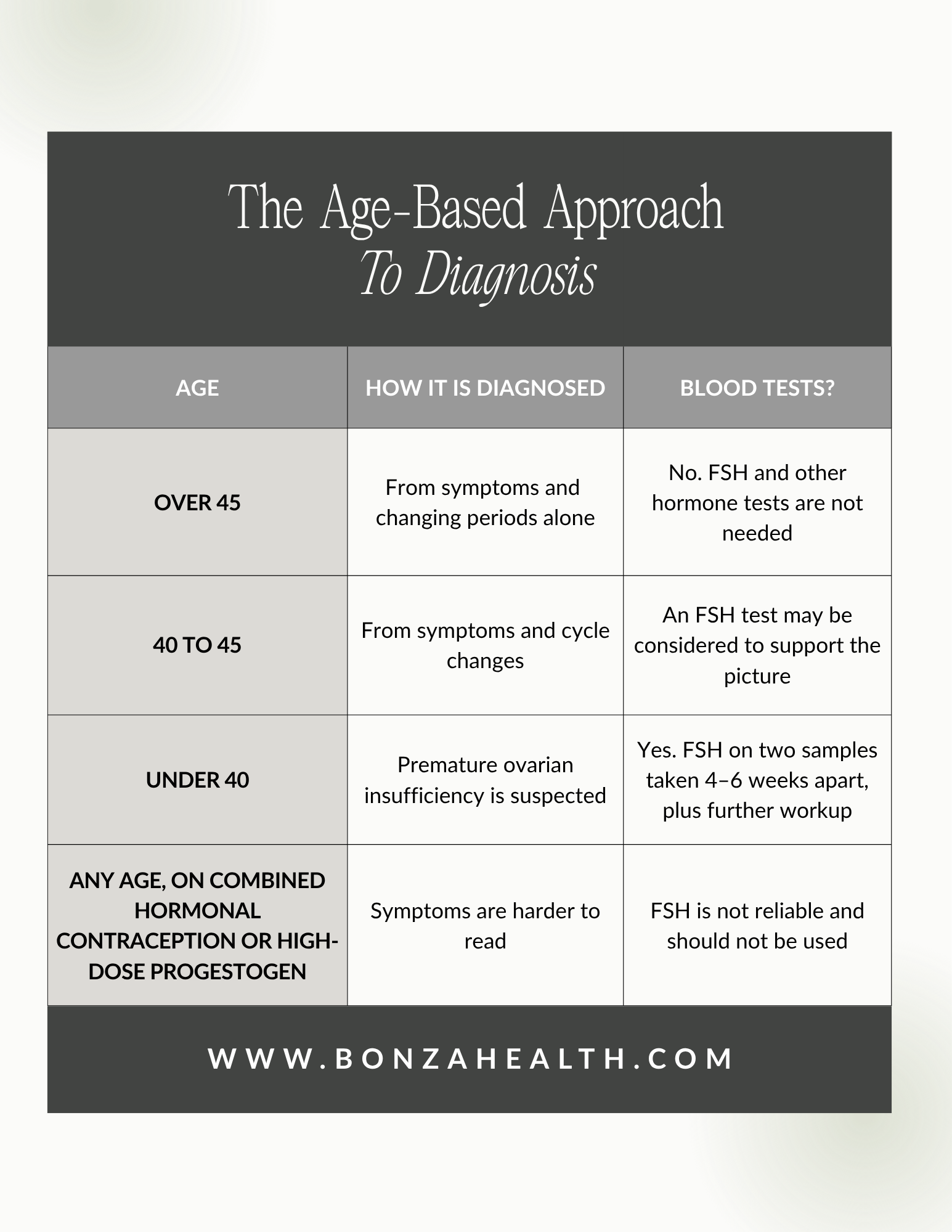
Table 3. The age-based approach to diagnosis
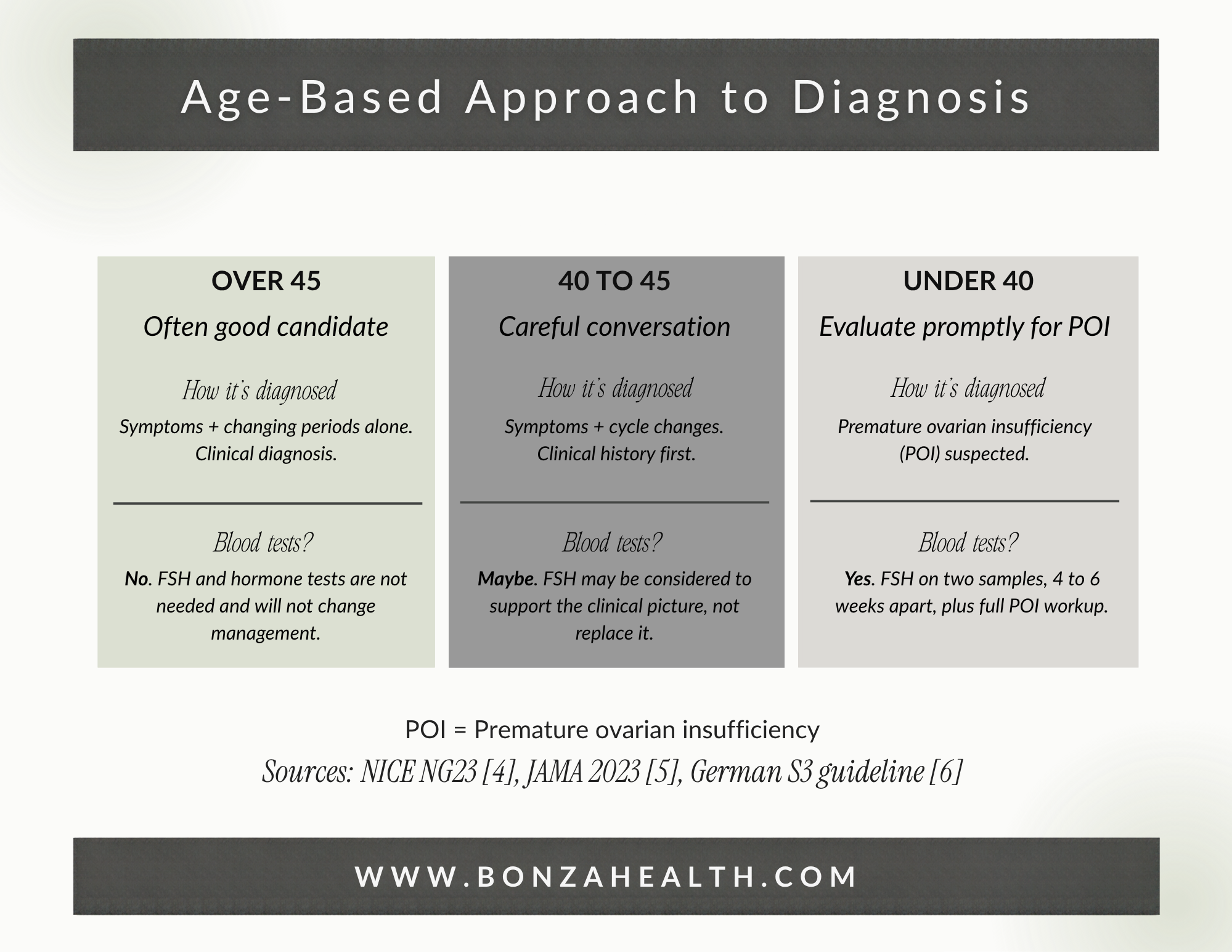
Age-based guide to diagnosing perimenopause
Why a “normal” hormone test doesn’t rule it out
Many women are told their labs were normal, so it can’t be perimenopause. The problem is that perimenopausal hormones swing widely, both within one cycle and from month to month. NICE states plainly that in women over 45, FSH testing does not help with the diagnosis because levels fluctuate, and knowing them will not change management [4]. A normal FSH on a Tuesday tells you almost nothing about the Tuesday after.
The same is true of the “fancier” tests. NICE and the German S3 guideline both advise against using anti-Müllerian hormone (AMH), inhibin, estradiol, antral follicle count, or ovarian volume to diagnose perimenopause in women 45 and over [4,6].
Now back to our 42-year-old. She is in the 40–45 band, and she has a persistent change of more than 7 days in her cycle length plus night sweats. That is a textbook picture of the early transition [2]. An FSH may be considered, but the guidance does not say “too young.” And if she were under 40, that would not be a reason to dismiss her either. It would be a reason to evaluate her promptly, because premature ovarian insufficiency affects bone and heart health and is usually treated [4].
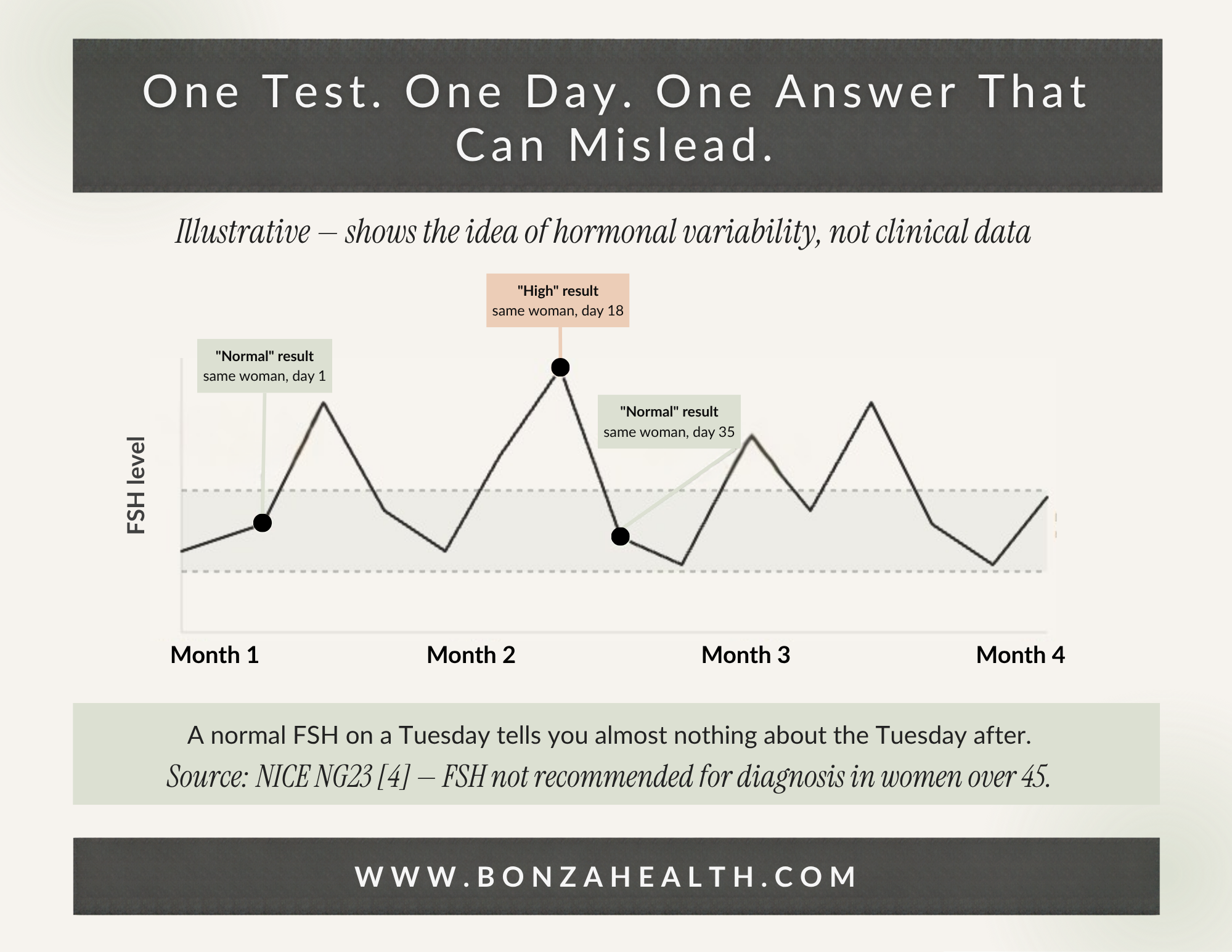
Hormone levels can swing up and down across months
Where the Greene Climacteric Scale fits
The Greene Climacteric Scale was developed by Scottish psychologist John Greene, first from work with patients at one of Europe’s earliest menopause clinics and then refined into a standard 21-item version in 1998 [7]. You rate how much each symptom is bothering you right now, from 0 (not at all) to 3 (extremely). Scores add up to a total between 0 and 63, and they also break into subscales [7-8].
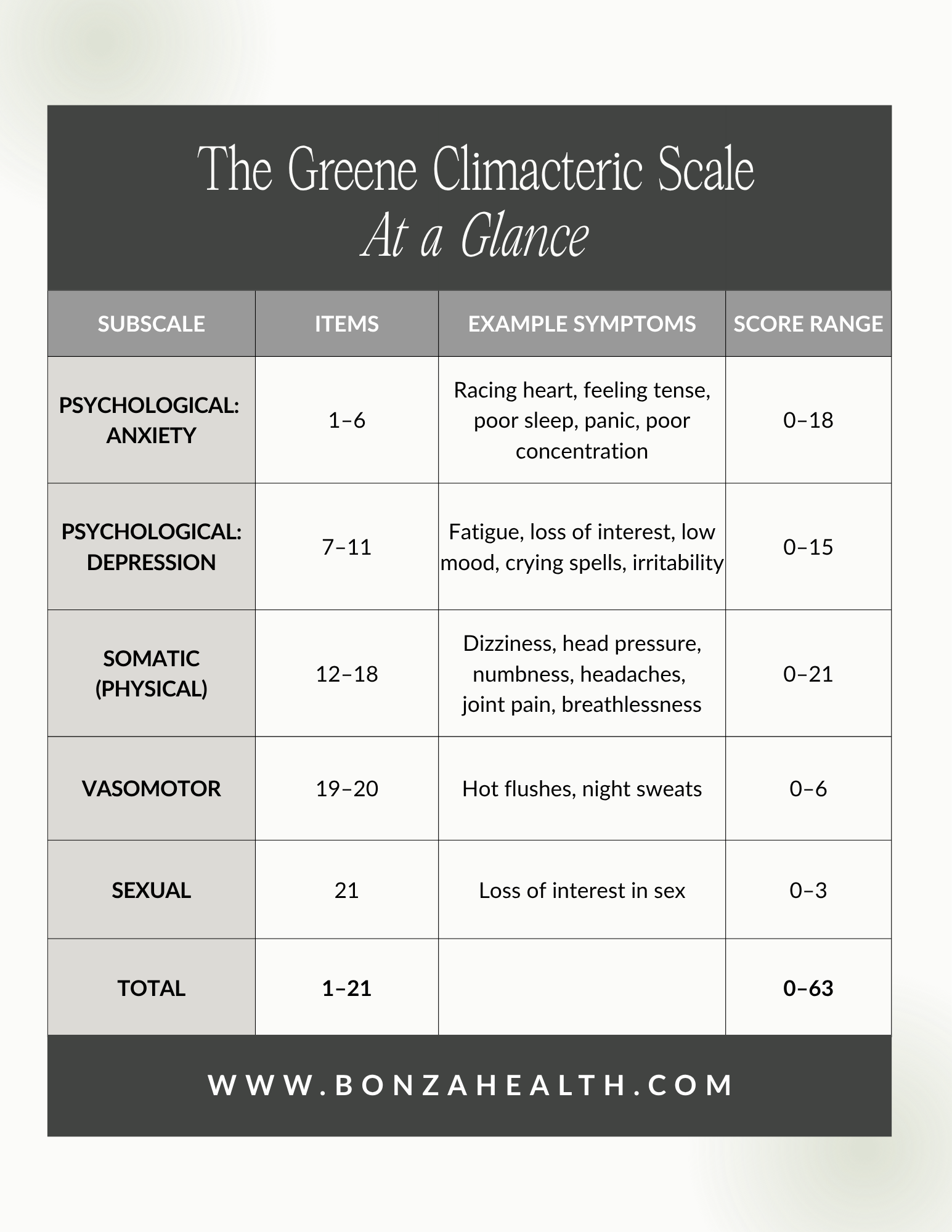
Table 4. The Greene Climacteric Scale at a glance
What the GCS does well. It is quick, free to use, and well validated, with good reliability and translations in many languages [8]. It gives us a shared, measurable picture of how much symptoms are affecting your life. Most usefully, it lets us track change: a score before treatment and again a few months later shows whether what we are doing is working.
What the GCS cannot do. It cannot diagnose perimenopause. There is no validated cutoff score that means “you are perimenopausal” [8]. Many of its items, such as fatigue, headaches, joint pain, poor sleep, and low mood, are not specific to hormones. They also show up with thyroid disease, anemia, depression, anxiety, sleep apnea, and plain chronic stress. The scale also leaves out genitourinary symptoms such as vaginal dryness and urinary changes, which matter a great deal in midlife [8].
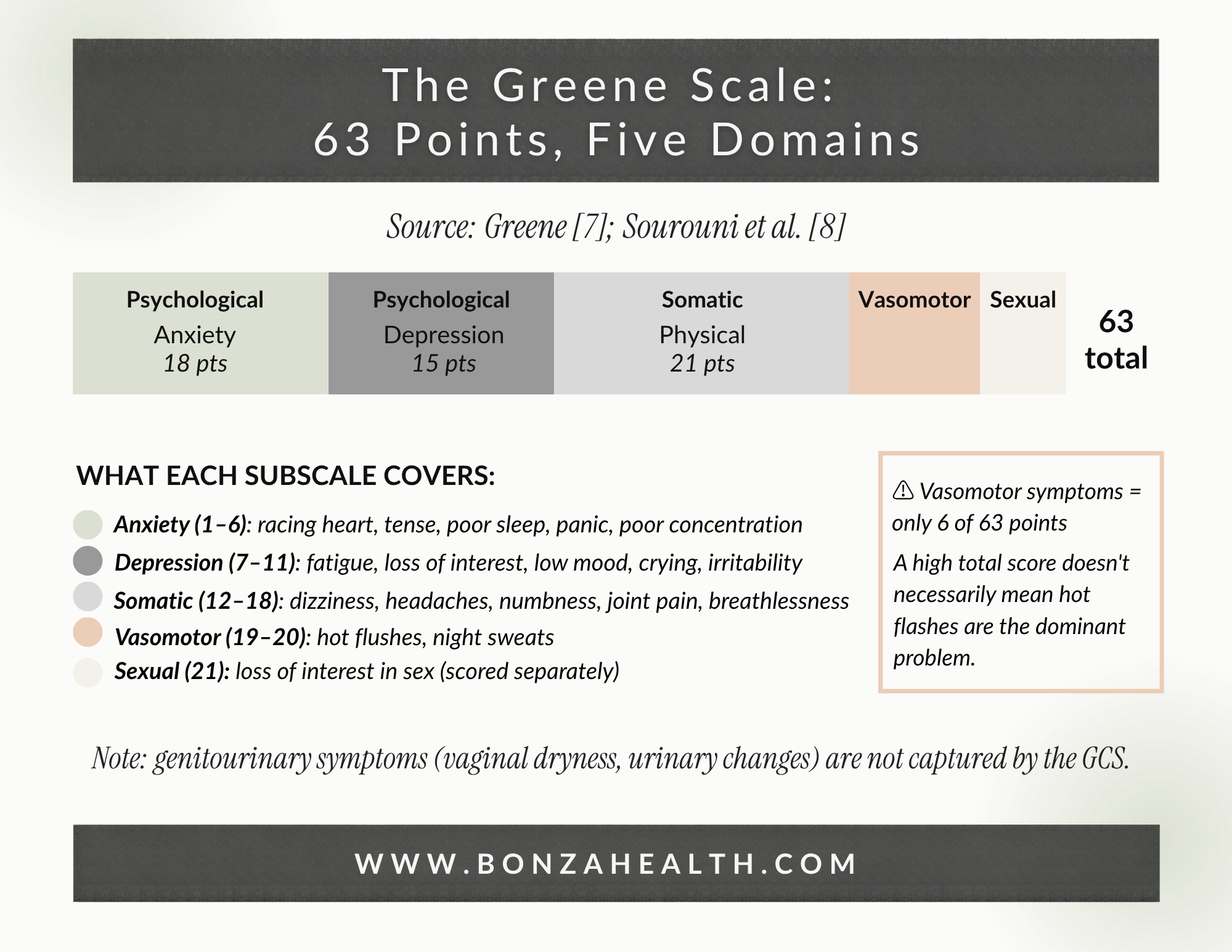
Breakdown of the 63-point Greene scale by subscale
How to read a high score
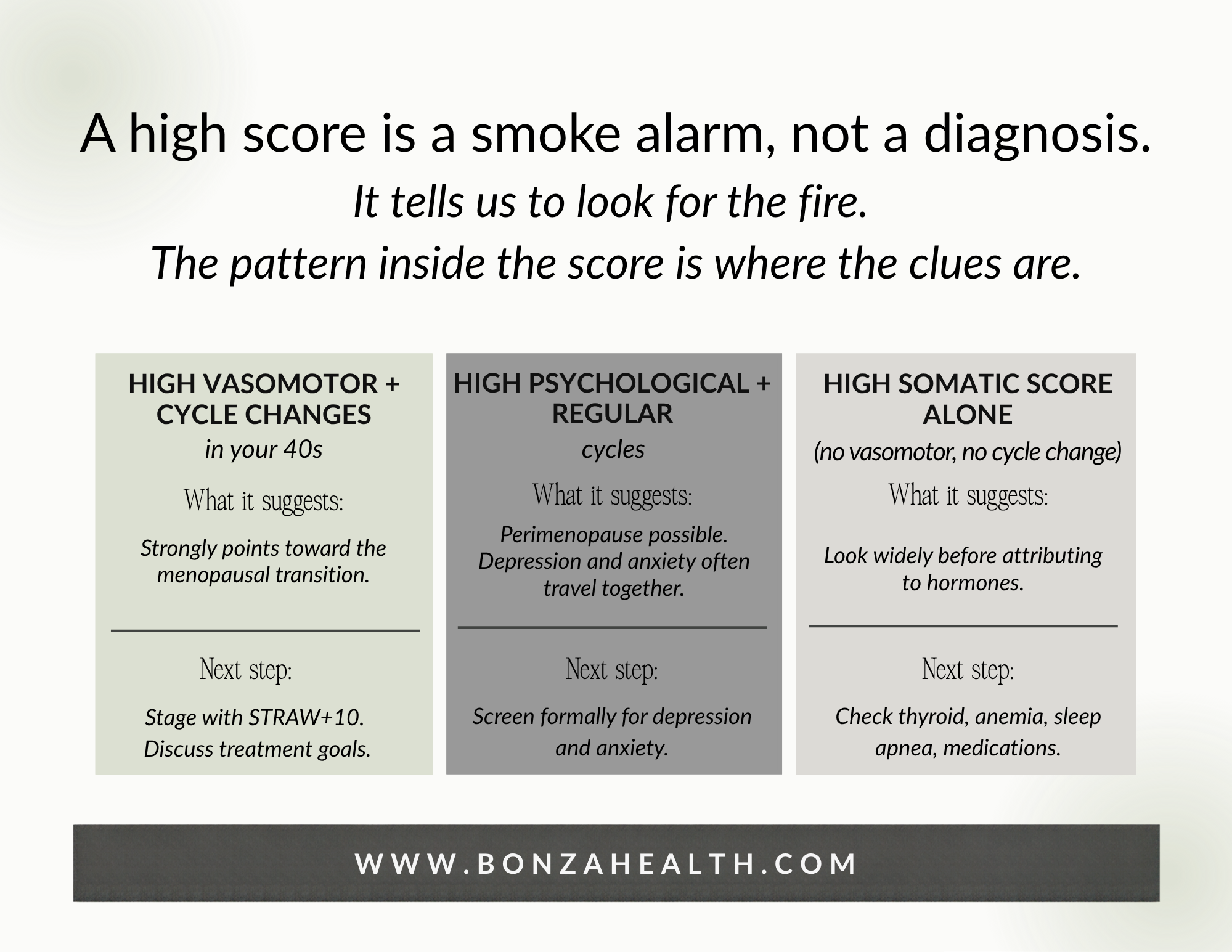
Think of a high GCS score as a smoke alarm, not a diagnosis. It tells us to look for the fire. The pattern inside the score is where the clues are:
High vasomotor score plus changing cycles in your 40s: this strongly points toward the menopausal transition.
High psychological score with regular cycles: perimenopause is still possible, but we also need to screen carefully for depression and anxiety. The two often travel together.
High somatic score alone: look widely for other causes before attributing it all to hormones.
The scale is the start of a conversation. It should never end one, in either direction.
A high score is a smoke alarm, not a diagnosis
What else we check
A good perimenopause evaluation also rules out conditions that can look like it. These are the essentials [5,9]:
Pregnancy. Ovulation still happens on and off in perimenopause, so a pregnancy test comes first when periods change.
Thyroid disease and anemia. Both can cause fatigue, palpitations, heat intolerance, mood changes, and heavy or irregular bleeding.
Depression and anxiety. The transition is a recognized window of vulnerability for both, especially in women with a past episode [9]. A high depression subscale should prompt formal screening.
Medications and other causes. Some antidepressants, other drugs, sleep apnea, and alcohol can all cause sweats or poor sleep.
Red flags. Fever, weight loss, a tremor, episodes of headache with a racing heart, or flushing with diarrhea or wheezing are not typical hot flashes and need a wider workup [5].

A good perimenopause evaluation also rules out conditions that can look like it, such as depression, anxiety, and anemia.
For patients: how to have the conversation
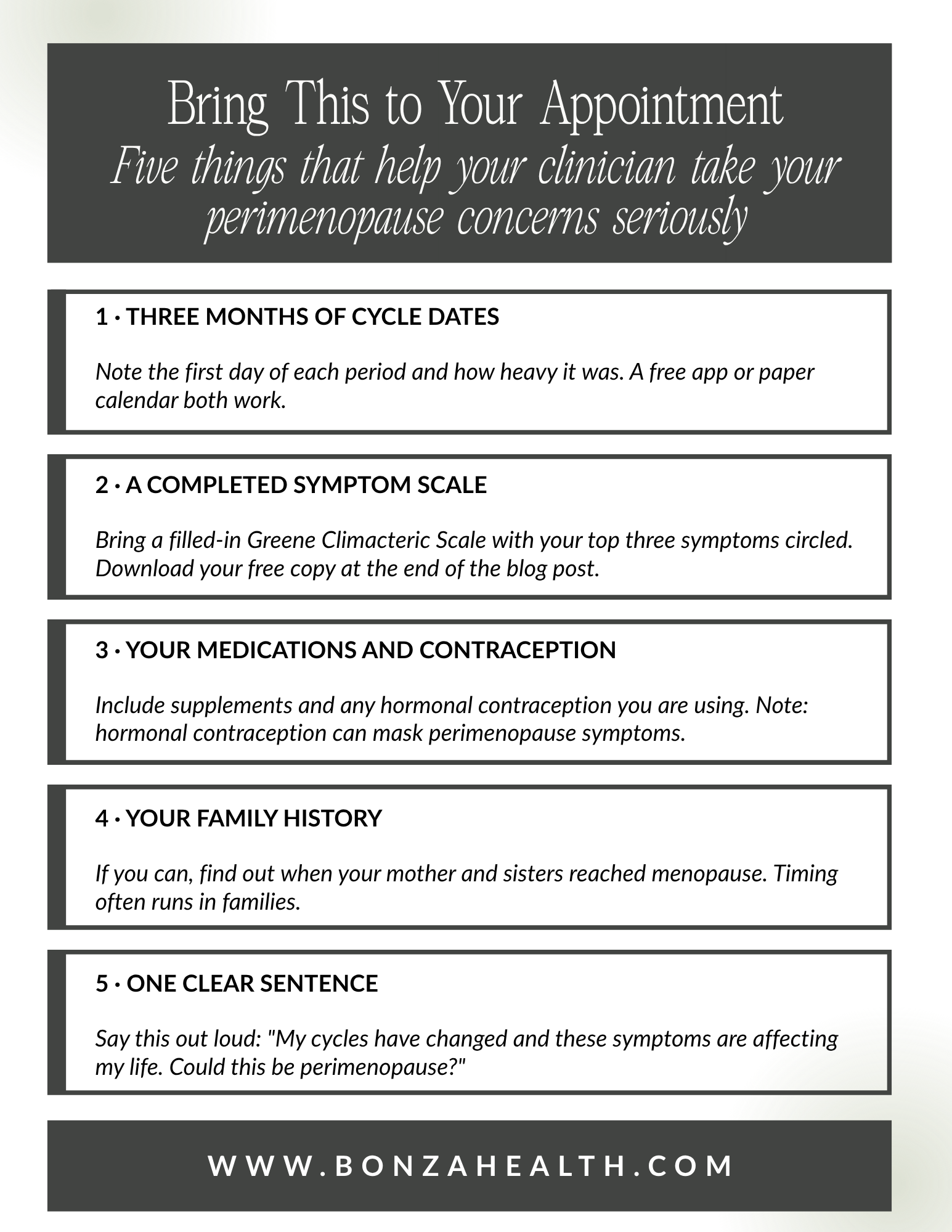
Track your cycle for three months. Note the first day of each period and how heavy it is. A free app or a paper calendar both work.
Complete a symptom scale. Bring a filled-in Greene Climacteric Scale and note which symptoms bother you most.
Bring your history. List your medications and contraception, and ask your mother or sisters when they reached menopause, if you can.
Use clear words. Try: “My cycles have changed, and these symptoms are affecting my life. Can we talk about whether this could be perimenopause, and what else it might be?”
Ask what happens next. If the answer is “you’re too young,” it is fair to ask, “What would you need to see to consider it?”
Five things to bring to your appointment
For clinicians: a five-minute checklist
Take a menstrual history and stage it with STRAW+10. A persistent change of 7 days or more in cycle length counts [2].
Use age to decide on labs: none needed over 45; FSH may be considered at 40–45; a full POI workup under 40 [4].
Exclude pregnancy, and test thyroid function and blood count when the picture calls for it [4,5].
Screen for depression and anxiety, especially when the GCS psychological subscale is high [9].
Record a baseline GCS total and subscales, and repeat it to measure response to treatment [8].
Ask directly about vaginal dryness and urinary symptoms, which the GCS does not capture [8].

The bottom line
“Too young” is not a diagnosis, and neither is a score. Perimenopause is diagnosed by putting your age, your cycles, and your symptoms together, and by thoughtfully ruling out what else could be going on. The Greene Climacteric Scale is a valuable tool for measuring how much you are struggling and whether treatment is helping. It works best in the hands of a clinician who listens.
If you see yourself in this article, you deserve a real evaluation. If you are a clinician, I hope this gives you a clear, defensible approach for the next patient who sits across from you.
To book a visit, go to bonzahealth.com, and follow me on Instagram at @drsarahbonza for more like this.
This article is for education only and is not a substitute for individual medical advice.

References
[1] S. M. McKinlay, D. J. Brambilla, and J. G. Posner, “The normal menopause transition,” Maturitas, vol. 14, no. 2, pp. 103–115, 1992, https://doi.org/10.1016/0378-5122(92)90003-m.
[2] S. D. Harlow et al., “Executive summary of the Stages of Reproductive Aging Workshop + 10: Addressing the unfinished agenda of staging reproductive aging,” Menopause, vol. 19, no. 4, pp. 387–395, 2012, https://doi.org/10.1097/gme.0b013e31824d8f40.
[3] N. E. Avis et al., “Duration of menopausal vasomotor symptoms over the menopause transition,” JAMA Intern. Med., vol. 175, no. 4, pp. 531–539, 2015, https://doi.org/10.1001/jamainternmed.2014.8063.
[4] National Institute for Health and Care Excellence, “Menopause: Identification and management,” NICE Guideline NG23, London, U.K., Nov. 2015 (updated Nov. 2024). [Online]. Available: https://www.nice.org.uk/guidance/ng23.
[5] C. J. Crandall, J. M. Mehta, and J. E. Manson, “Management of menopausal symptoms: A review,” JAMA, vol. 329, no. 5, pp. 405–420, 2023, https://doi.org/10.1001/jama.2022.24140.
[6] O. Ortmann et al., “Peri- and postmenopause—Diagnosis and interventions interdisciplinary S3 guideline of the association of the scientific medical societies in Germany (AWMF 015/062): Short version,” Arch. Gynecol. Obstet., vol. 302, no. 3, pp. 763–777, 2020, https://doi.org/10.1007/s00404-020-05682-4.
[7] J. G. Greene, “Constructing a standard climacteric scale,” Maturitas, vol. 29, no. 1, pp. 25–31, 1998, https://doi.org/10.1016/s0378-5122(98)00025-5.
[8] M. Sourouni, M. Zangger, L. Honermann, D. Foth, and P. Stute, “Assessment of the climacteric syndrome: A narrative review,” Arch. Gynecol. Obstet., vol. 304, no. 4, pp. 855–862, 2021, https://doi.org/10.1007/s00404-021-06139-y.
[9] P. M. Maki et al., “Guidelines for the evaluation and treatment of perimenopausal depression: Summary and recommendations,” Menopause, vol. 25, no. 10, pp. 1069–1085, 2018, https://doi.org/10.1097/gme.0000000000001174.